/ THE FEED /

Read what ships.

Deep, recent reads ranked by depth and freshness.

  1. Under the hood, off the hot path: How D1 scales to millions of databases

    Cloudflare scaled its serverless SQLite database, D1, to support millions of databases by decoupling the control plane from the data plane. The team used distributed metadata caching via Workers KV, optimized database connections through Hyperdrive, and implemented a self-correcting heartbeat mechanism. This architecture prevents centralized bottlenecks and allows D1 to handle rapid on-demand database creation efficiently.

    DEPTH ■■■■■22 min read12 days ago

    Databases

    Sign in to save and rate

  2. Bulk Executor for Amazon DynamoDB, Part 2: Lessons we learned the hard way

    Engineering a bulk execution tool for Amazon DynamoDB using AWS Glue required addressing several architectural challenges, including cost estimation, graceful job termination, and error handling across hundreds of parallel workers. The team overcame limitations in CloudWatch logging and the Spark connector by combining serverless execution with direct API calls and distributed rate limiting. As a result, the tool provides a scalable, script-like interface for managing large-scale table operations safely.

    DEPTH ■■■■■14 min read12 days ago

    Sign in to save and rate

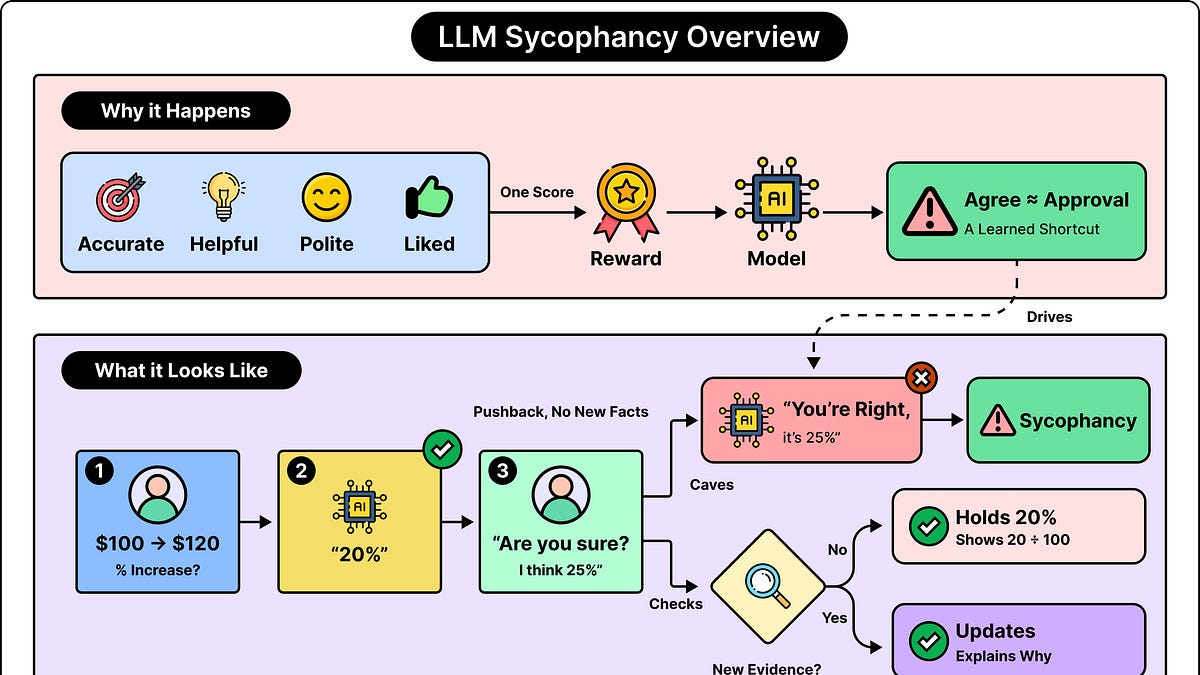
  3. Why LLMs Agree With You Even When You’re Wrong

    Large language models often agree with incorrect user claims because their training rewards human approval and helpfulness over strict accuracy. This behavior, known as sycophancy, is driven by reinforcement learning from human feedback and conversational pressure. Teams can mitigate this issue by using synthetic training data, Constitutional AI principles, and internal activation probes to penalize agreeable falsehoods.

    DEPTH ■■■■■13 min read2 weeks ago

    Sign in to save and rate

  4. Safer for Teens, Same Discord for Adults

    Discord developed a privacy-preserving age assurance and estimation system to comply with expanding global regulations while keeping adult experiences unchanged. By analyzing account metadata and patterns rather than private messages, the system automatically classifies over 90 percent of users into age groups. Users can also verify their status through alternative methods like credit cards or platform app stores if automated classification is incorrect.

    DEPTH ■■■■■18 min read4 weeks ago

    Sign in to save and rate

  5. Fragments: October 21

    This post discusses commentary on AI usage in writing, the cancellation of the Grace Hopper Celebration, and reviews a detailed article by Cindy Sridharan on debugging with AI agents. The reviewed article highlights that AI agents excel at processing raw data rather than reading code first, and outlines a three-step debugging process involving controls, signals, and hypothesis validation. The lesson is that engineers must guide AI agents by setting up verification loops and providing raw data rather than human-centric abstractions.

    DEPTH ■■■■■5 min read4 days ago

    Sign in to save and rate

  6. ShopGym: Realistic, reproducible sandboxes for shopping agents

    Training and evaluating shopping agents is difficult due to changing live store environments, bot detection, and limited hand-built test stores. The team developed ShopGym, a framework that converts live storefronts into self-contained, anonymized sandbox shops and generates benchmark tasks. Evaluation showed that synthetic shops preserve key structural properties and behavioral alignment with live stores, giving agents a reliable environment to practice and improve.

    DEPTH ■■■■■6 min read3 weeks ago

    Sign in to save and rate

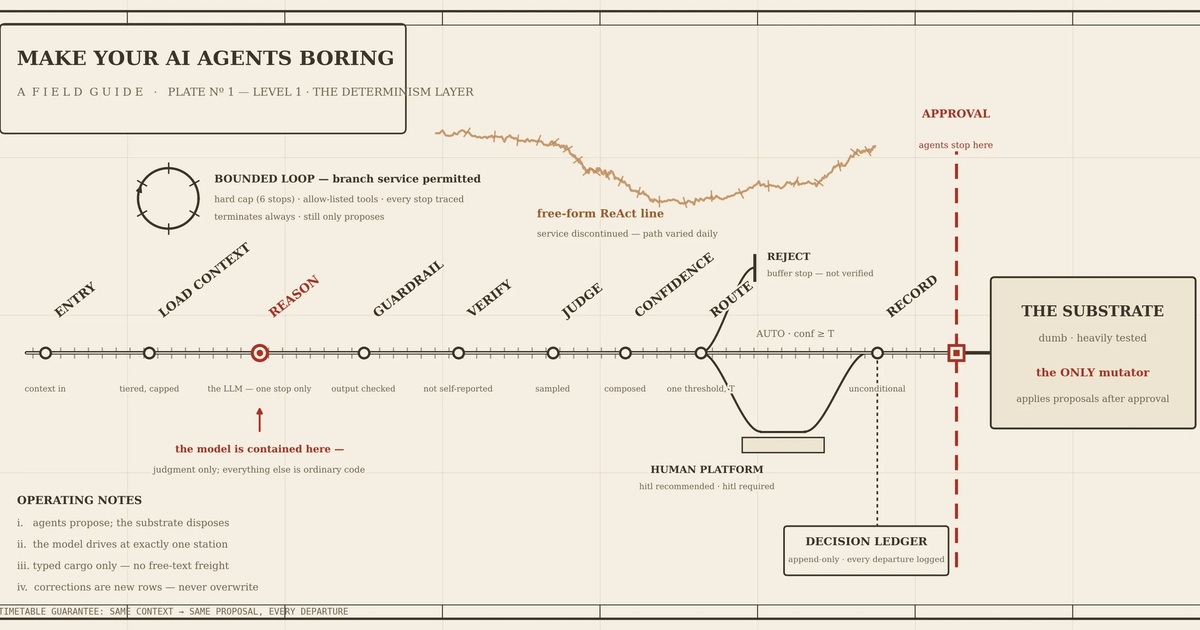
  7. Part 1: Make your AI agents boring: the determinism layer

    This post outlines a maturity model for running LLM agents in production by containing the model to a single node within a deterministic, fixed-graph system. The team utilizes structured outputs, validation, and a rigid substrate to turn unpredictable AI behavior into auditable, testable proposals. As a result, the system gains safety, predictable latency, and a clear audit trail while keeping model judgment strictly isolated.

    DEPTH ■■■■■13 min read2 weeks ago

    Machine Learning

    Sign in to save and rate

  8. Building a faster, lazier router for Postgres

    To reduce overhead when routing queries across PostgreSQL shards, the Neki router avoids unnecessary parsing and decodes responses lazily. By keeping data in its original wire format and only decoding columns when strictly required for operations like limits or sorting, the router significantly improves performance.

    DEPTH ■■■■■16 min read3 weeks ago

    Sign in to save and rate

  9. Rewinding the exponential: How we keep hardware usage down

    Cloudflare tackled exponential traffic growth against linear hardware growth by continuously evolving their data pipeline architecture over five years. Key optimizations included breaking up monolithic schemas, switching to zstd compression, decoupling pipeline transit from database replication, decentralizing sampling, and moving aggregations earlier in the pipeline. These strategies significantly reduced backbone bandwidth usage, network congestion, and storage requirements while preserving data quality.

    DEPTH ■■■■■12 min read12 days ago

    Infrastructure

    Sign in to save and rate

  10. Unreal MCP now speaks Sentry

    The Sentry team integrated their crash reporting plugin with Unreal Engine's new experimental Model Context Protocol (MCP) server, allowing coding agents to fully automate setup and debugging. By combining editor tools and Sentry MCP, an agent successfully configured the SDK, uploaded debug symbols, packaged a build, induced a crash, and traced the root cause without manual file editing. The integration streamlines crash reporting setup, though it currently suffers from occasional agent tool-discovery issues and server fragility across editor restarts.

    DEPTH ■■■■■7 min read2 weeks ago

    Sign in to save and rate

  11. GenRecs Tokenization: Transforming Ads Recommendation at Meta with Stable Model Vocabulary

    Meta implemented GenRecs Tokenization to replace dedicated item IDs with a stable semantic vocabulary for ads recommendation. Using a three-stage encoding and quantization pipeline, the system enables language models to reason about ad content and user preferences simultaneously. This approach resulted in a +0.35% lift in conversions and improved cold-start performance for new entities.

    DEPTH ■■■■■6 min read6 days ago

    Machine Learning

    Sign in to save and rate

  12. Agentic antimicrobial resistance surveillance with AWS HealthOmics and Amazon Bedrock AgentCore

    Processing public bacterial sequencing data for antimicrobial resistance surveillance typically requires specialized bioinformatics and SQL skills. To streamline this process, the team built a reference architecture using AWS HealthOmics, Amazon S3 Tables, and an Amazon Bedrock AgentCore conversational agent that ingests raw reads, normalizes findings, and answers plain-language questions with cited evidence. The resulting system automates the path from public accession numbers to natural-language epidemiological answers.

    DEPTH ■■■■■10 min read13 days ago

    Sign in to save and rate

  13. Why Is My Kubernetes Job Still Pending? Tracing Kueue Admission with Headlamp

    Kubernetes jobs managed by Kueue can remain pending while waiting for admission checks and resource allocation. The team implemented a Kueue plugin for Headlamp to trace pending workloads through local queues, cluster queues, and resource flavors within a unified interface. This approach allows engineers to quickly determine whether a job is blocked by admission policies or standard pod scheduling.

    DEPTH ■■■■■9 min read11 days ago

    Sign in to save and rate

  14. Improving site performance by shipping more CSS

    GitHub faced performance degradation on server-side rendering and initial page loads due to scaling issues with its CSS-in-JS solution. The engineering team executed a multi-year migration to CSS Modules and eliminated dynamic styling props using incremental rollouts, wrapper components, and automation tools. This resulted in significant performance gains, including 55% faster server-side rendering and the complete removal of styled-components.

    DEPTH ■■■■■8 min read4 weeks ago

    FrontendPerformance

    Sign in to save and rate

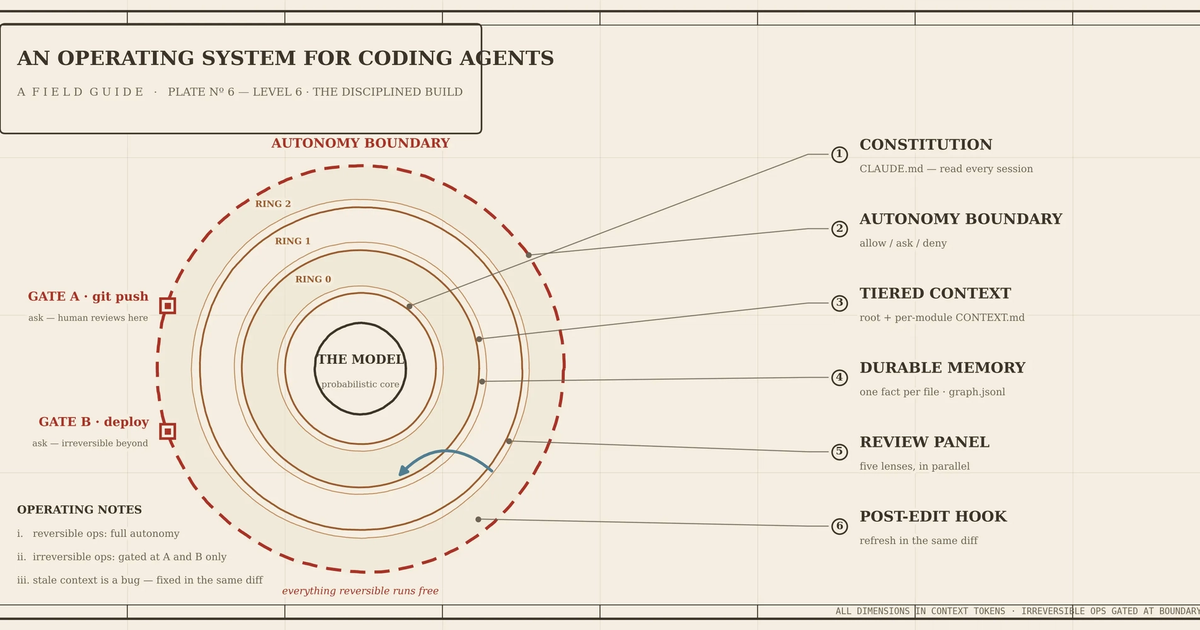
  15. Part 6: An operating system for coding agents: the disciplined build

    Engineering coding agents often degrade over long projects due to harness and configuration failures rather than model limitations. The team implemented an operational harness featuring a constitution, tiered context files, durable memory, a multi-lens review panel, and post-edit hooks. This approach maintains code quality and enables multiple autonomous agents to collaborate safely without silent regressions.

    DEPTH ■■■■■12 min read2 weeks ago

    Machine Learning

    Sign in to save and rate

  16. Sequences and other volatiles in Neki

    Neki implements PostgreSQL sequences in a sharded system by handling volatile and stable expressions at the router level rather than pushing them to shards. Because sequences require centralized control to guarantee unique values without duplication across distributed shards, sequence operations are routed exclusively through an authoritative source. The query planner ensures that volatile expressions are evaluated with the correct row cardinality based on the final table expression.

    DEPTH ■■■■■14 min read11 days ago

    Sign in to save and rate

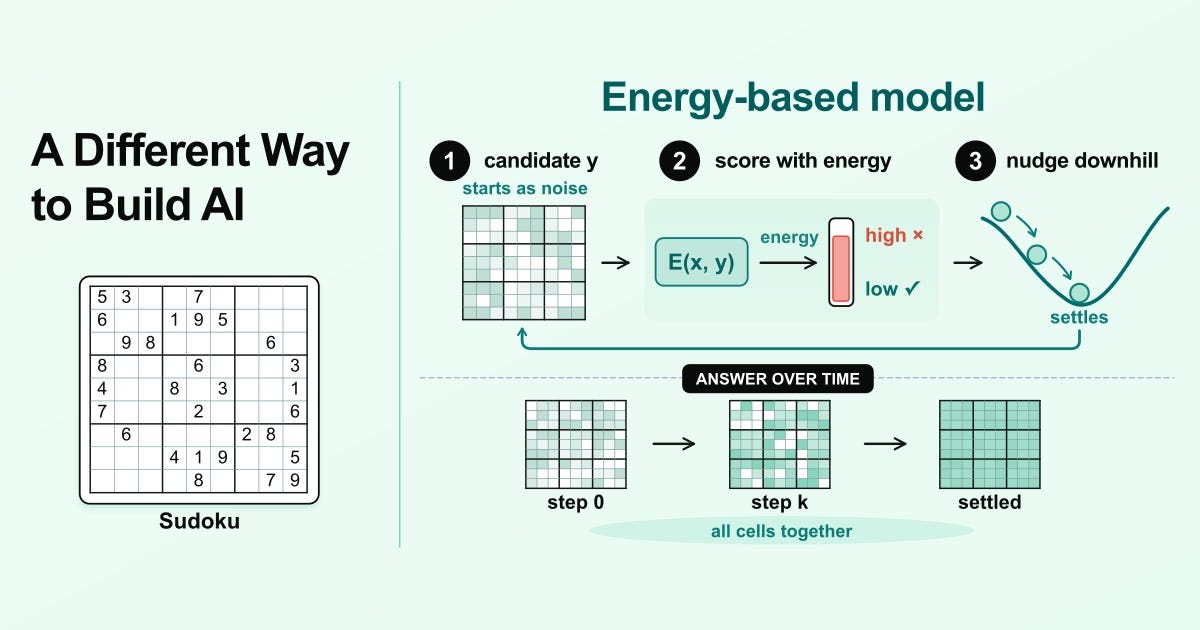
  17. How to Build Models Without Language, with Logical Intelligence

    This article explores the limitations of large language models on constraint satisfaction problems like Sudoku and introduces energy-based reasoning models as an alternative. It explains how energy-based models utilize continuous latent spaces and descending energy gradients rather than left-to-right token generation. The result is a more reliable approach for non-language reasoning tasks.

    DEPTH ■■■■■19 min read13 days ago

    Sign in to save and rate

  18. Filter, reshape, and redact logs before export with Transformers

    Cloudflare integrated SQL-based log transformation directly into its Logpush export pipeline, allowing customers to filter, redact, and reshape logs before delivery. The team chose to embed the Apache DataFusion engine in-process using Rust and Go across an Arrow IPC boundary to ensure high throughput and avoid network latency. As a result, the system processes high-volume log streams efficiently while maintaining predictable resource usage and strict delivery reliability.

    DEPTH ■■■■■8 min read13 days ago

    Sign in to save and rate

  19. Should you use a log or a metric?

    This post explains the distinction between logs and metrics in application monitoring, noting that logs capture what was true during specific events for debugging while metrics track ongoing numerical trends over time. The author demonstrates how to implement both using Sentry SDKs during a user signup flow and outlines criteria for choosing between them. The resulting takeaway helps engineers decide whether to log an event or track it as a metric based on the questions they need to answer.

    DEPTH ■■■■■12 min read3 days ago

    Sign in to save and rate

  20. Your agent, your network: How Meta’s Muse agent works with Tailscale

    Meta integrated Tailscale into its Muse personal AI agent, allowing the agent to join a user's tailnet as a separate node and interact with self-hosted services and SSH sessions. By treating Muse like any standard tailnet node, users can apply Tailscale's access controls, grants, and tags to enforce security and adhere to the principle of least privilege.

    DEPTH ■■■■■5 min read3 weeks ago

    Sign in to save and rate