/ THE FEED /

Read what ships.

Deep, recent reads ranked by depth and freshness.

  1. Origin Range Requests: Serving large files without range-request tuning

    Cloudflare replaced a legacy, fixed-size range caching design that suffered from bandwidth waste and memory pressure with a Pingora-based chunk coordinator. The new implementation dynamically combines cached chunks and aligned origin fetches to serve range requests accurately without manual tuning. This approach cut p99 time to first byte in half for R2 storage and reduced tiered cache traffic by six percent.

    DEPTH ■■■■■8 min read2 days ago

    DatabasesPerformanceRedis

    Sign in to save and rate

  2. Shard design doesn't start from your tables

    Designing a sharded Postgres architecture requires grouping tables around shared query keys rather than starting from table structures alone. The post details how to configure shard groups, reference tables, SQL expressions in shard indexes, and global secondary indexes using Neki. This setup enables efficient single-shard queries and transactions while maintaining full Postgres semantics.

    DEPTH ■■■■■8 min read2 days ago

    PostgreSQL

    Sign in to save and rate

  3. We gave AI agents a mobile dev environment

    Engineering teams outgrew their local machines while running parallel AI mobile development agents, constrained by heavy builds and lack of iOS tools on Linux. To solve this, they built Remote Dev using warm pools of remote Macs connected via SSH alongside separate Linux VMs for Android virtualization, paired with agent skills and live browser streaming. This setup shifted workflow bottlenecks, increasing AI-merged pull requests from 6 percent to 61 percent.

    DEPTH ■■■■■9 min read3 days ago

    ArchitectureMobile

    Sign in to save and rate

  4. PHP2Shell: GitLab helps find and remediate critical PHP flaws

    Critical remote code execution vulnerabilities known as PHP2Shell affect the PHP engine across multiple versions, requiring immediate runtime updates to fixed versions or patched distribution packages. The team utilized platform features like container scanning, code search, and automated agent workflows to locate PHP projects and remediate vulnerabilities. Operators must also check logs and environments for signs of compromise as framework updates and input validations cannot prevent these engine-level flaws.

    DEPTH ■■■■■10 min read3 days ago

    ArchitectureSecurity

    Sign in to save and rate

  5. Automate medical coding with Step Functions and Amazon Bedrock AgentCore

    Automating medical coding requires a hybrid approach that combines deterministic orchestration with bounded agentic reasoning to ensure safety, auditability, and human oversight. The team built a workflow using AWS Step Functions, AWS Lambda, and Amazon Bedrock AgentCore that evaluates terms cheapest-first via block-lists, exact matching, and finally an LLM agent for ambiguous cases. This design successfully autocodes confident cases while routing ambiguous ones to human reviewers with full audit trails and decision explanations.

    DEPTH ■■■■■15 min read3 days ago

    AWS

    Sign in to save and rate

  6. The bridge to agent-scale Git infrastructure

    GitHub faced infrastructure capacity limits and a 25ms cross-region network round trip when migrating repositories to Azure. The team changed the storage quorum from repository-wide locks to per-reference serialization and introduced ephemeral virtual replicas backed by object storage. This raised write throughput, prevented slow replicas from blocking traffic, and decoupled read scaling from the write quorum.

    DEPTH ■■■■■8 min read4 days ago

    Infrastructure

    Sign in to save and rate

  7. App stability at scale with a layered defense

    To maintain app stability amidst rapid weekly releases and AI-generated code, Grab uses a layered defense strategy covering prevention, release gates, and incident response. This pipeline includes static analysis via custom lint rules, multiple tiers of automated and manual testing, a pre-production early access build, staged rollouts, and feature flags with instant kill switches. As a result, critical defects are caught early in the development lifecycle before reaching the wider production user base.

    DEPTH ■■■■■16 min read4 days ago

    MobileReliability

    Sign in to save and rate

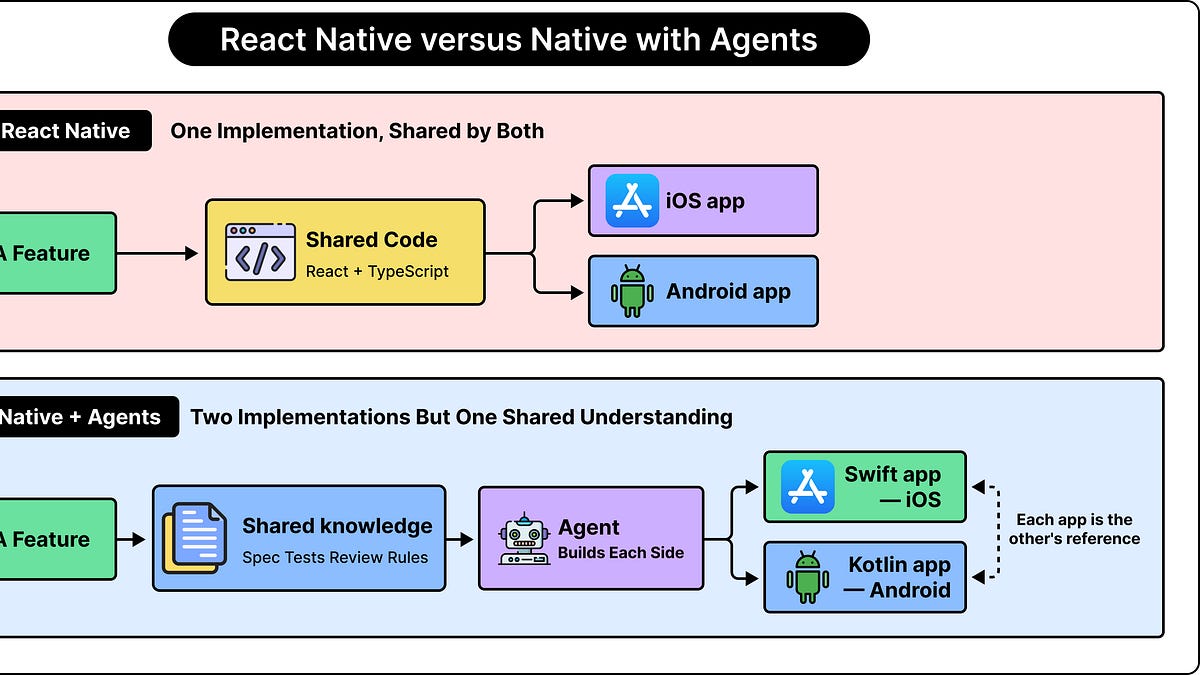
  8. Why Shopify Migrated From React Native

    Shopify migrated its mobile applications from React Native to native Swift and Kotlin because AI coding agents made the cost of duplicating features across platforms negligible. Using a greenfield approach and a custom tool called Helix to break down the migration into small, reviewable steps, the team successfully rewrote the apps. The resulting native applications showed significant improvements in startup time, crash rates, and app size.

    DEPTH ■■■■■11 min read5 days ago

    Sign in to save and rate

  9. Beyond container image signing: How we enforce software supply chain policies at Datadog

    Container image signing alone cannot detect upstream security compromises occurring before the image is signed. To address this, the engineering team built an internal system called Turnstile that generates cryptographically signed attestations across an artifact's life cycle and evaluates them against environment-specific policies at deployment time. This approach enables the organization to enforce strict security and compliance requirements at scale without disrupting developer workflows.

    DEPTH ■■■■■15 min read5 days ago

    Sign in to save and rate

  10. The Thin Orchestrator: How We Made Our AI Agents More Reliable by Giving the Router Less to Do

    Meta engineers reduced hallucinations and improved reliability in their data pipeline agents by replacing a single heavyweight LLM orchestrator with a thin deterministic router and fourteen specialized subagents. The thin orchestrator handles routing and reliability checks through a fixed protocol, while isolated subagents execute domain reasoning. This architecture reduced configuration preparation time from a day to under an hour.

    DEPTH ■■■■■7 min read6 days ago

    Machine Learning

    Sign in to save and rate

  11. Bringing post-quantum cryptography to geographically fenced key management

    Cloudflare introduced a post-quantum geographically restricted key manager in closed beta to enforce data sovereignty and protect customers against harvest-now-decrypt-later attacks. The team implemented a hybrid ML-KEM-768 and X25519 cryptographic design that separates globally distributed wrapped private keys from regionally restricted root keys. This ensures that decryption keys are only accessible within authorized geographical boundaries and fails closed if validation fails.

    DEPTH ■■■■■12 min read2 days ago

    Security

    Sign in to save and rate

  12. MCP standardized tools. Now we need the infrastructure around them.

    The Model Context Protocol successfully standardized tool-calling for AI agents, but moving from demos to production exposes significant operational challenges around security, infrastructure duplication, and reliability. Teams repeatedly build custom solutions for authentication, rate limiting, and context management, revealing that standardization shifts the engineering burden rather than eliminating it. Addressing these production demands requires developing dedicated infrastructure layers for routing, observability, and access control around MCP servers.

    DEPTH ■■■■■8 min read9 days ago

    Machine Learning

    Sign in to save and rate

  13. When Software Meets Hardware

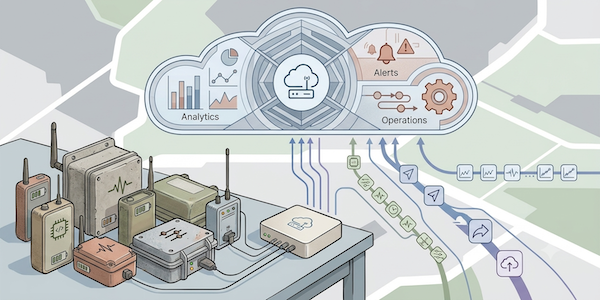
    A software engineering team modernizing a large-scale retail IoT system of 800,000 battery-powered sensors faced challenges integrating software practices with embedded hardware. By building physical sensor farms, virtual emulators, and self-diagnosing firmware, the team learned to design for intermittent connectivity, power efficiency, and fleet-level observability. The project succeeded by treating the physical world, hardware constraints, and engineering environments as core parts of the system lifecycle.

    DEPTH ■■■■■12 min read10 days ago

    Sign in to save and rate

  14. How Shopify turns open models into task experts

    Shopify uses a continual learning flywheel to post-train open models, such as NVIDIA Nemotron, to serve as dedicated subagents for specific tasks like GraphQL generation. By optimizing inference and utilizing automated self-healing to generate training data from production failures, the team successfully created task experts that outperform frontier models while reducing serving costs by 90-98% and improving response times.

    DEPTH ■■■■■5 min read4 days ago

    Architecture

    Sign in to save and rate

  15. I don't trust ON DELETE CASCADE

    Postgres ON DELETE CASCADE can cause production outages, replication failures, and performance degradation during large deletions or schema migrations due to long-running transactions holding locks and generating massive WAL. The author recommends using soft deletes with batched background cleanup instead to keep transactions short and bounded. This approach avoids table locks and simplifies data recovery.

    DEPTH ■■■■■5 min read4 days ago

    PostgreSQL

    Sign in to save and rate

  16. Better HTTP/1 connection reuse

    Failing to read an HTTP/1 response body completely prevents connection reuse, forcing clients to repeatedly pay the high cost of TCP and TLS handshakes. While developers previously had to implement complex manual body-draining logic, Go 1.27 introduces automatic asynchronous response draining in the net/http package. This improvement allows developers to simply close response bodies without worrying about connection pooling performance.

    DEPTH ■■■■■7 min read11 days ago

    Sign in to save and rate

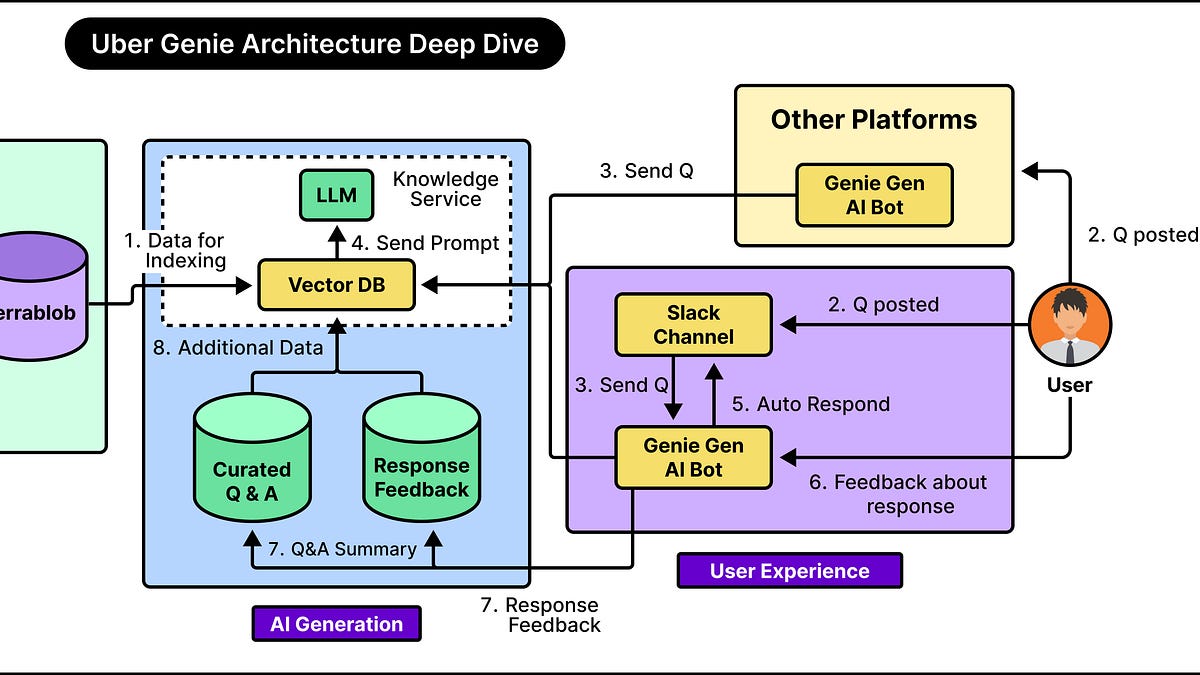
  17. How Uber Built a Genie to Answer Questions Correctly

    Uber built an internal AI assistant called Genie to answer engineering support questions directly within Slack. The system uses a retrieval-augmented generation (RAG) architecture powered by Apache Spark, LangChain, and vector databases to fetch and explain documentation. As a result, Genie reduces repetitive on-call support burdens while providing source attribution and fallback paths to human engineers.

    DEPTH ■■■■■13 min read6 days ago

    Sign in to save and rate

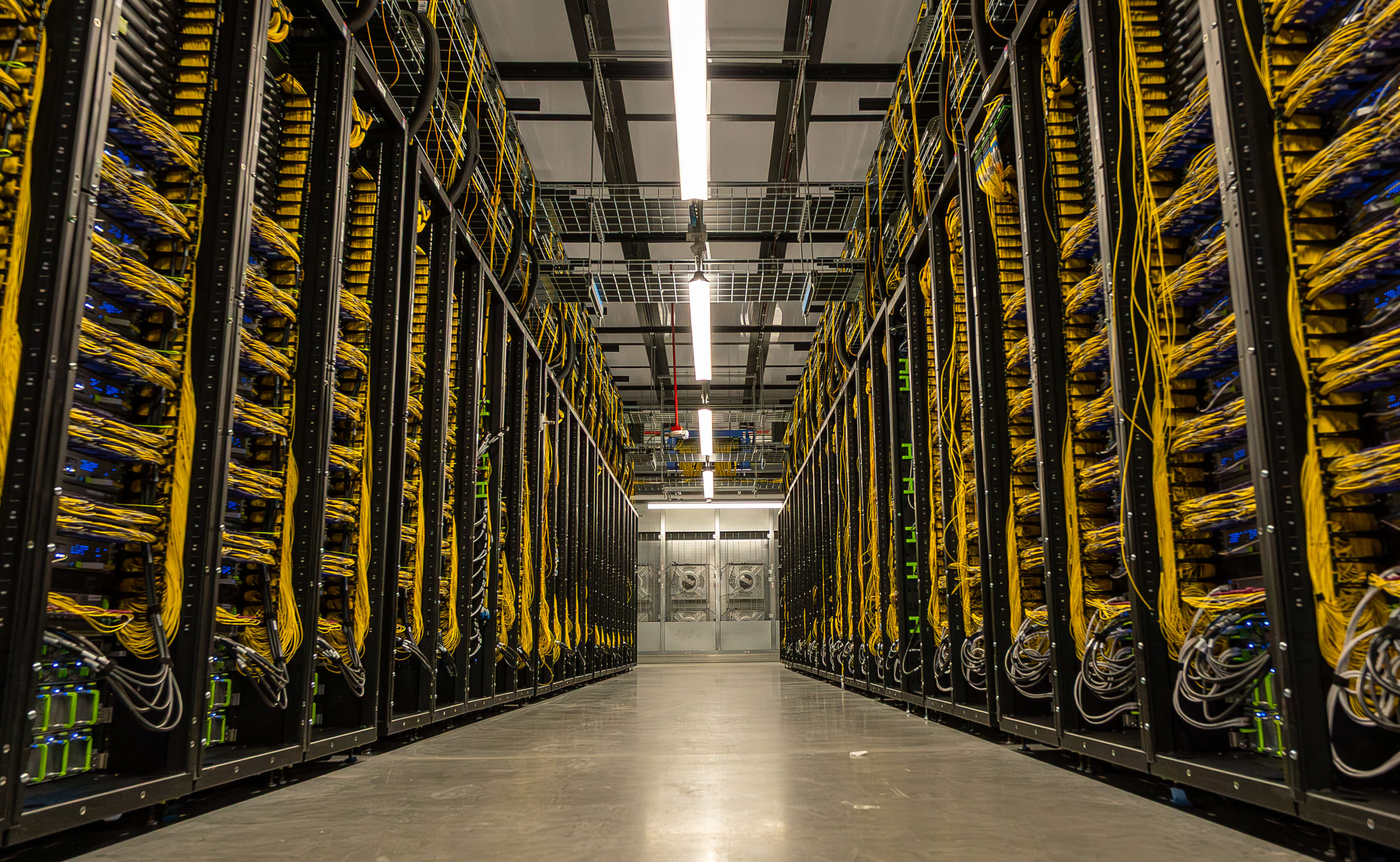
  18. Inside Prometheus: Meta’s Journey to a Gigawatt-Scale Supercluster

    Meta built Prometheus, a gigawatt-scale AI supercluster designed to scale up to one million GPUs using multi-generation NVIDIA hardware and specialized backend Ethernet networks. The team achieved high goodput and significantly reduced system interruptions by implementing an in-rack sparing strategy, parallelism-aware fault tolerance, and close co-engineering with vendors. These infrastructure advancements allowed the team to successfully train frontier foundational models like Muse Wonder.

    DEPTH ■■■■■17 min read6 days ago

    InfrastructureMachine Learning

    Sign in to save and rate

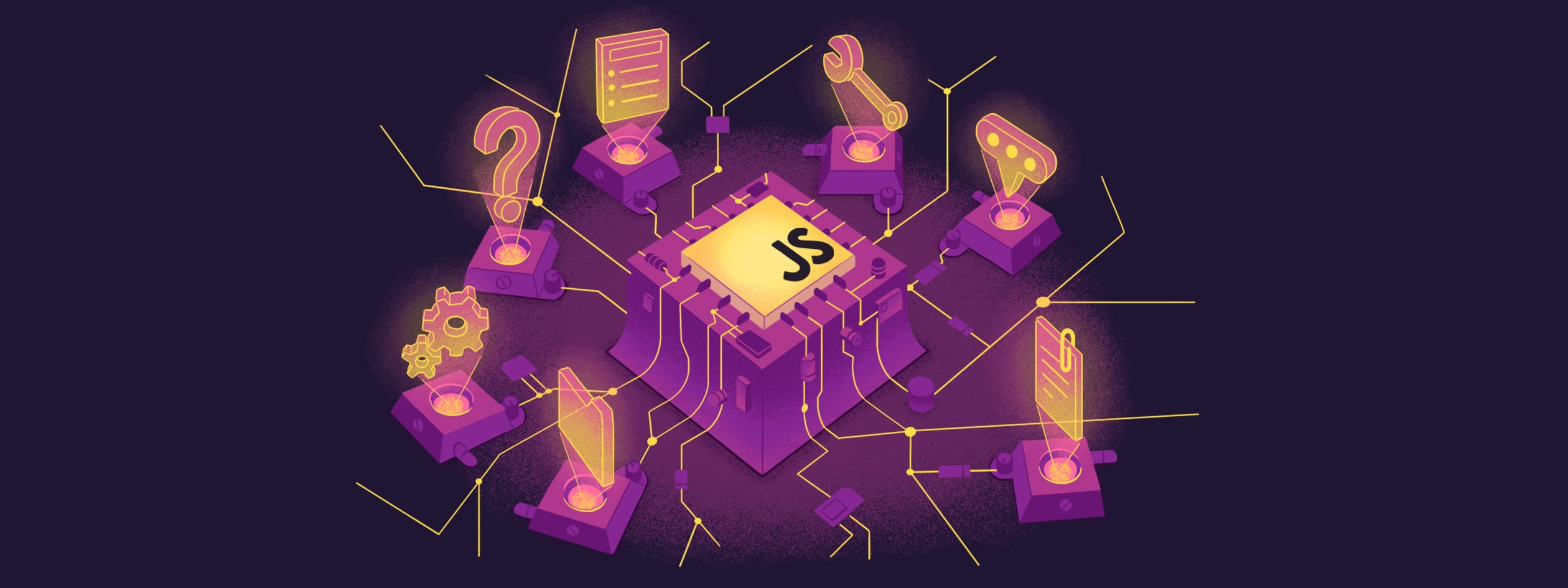
  19. Sentry JavaScript SDK v11 adds tracing for all JS platforms

    Sentry replaced its OpenTelemetry-based JavaScript SDK instrumentation with a source-code transformation approach using diagnostics channels in version 11. This change removes reliance on Node-specific module loader hooks, enabling reliable tracing across non-Node runtimes like Deno, Bun, and Cloudflare Workers, while also supporting bundled applications. The result is a simplified architecture that reduces bundle weight and fixes previous limitations with load order and immutable exports.

    DEPTH ■■■■■13 min read2 weeks ago

    Sign in to save and rate

  20. From 2,500 requests to 24: Rebuilding star history without the stargazers

    GitHub faced abuse and performance issues because tools were scraping user identities to reconstruct repository star history. The engineering team collaborated with maintainers to build a purpose-built aggregate endpoint that returns daily star counts without identities and filters by time before aggregation. This reduced request volume from thousands to a few dozen and eliminated heavy database scans.

    DEPTH ■■■■■8 min read10 days ago

    Microservices

    Sign in to save and rate