/ THE FEED /

Read what ships.

Deep, recent reads ranked by depth and freshness.

  1. From 2,500 requests to 24: Rebuilding star history without the stargazers

    GitHub faced abuse and performance issues because tools were scraping user identities to reconstruct repository star history. The engineering team collaborated with maintainers to build a purpose-built aggregate endpoint that returns daily star counts without identities and filters by time before aggregation. This reduced request volume from thousands to a few dozen and eliminated heavy database scans.

    DEPTH ■■■■■8 min read11 days ago

    Microservices

    Sign in to save and rate

  2. Multi-region disaster recovery for Amazon API Gateway WebSocket APIs

    Real-time applications using WebSocket connections face disruptions during regional AWS outages because connections are tied to specific regions. The team implemented an active-passive multi-region disaster recovery architecture using Route 53 DNS failover, DynamoDB Global Tables, an automated canary health probe, and client-side exponential backoff with jitter. This design automatically detects failures, redirects traffic, and restores client state without manual intervention.

    DEPTH ■■■■■10 min read11 days ago

    Sign in to save and rate

  3. OpenTelemetry Collector Configuration for LLM Observability

    LLM applications emit bulky telemetry containing sensitive user content and disparate attribute names. The team uses an OpenTelemetry Collector pipeline to normalize, enrich, redact, and export this data to Honeycomb. This centralizes control, protects data before it leaves the network, and maintains consistent observability.

    DEPTH ■■■■■12 min read2 weeks ago

    Sign in to save and rate

  4. Cross-store product clustering across millions of stores

    Shopify needed to group identical product listings from millions of different merchants under a single global identifier. To solve this at scale without comparing every possible pair, the team implemented a multi-stage pipeline using vector retrieval, a tiered scoring system of ML models, and a bounded graph clustering approach. This architecture successfully standardizes product data across the entire platform while controlling computational costs.

    DEPTH ■■■■■13 min read5 days ago

    Architecture

    Sign in to save and rate

  5. Are Harnesses Worth the Cost?

    An experiment was conducted to evaluate whether behavioral harnesses improve coding agent reliability when building a complex backend-for-frontend service. While frontier models succeeded consistently with or without a harness, the harness significantly increased token usage, time, and cost without improving final output. However, for a cost-optimized model, the harness improved success rates from 30 percent to 100 percent.

    DEPTH ■■■■■17 min read12 days ago

    Sign in to save and rate

  6. The Shift to cgroup v2 in Kubernetes: What You Need to Know

    Kubernetes has deprecated cgroup v1 in favor of cgroup v2, with complete removal scheduled for future releases. The transition requires migrating Linux nodes, updating container runtimes, and verifying kernel compatibility. Adopting cgroup v2 enables advanced features such as Memory QoS, improved OOM handling, and pressure stall information metrics.

    DEPTH ■■■■■12 min read2 weeks ago

    Sign in to save and rate

  7. Cutting our inference bill by 68% by being obsessive about optimization

    An engineering team investigated a steady rise in AI code review costs and found that cache misses and redundant model calls were driving up expenses. By restructuring system prompts to enable cross-repository prompt caching, eliminating wasted tool calls, and switching to more efficient models, the team cut inference costs by 68% while also significantly improving review latency.

    DEPTH ■■■■■15 min read6 days ago

    Machine Learning

    Sign in to save and rate

  8. Make every AI credit count: See, cap, and reduce agent spend

    Uncontrolled AI agent spending can be mitigated by combining open-weight models, centralized context graphs to reduce retries, and usage analytics with credit caps. GitLab introduced these capabilities in its Duo Agent Platform to help platform teams trace, limit, and optimize AI credit consumption. The resulting architecture matches specific tasks to lower-cost models while maintaining task completion quality.

    DEPTH ■■■■■6 min read12 days ago

    Sign in to save and rate

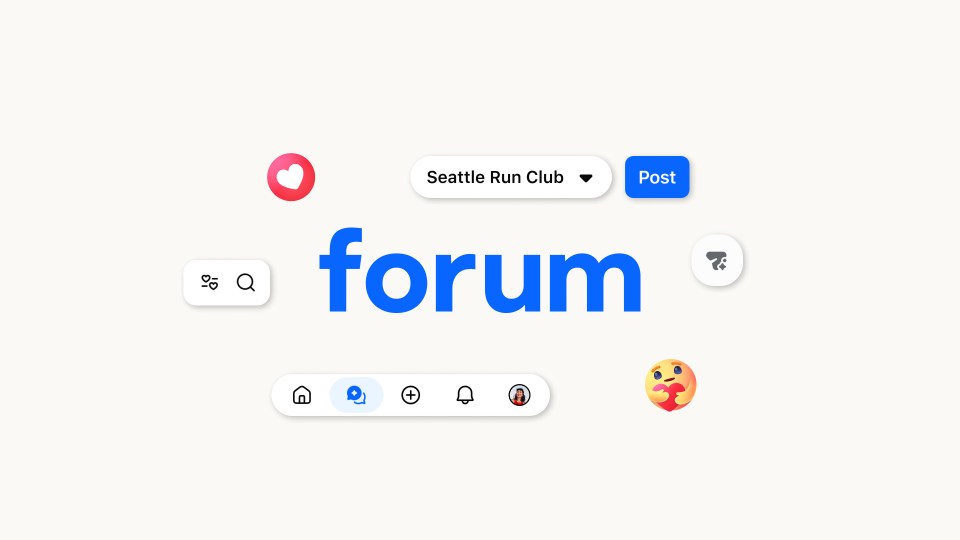
  9. How Meta Built Forum With AI-Native Engineering

    Meta engineers built the Forum app using a human-on-the-loop AI agent workflow that automated planning, building, testing, and verification. By shifting focus from code generation to automated verification, tooling improvements, and architectural legibility, the team reached feature parity in eight weeks while catching systemic memory issues early.

    DEPTH ■■■■■8 min read10 days ago

    FrontendMobile

    Sign in to save and rate

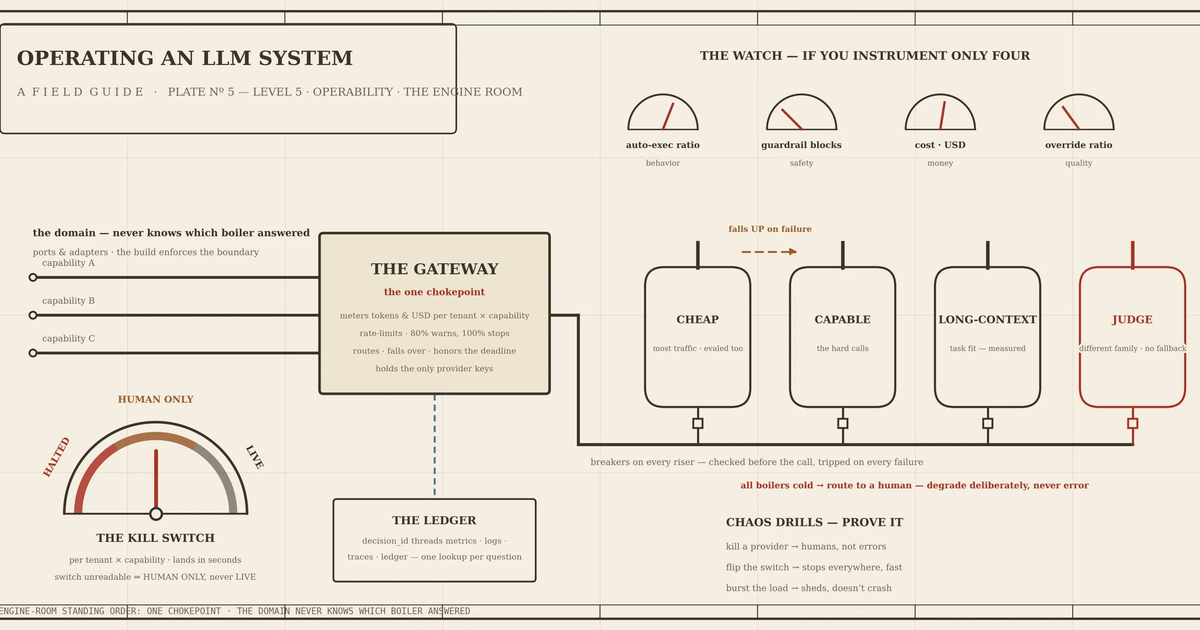
  10. Part 5: Operating an LLM system: observability, cost, routing, and the platform underneath

    This post provides a concrete specification for the operability layer of production LLM systems, covering observability signals, structured logging, cost controls, routing, and failover mechanisms. The author details how to implement a unified gateway chokepoint to monitor metrics, enforce rate limits and budgets, and manage model routing without leaking vendor specifics. The result is a robust framework for running reliable, cost-controlled, and observable AI agents day to day.

    DEPTH ■■■■■19 min read2 weeks ago

    Machine Learning

    Sign in to save and rate

  11. Reducing Android scope-sync overhead in Sentry Flutter

    The Sentry Flutter team investigated scope-sync overhead on Android and found redundant data normalization across isolates alongside unnecessary buffer copies during JSON encoding. By removing the duplicate normalization and encoding directly to UTF-8 bytes, the team reduced processing time by 27 to 30 percent across benchmarked payloads.

    DEPTH ■■■■■4 min read2 weeks ago

    Sign in to save and rate

  12. How UTS established a modern curriculum data services foundation on AWS

    University of Technology Sydney rearchitected its curriculum data integration using serverless AWS services to decouple systems of record from downstream consumers. By implementing domain-driven design with an event-driven architecture and purpose-built persistence layers, the team achieved zero production incidents, low latency, and reduced operational overhead while managed by a single engineer.

    DEPTH ■■■■■9 min read11 days ago

    Sign in to save and rate

  13. Building Overexposed: understanding application exposure

    The team built an automated scanner called Overexposed to track internet-facing services and verify access controls across Kubernetes and Cloud Run. By querying live cloud inventories and probing endpoints like an outsider, the scanner classifies exposure while avoiding false assumptions from static config files. As a result, the engineering organization improved accuracy and significantly reduced inconclusive findings over time.

    DEPTH ■■■■■8 min read5 days ago

    Sign in to save and rate

  14. Evolving our calendar assistant Reclaim to be AI-native without starting over

    Dropbox engineers evolved their calendar assistant, Reclaim, to support natural-language AI requests by building a custom agent platform that integrates with existing scheduling logic. They utilized a shared action system and a Preview Mode backed by Redis to ensure AI suggestions are consistent and reviewable before affecting real calendars. This approach allows the product to adopt AI capabilities without fragmenting its core architecture or duplicating functionality.

    DEPTH ■■■■■7 min read3 weeks ago

    InfrastructureMachine Learning

    Sign in to save and rate

  15. Scaling Kubernetes Workloads with Node Swap

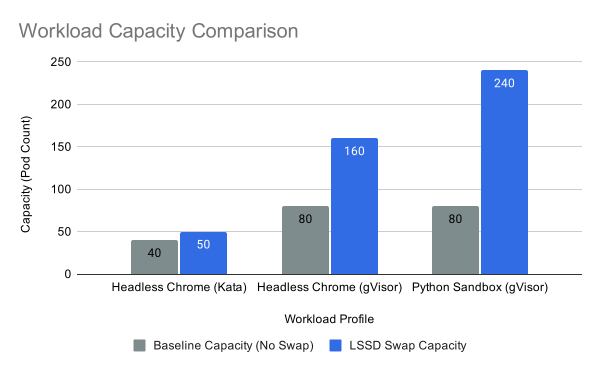
    Kubernetes memory limits often cap node density for bursty agentic AI workloads that sit idle with large memory footprints. To solve this, the engineering team benchmarked Kubernetes v1.34 node swap backed by fast NVMe Local SSDs across CI/CD builds, headless browsers, and Python sandboxes. The approach successfully increased pod density up to three times without significant latency costs.

    DEPTH ■■■■■6 min read2 weeks ago

    Sign in to save and rate

  16. What gets TOASTed in Postgres

    This post examines how PostgreSQL uses TOAST to manage oversized rows and variable-length columns through compression and off-row storage. It compares the pglz and LZ4 compression algorithms across different workloads, highlighting trade-offs in search windows, file sizes, and CPU overhead. The analysis demonstrates how these mechanisms impact storage efficiency and read performance for large text and JSON data.

    DEPTH ■■■■■12 min read13 days ago

    PostgreSQL

    Sign in to save and rate

  17. Powering AI-led research through simulation

    The engineering team built a self-contained simulation platform called sim-rs to model marketplace dispatch dynamics and accelerate experimentation. By connecting automated software agents to this simulator with strict safety safeguards, the team successfully optimized strategy policies and simulator performance. This closed-loop lab environment allows agents to test ideas rapidly while ensuring that only valid, production-ready improvements are produced.

    DEPTH ■■■■■10 min read2 weeks ago

    Machine Learning

    Sign in to save and rate

  18. Arch-specific SIMD in Go

    Go 1.27 introduces the archsimd package to provide low-level architecture-specific SIMD intrinsics for amd64, arm64, and wasm without requiring assembly. The API uses sensible naming conventions, zero-cost type reinterpretation, and opaque masks to improve usability and maintainability while achieving high performance. The resulting design enables developers to write optimized vectorized code safely with proper runtime CPU feature checking and compiler optimizations.

    DEPTH ■■■■■12 min read3 weeks ago

    Sign in to save and rate

  19. LLM Prompt Caching Versus Semantic Caching

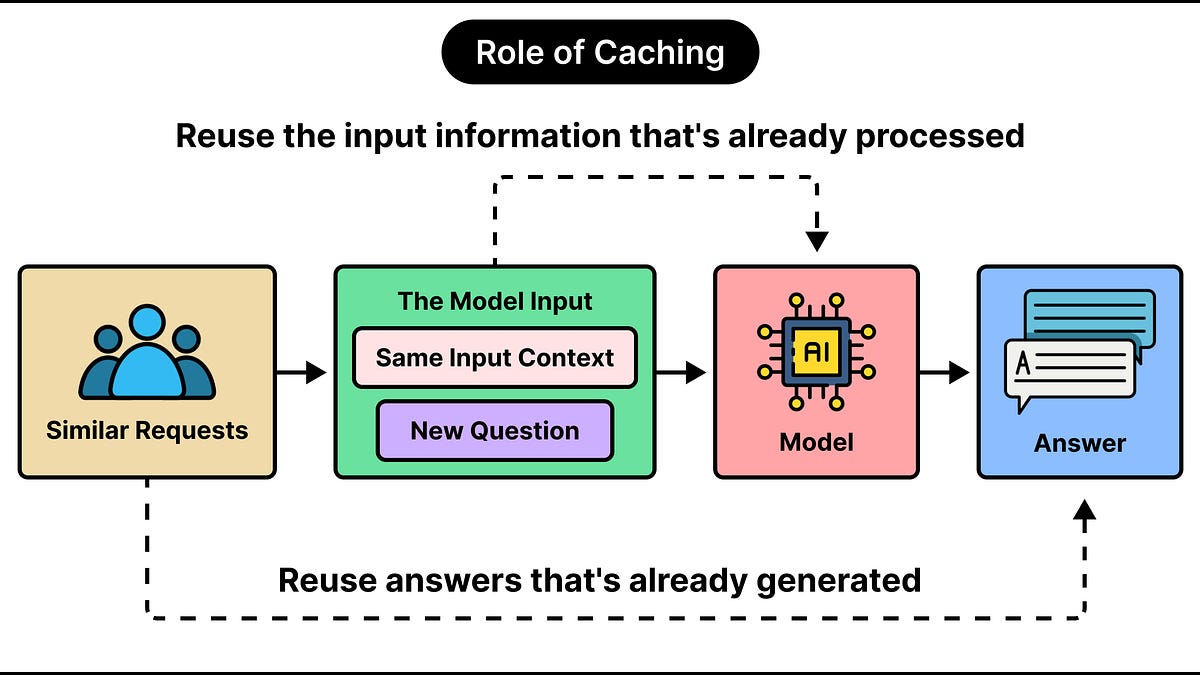
    This post compares prompt caching and semantic caching for large language models to reduce costs and latency. Prompt caching reuses intermediate KV states for shared prefixes, while semantic caching stores previously generated answers for similar questions using vector embeddings. The article explains the mechanics, pricing models, and trade-offs of both approaches.

    DEPTH ■■■■■16 min read4 days ago

    Sign in to save and rate

  20. Yandex outage: Data shows that instead of going dark, malicious bots went on the move

    Following physical strikes on Yandex data centers, overall HTTP traffic from the network dropped significantly, leading to speculation that malicious bot farms had been disabled. However, traffic analysis revealed that search crawling simply decreased while malicious automation quickly migrated to other hosting providers with identical fingerprints. Consequently, overall malicious bot traffic remained flat, demonstrating that network disruptions do not stop portable automated workloads.

    DEPTH ■■■■■8 min read10 days ago

    Incidents & Postmortems

    Sign in to save and rate