/ THE FEED /

Read what ships.

Deep, recent reads ranked by depth and freshness.

  1. Debugging our AI search assistant with agent tracing

    The Sentry team developed a Search Query Assistant to convert natural language prompts into search syntax, which initially failed on custom numerical attributes due to incorrect field formatting in the system prompt. By utilizing their own AI Conversation view and agent tracing, they identified the root cause in the tool call results and system prompt generation. This observability workflow enabled them to reproduce, fix, and verify the issue both locally and in production.

    DEPTH ■■■■■4 min read6 weeks ago

    Sign in to save and rate

  2. Why your platform team shouldn't build an AI context layer (even though they probably could)

    Engineering teams often underestimate the long-term maintenance required to build and run an internal AI context layer, mistaking a simple vector database for a fully governed knowledge pipeline. Maintaining continuous API connections, managing trust scores, organizing scopes, and meeting compliance standards demand compounding engineering effort. Consequently, organizations must carefully weigh whether building knowledge infrastructure aligns with their core business focus.

    DEPTH ■■■■■6 min read11 days ago

    Machine Learning

    Sign in to save and rate

  3. Your next job doesn’t have a title yet: Emerging role skills Q&A with Cory Hymel of Andela

    Researchers analyzed thousands of job postings to understand how artificial intelligence is changing technical skill requirements. The findings indicate that instead of creating a workforce of pure generalists, the market is developing distinct new specialized skill bundles and hybrid roles. Consequently, organizations are facing talent debt as the half-life of technical skills rapidly shrinks.

    DEPTH ■■■■■15 min read12 days ago

    Testing

    Sign in to save and rate

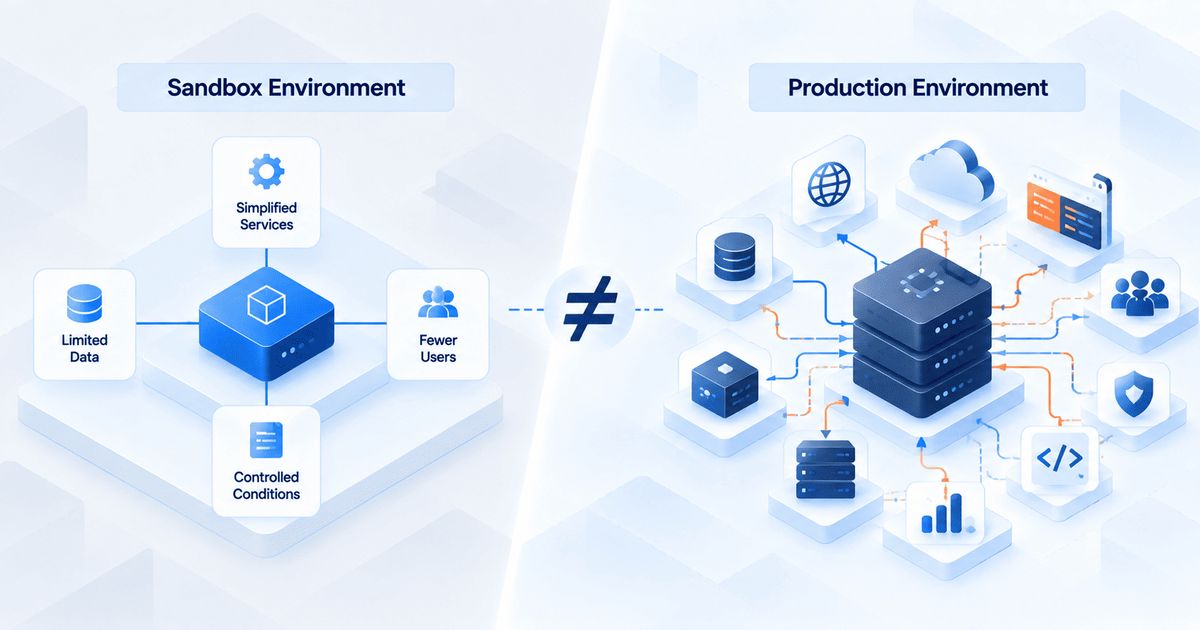
  4. Why Your Sandbox Never Quite Matches Production (And Why That's Fine)

    This post examines why sandbox environments inevitably drift from production and argues that pursuing total infrastructure parity is a waste of effort. Instead of chasing impossible replication, teams should focus on maintaining accurate behavioral contracts and updating mock simulations when upstream services deploy. The result is a targeted approach that prevents integration failures caused by stale assumptions rather than expensive, low-value environmental matching.

    DEPTH ■■■■■6 min read13 days ago

    Sign in to save and rate

  5. A Treatise on Model Oriented Programming Languages

    An author reflects on a custom model-oriented programming language and IDE they built thirteen years ago, outlining principles and forms of model-oriented development. The article defines model structures and data using a restaurant scenario to compare informal, inline, coupled, and decoupled modeling approaches. Ultimately, the author aims to inspire further research and development into model-oriented programming languages.

    DEPTH ■■■■■33 min read2 weeks ago

    Sign in to save and rate

  6. Implementing a Modular Master-Agent Telemetry & Diagnostic Framework in Python: Prime-Sentinel Command (PSC)

    The post introduces the Prime-Sentinel Command architecture, a master-agent pattern designed to separate centralized governance from autonomous edge execution in distributed telemetry systems. It provides an object-oriented Python implementation where Sentinels handle localized diagnostics and a Prime controller manages orchestration and telemetry intake. This separation avoids bottlenecks and improves fault isolation in health-checking pipelines.

    DEPTH ■■■■■3 min read2 weeks ago

    Sign in to save and rate

  7. Constraints that make developers faster

    Julien Verlaguet, CEO of Skip Labs, discusses the design of programming languages and tooling to prevent developer mistakes. The conversation explores balancing code constraints with developer tolerance, the nuances of type systems across different use cases, and how AI agents change the requirements for constraint-based tooling. The key takeaway emphasizes that language choice and constraints must match the specific use case and context rather than a universal standard.

    DEPTH ■■■■■23 min read3 weeks ago

    Machine Learning

    Sign in to save and rate

  8. Your phone is AI’s newest hardware

    An AI research lab develops on-device transformer models and custom kernel-level compilation to power mobile agentic software. By writing optimized edge code and building internal testing environments, the team achieved high execution reliability on mobile operating tasks. The resulting system addresses safety and human-in-the-loop control by restricting access to sensitive applications like banking.

    DEPTH ■■■■■27 min read3 weeks ago

    Machine Learning

    Sign in to save and rate