/ THE FEED /

Read what ships.

Deep, recent reads ranked by depth and freshness.

  1. Automate medical coding with Step Functions and Amazon Bedrock AgentCore

    Automating medical coding requires a hybrid approach that combines deterministic orchestration with bounded agentic reasoning to ensure safety, auditability, and human oversight. The team built a workflow using AWS Step Functions, AWS Lambda, and Amazon Bedrock AgentCore that evaluates terms cheapest-first via block-lists, exact matching, and finally an LLM agent for ambiguous cases. This design successfully autocodes confident cases while routing ambiguous ones to human reviewers with full audit trails and decision explanations.

    DEPTH ■■■■■15 min read4 days ago
    AWS

    Sign in to save and rate

  2. How Meta Built Forum With AI-Native Engineering

    Meta engineers built the Forum app using a human-on-the-loop AI agent workflow that automated planning, building, testing, and verification. By shifting focus from code generation to automated verification, tooling improvements, and architectural legibility, the team reached feature parity in eight weeks while catching systemic memory issues early.

    DEPTH ■■■■■8 min read10 days ago

    FrontendMobile

    Sign in to save and rate

  3. Improving site performance by shipping more CSS

    GitHub faced performance degradation on server-side rendering and initial page loads due to scaling issues with its CSS-in-JS solution. The engineering team executed a multi-year migration to CSS Modules and eliminated dynamic styling props using incremental rollouts, wrapper components, and automation tools. This resulted in significant performance gains, including 55% faster server-side rendering and the complete removal of styled-components.

    DEPTH ■■■■■8 min read4 weeks ago

    FrontendPerformance

    Sign in to save and rate

  4. Shipping Media Over QUIC at Meta Scale for Instagram Live Ingest

    Meta deployed the emerging Media over QUIC (MoQ) protocol for Instagram Live ingest on iOS and Android to replace their legacy RUSH protocol. By using edge translation to avoid backend rewrites and a phased rollout strategy, the team achieved metric parity with the old protocol without regressions. This deployment establishes a foundation to extend MoQ across Meta's applications for lower-latency and more resilient video streaming.

    DEPTH ■■■■■8 min read13 days ago

    FrontendMobile

    Sign in to save and rate

  5. Front-End Web Deep Dive: Runtime Config

    Front-end web applications traditionally bake environment variables into build artifacts, requiring a full rebuild to change configurations across environments. To solve this, a new approach injects runtime environment variables directly into the HTML document's head element as data attributes via a Cloud Native Buildpack. This enables zero-rebuild configuration changes while remaining compatible with browser security standards like CSP.

    DEPTH ■■■■■3 min read10 days ago

    Frontend

    Sign in to save and rate

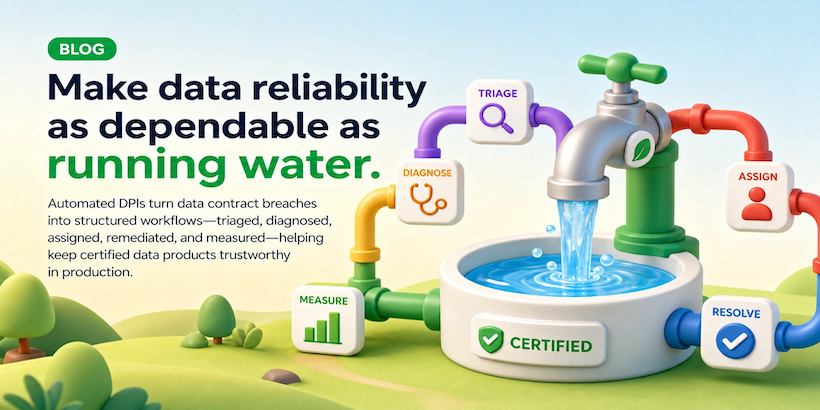
  6. Data Mesh at Grab (Part III): Operationalizing data reliability with automated DPIs

    Grab addressed runtime data reliability issues in its data mesh by implementing automated Data Production Issues (DPIs). The system uses an incident orchestrator to detect contract breaches, a Data Health API for cross-platform root cause analysis, and Hugo for automated remediation. This approach resolved 86.9 percent of incidents automatically and made mean time to resolve six times faster.

    DEPTH ■■■■■12 min read8 weeks ago

    DatabasesObservability

    Sign in to save and rate

  7. Taking a look under your agent’s hood

    This post discusses the challenges and methods of applying observability to AI agents, which combine traditional distributed systems telemetry with new requirements for monitoring LLMs and multi-step tool calls. The discussion highlights how non-deterministic agent behavior and increased speed of execution make continuous production feedback loops essential for upstream development. Ultimately, integrating observability data into automated testing and development loops helps teams iterate on agent performance.

    DEPTH ■■■■■25 min read2 weeks ago

    Machine LearningObservability

    Sign in to save and rate