/ THE FEED /

Read what ships.

Deep, recent reads ranked by depth and freshness.

  1. Origin Range Requests: Serving large files without range-request tuning

    Cloudflare replaced a legacy, fixed-size range caching design that suffered from bandwidth waste and memory pressure with a Pingora-based chunk coordinator. The new implementation dynamically combines cached chunks and aligned origin fetches to serve range requests accurately without manual tuning. This approach cut p99 time to first byte in half for R2 storage and reduced tiered cache traffic by six percent.

    DEPTH ■■■■■8 min read2 days ago

    DatabasesPerformanceRedis

    Sign in to save and rate

  2. We gave AI agents a mobile dev environment

    Engineering teams outgrew their local machines while running parallel AI mobile development agents, constrained by heavy builds and lack of iOS tools on Linux. To solve this, they built Remote Dev using warm pools of remote Macs connected via SSH alongside separate Linux VMs for Android virtualization, paired with agent skills and live browser streaming. This setup shifted workflow bottlenecks, increasing AI-merged pull requests from 6 percent to 61 percent.

    DEPTH ■■■■■9 min read3 days ago

    ArchitectureMobile

    Sign in to save and rate

  3. App stability at scale with a layered defense

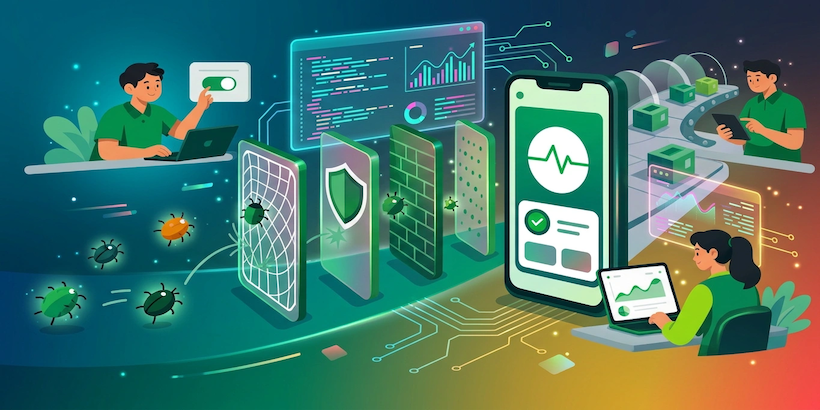
    To maintain app stability amidst rapid weekly releases and AI-generated code, Grab uses a layered defense strategy covering prevention, release gates, and incident response. This pipeline includes static analysis via custom lint rules, multiple tiers of automated and manual testing, a pre-production early access build, staged rollouts, and feature flags with instant kill switches. As a result, critical defects are caught early in the development lifecycle before reaching the wider production user base.

    DEPTH ■■■■■16 min read4 days ago

    MobileReliability

    Sign in to save and rate

  4. How Meta Built Forum With AI-Native Engineering

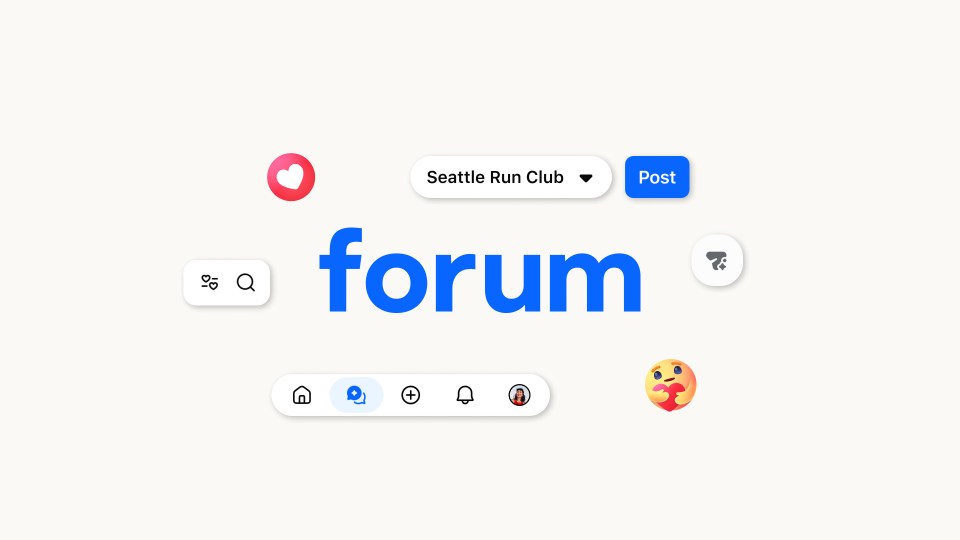
    Meta engineers built the Forum app using a human-on-the-loop AI agent workflow that automated planning, building, testing, and verification. By shifting focus from code generation to automated verification, tooling improvements, and architectural legibility, the team reached feature parity in eight weeks while catching systemic memory issues early.

    DEPTH ■■■■■8 min read10 days ago

    FrontendMobile

    Sign in to save and rate

  5. Inside Hyperdrive: How we solved a rare Hyperdrive MySQL caching bug

    During the beta of MySQL support for Hyperdrive, engineers investigated rare empty query responses and connection hangs occurring in 0.001% of requests. They discovered that sharing the data center cache between client and endpoint nodes caused protocol capability mismatches when translating MySQL wire messages. The team resolved the issue by standardizing the cache to always store responses encoded with canonical Hyperdrive capabilities.

    DEPTH ■■■■■9 min read11 days ago

    MySQL

    Sign in to save and rate

  6. Shipping Media Over QUIC at Meta Scale for Instagram Live Ingest

    Meta deployed the emerging Media over QUIC (MoQ) protocol for Instagram Live ingest on iOS and Android to replace their legacy RUSH protocol. By using edge translation to avoid backend rewrites and a phased rollout strategy, the team achieved metric parity with the old protocol without regressions. This deployment establishes a foundation to extend MoQ across Meta's applications for lower-latency and more resilient video streaming.

    DEPTH ■■■■■8 min read13 days ago

    FrontendMobile

    Sign in to save and rate

  7. Handling hot shards

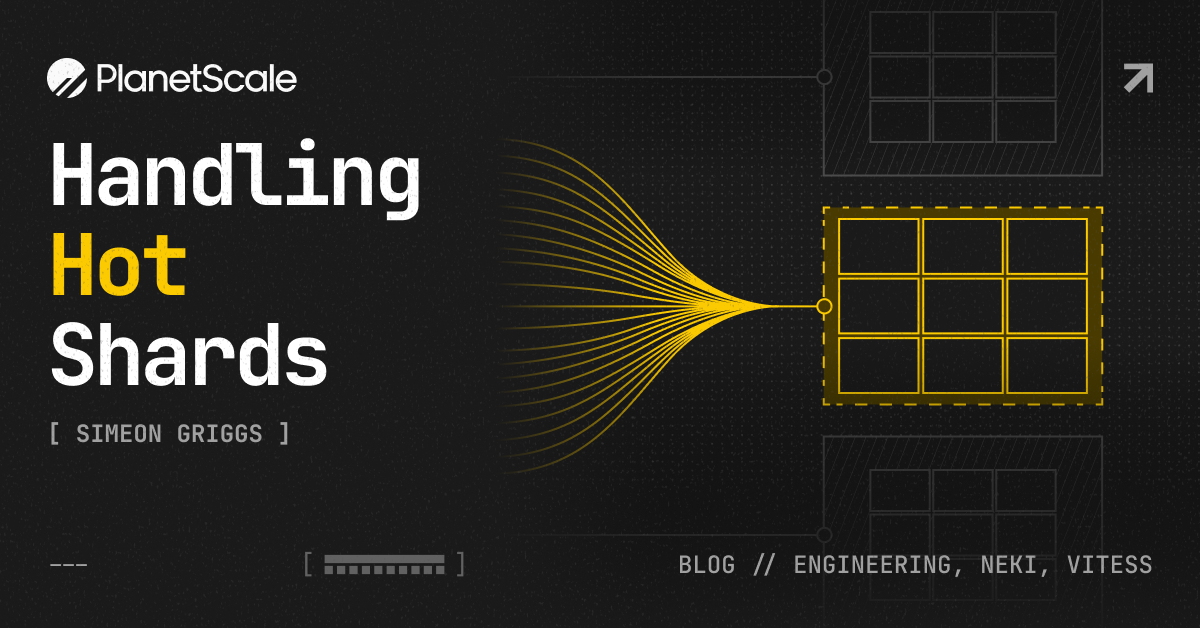
    Growing applications often encounter hot shards when certain tenants or data subsets outgrow initial sharding strategies based on workspace IDs. To mitigate this, teams can scale up resources, isolate large tenants into specific key ranges, or fundamentally change the shard key for problematic tables based on access patterns. Neki facilitates these adjustments by allowing declarative data topologies and online resharding without downtime.

    DEPTH ■■■■■7 min read3 weeks ago

    MySQLPostgreSQL

    Sign in to save and rate