/ THE FEED /

Read what ships.

Deep, recent reads ranked by depth and freshness.

  1. Shard design doesn't start from your tables

    Designing a sharded Postgres architecture requires grouping tables around shared query keys rather than starting from table structures alone. The post details how to configure shard groups, reference tables, SQL expressions in shard indexes, and global secondary indexes using Neki. This setup enables efficient single-shard queries and transactions while maintaining full Postgres semantics.

    DEPTH ■■■■■8 min read2 days ago
    PostgreSQL

    Sign in to save and rate

  2. We gave AI agents a mobile dev environment

    Engineering teams outgrew their local machines while running parallel AI mobile development agents, constrained by heavy builds and lack of iOS tools on Linux. To solve this, they built Remote Dev using warm pools of remote Macs connected via SSH alongside separate Linux VMs for Android virtualization, paired with agent skills and live browser streaming. This setup shifted workflow bottlenecks, increasing AI-merged pull requests from 6 percent to 61 percent.

    DEPTH ■■■■■9 min read3 days ago

    ArchitectureMobile

    Sign in to save and rate

  3. The bridge to agent-scale Git infrastructure

    GitHub faced infrastructure capacity limits and a 25ms cross-region network round trip when migrating repositories to Azure. The team changed the storage quorum from repository-wide locks to per-reference serialization and introduced ephemeral virtual replicas backed by object storage. This raised write throughput, prevented slow replicas from blocking traffic, and decoupled read scaling from the write quorum.

    DEPTH ■■■■■8 min read4 days ago

    Infrastructure

    Sign in to save and rate

  4. App stability at scale with a layered defense

    To maintain app stability amidst rapid weekly releases and AI-generated code, Grab uses a layered defense strategy covering prevention, release gates, and incident response. This pipeline includes static analysis via custom lint rules, multiple tiers of automated and manual testing, a pre-production early access build, staged rollouts, and feature flags with instant kill switches. As a result, critical defects are caught early in the development lifecycle before reaching the wider production user base.

    DEPTH ■■■■■16 min read4 days ago

    MobileReliability

    Sign in to save and rate

  5. Cutting our inference bill by 68% by being obsessive about optimization

    An engineering team investigated a steady rise in AI code review costs and found that cache misses and redundant model calls were driving up expenses. By restructuring system prompts to enable cross-repository prompt caching, eliminating wasted tool calls, and switching to more efficient models, the team cut inference costs by 68% while also significantly improving review latency.

    DEPTH ■■■■■15 min read6 days ago

    Machine Learning

    Sign in to save and rate

  6. The Thin Orchestrator: How We Made Our AI Agents More Reliable by Giving the Router Less to Do

    Meta engineers reduced hallucinations and improved reliability in their data pipeline agents by replacing a single heavyweight LLM orchestrator with a thin deterministic router and fourteen specialized subagents. The thin orchestrator handles routing and reliability checks through a fixed protocol, while isolated subagents execute domain reasoning. This architecture reduced configuration preparation time from a day to under an hour.

    DEPTH ■■■■■7 min read6 days ago

    Machine Learning

    Sign in to save and rate

  7. MCP standardized tools. Now we need the infrastructure around them.

    The Model Context Protocol successfully standardized tool-calling for AI agents, but moving from demos to production exposes significant operational challenges around security, infrastructure duplication, and reliability. Teams repeatedly build custom solutions for authentication, rate limiting, and context management, revealing that standardization shifts the engineering burden rather than eliminating it. Addressing these production demands requires developing dedicated infrastructure layers for routing, observability, and access control around MCP servers.

    DEPTH ■■■■■8 min read10 days ago

    Machine Learning

    Sign in to save and rate

  8. I don't trust ON DELETE CASCADE

    Postgres ON DELETE CASCADE can cause production outages, replication failures, and performance degradation during large deletions or schema migrations due to long-running transactions holding locks and generating massive WAL. The author recommends using soft deletes with batched background cleanup instead to keep transactions short and bounded. This approach avoids table locks and simplifies data recovery.

    DEPTH ■■■■■5 min read4 days ago

    PostgreSQL

    Sign in to save and rate

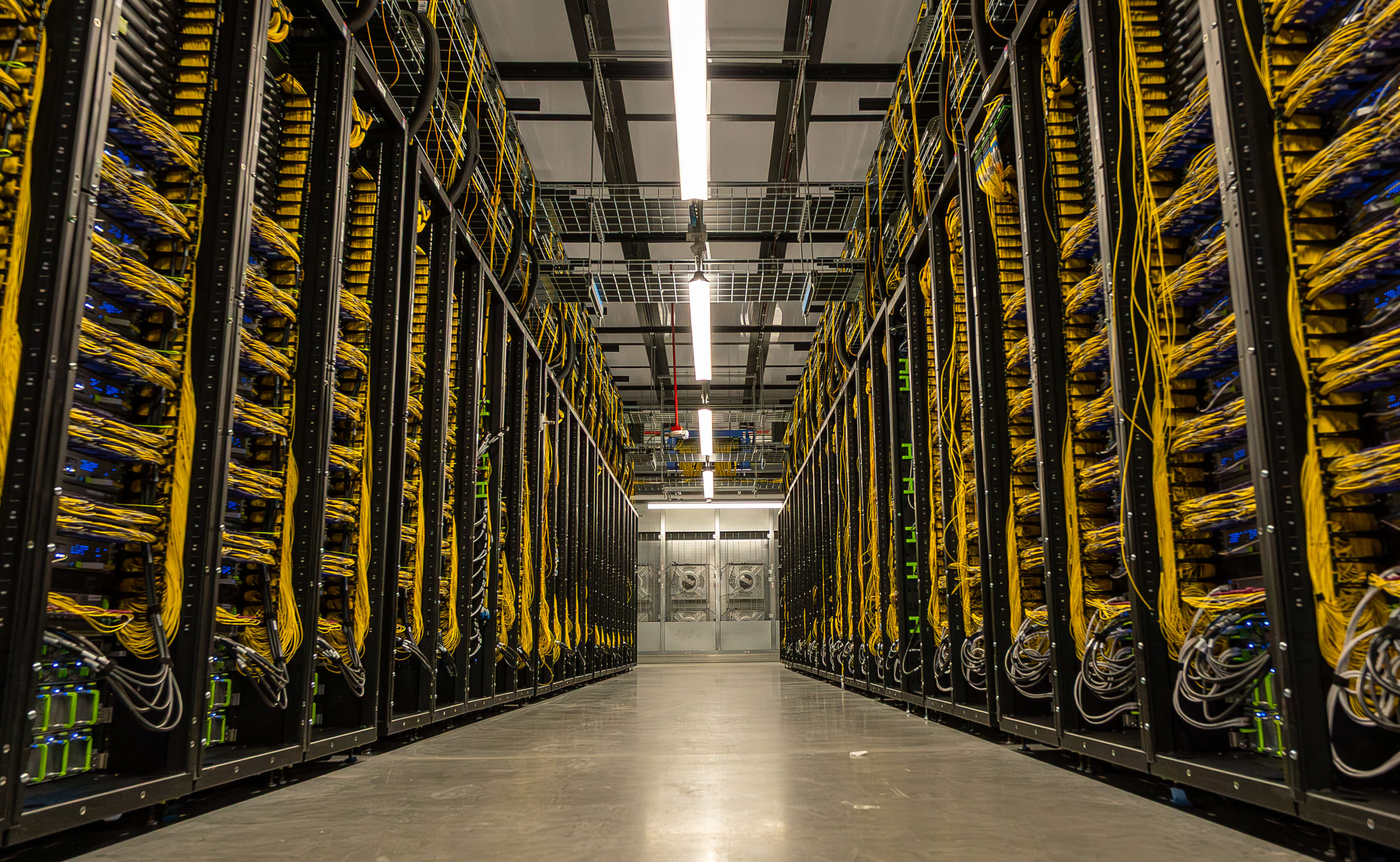
  9. Inside Prometheus: Meta’s Journey to a Gigawatt-Scale Supercluster

    Meta built Prometheus, a gigawatt-scale AI supercluster designed to scale up to one million GPUs using multi-generation NVIDIA hardware and specialized backend Ethernet networks. The team achieved high goodput and significantly reduced system interruptions by implementing an in-rack sparing strategy, parallelism-aware fault tolerance, and close co-engineering with vendors. These infrastructure advancements allowed the team to successfully train frontier foundational models like Muse Wonder.

    DEPTH ■■■■■17 min read6 days ago

    InfrastructureMachine Learning

    Sign in to save and rate

  10. Rewinding the exponential: How we keep hardware usage down

    Cloudflare tackled exponential traffic growth against linear hardware growth by continuously evolving their data pipeline architecture over five years. Key optimizations included breaking up monolithic schemas, switching to zstd compression, decoupling pipeline transit from database replication, decentralizing sampling, and moving aggregations earlier in the pipeline. These strategies significantly reduced backbone bandwidth usage, network congestion, and storage requirements while preserving data quality.

    DEPTH ■■■■■12 min read12 days ago

    Infrastructure

    Sign in to save and rate

  11. How Meta Built Forum With AI-Native Engineering

    Meta engineers built the Forum app using a human-on-the-loop AI agent workflow that automated planning, building, testing, and verification. By shifting focus from code generation to automated verification, tooling improvements, and architectural legibility, the team reached feature parity in eight weeks while catching systemic memory issues early.

    DEPTH ■■■■■8 min read10 days ago

    FrontendMobile

    Sign in to save and rate

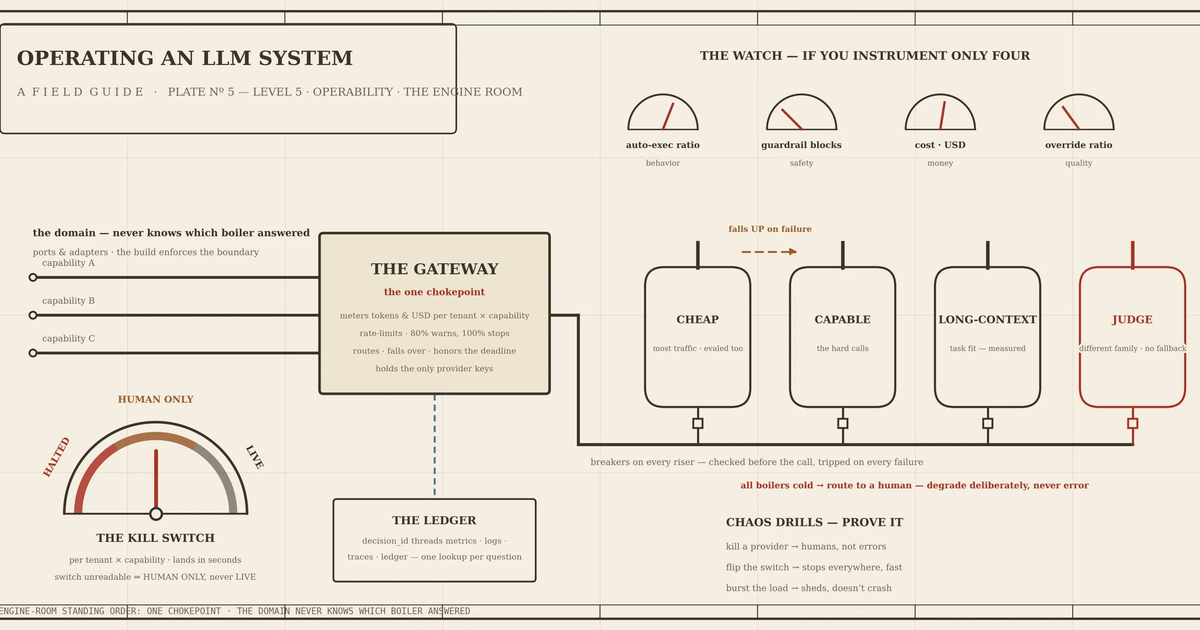
  12. Part 5: Operating an LLM system: observability, cost, routing, and the platform underneath

    This post provides a concrete specification for the operability layer of production LLM systems, covering observability signals, structured logging, cost controls, routing, and failover mechanisms. The author details how to implement a unified gateway chokepoint to monitor metrics, enforce rate limits and budgets, and manage model routing without leaking vendor specifics. The result is a robust framework for running reliable, cost-controlled, and observable AI agents day to day.

    DEPTH ■■■■■19 min read2 weeks ago

    Machine Learning

    Sign in to save and rate

  13. Building Git infrastructure for agent-scale development

    GitHub is redesigning its Git infrastructure to handle the massive surge in concurrent read and write operations driven by agentic software development and high-volume workloads. The team is decoupling storage from compute by leveraging Azure Blob Storage for durability and lightweight compute workers for requests, which separates scaling dimensions. In internal benchmarks, this approach achieves up to 35 times higher write throughput and independent read scalability.

    DEPTH ■■■■■9 min read2 weeks ago

    Infrastructure

    Sign in to save and rate

  14. Evolving our calendar assistant Reclaim to be AI-native without starting over

    Dropbox engineers evolved their calendar assistant, Reclaim, to support natural-language AI requests by building a custom agent platform that integrates with existing scheduling logic. They utilized a shared action system and a Preview Mode backed by Redis to ensure AI suggestions are consistent and reviewable before affecting real calendars. This approach allows the product to adopt AI capabilities without fragmenting its core architecture or duplicating functionality.

    DEPTH ■■■■■7 min read3 weeks ago

    InfrastructureMachine Learning

    Sign in to save and rate

  15. What gets TOASTed in Postgres

    This post examines how PostgreSQL uses TOAST to manage oversized rows and variable-length columns through compression and off-row storage. It compares the pglz and LZ4 compression algorithms across different workloads, highlighting trade-offs in search windows, file sizes, and CPU overhead. The analysis demonstrates how these mechanisms impact storage efficiency and read performance for large text and JSON data.

    DEPTH ■■■■■12 min read13 days ago

    PostgreSQL

    Sign in to save and rate

  16. Powering AI-led research through simulation

    The engineering team built a self-contained simulation platform called sim-rs to model marketplace dispatch dynamics and accelerate experimentation. By connecting automated software agents to this simulator with strict safety safeguards, the team successfully optimized strategy policies and simulator performance. This closed-loop lab environment allows agents to test ideas rapidly while ensuring that only valid, production-ready improvements are produced.

    DEPTH ■■■■■10 min read2 weeks ago

    Machine Learning

    Sign in to save and rate

  17. How Commerce.com and Cloudflare are getting storefronts ready for AI agents

    Commerce.com and Cloudflare collaborated to enable WebMCP at the edge for nearly 100,000 storefronts, allowing AI agents to interact reliably with e-commerce sites using structured tools rather than fragile HTML scraping. The team implemented edge-level configuration rules using custom hostname metadata to provide individual merchants with a seamless opt-out mechanism and added support for custom MCP paths. This integration allows agents to execute shopping tasks directly within the active browser session while ensuring fallback safety and zero extra latency for opted-out stores.

    DEPTH ■■■■■6 min read4 days ago

    Machine Learning

    Sign in to save and rate

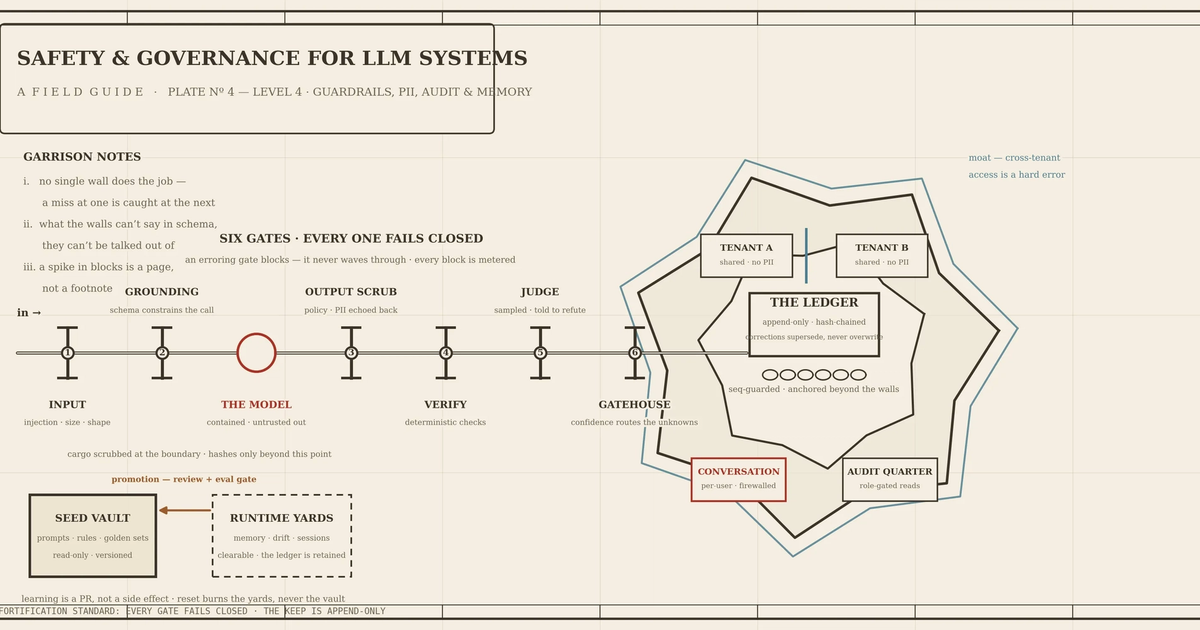
  18. Part 4: Safety and governance for LLM systems: guardrails, PII, audit, and memory

    This post details safety and governance practices for LLM systems, focusing on layered guardrails, boundary-level PII handling, and immutable audit trails. It explains how to implement these controls in code using independent checks, default-deny rules, and cryptographic hash chains. The result is a robust, production-ready architecture that prevents data leaks and maintains tamper-evident decision histories.

    DEPTH ■■■■■19 min read2 weeks ago

    Machine Learning

    Sign in to save and rate

  19. Meta’s Generative Ads Model (GEM): Scaling the Central Model and Compute Engine for Frontier Ads AI

    Meta developed GEM, a unified recommendation foundation model using an LLM-style architecture called Kunlun to handle heterogeneous ads data across multiple surfaces. The team implemented block attention, custom low-precision kernels, and post-training intelligence transfer techniques like LoopFM and Solaris to scale training efficiency and bypass real-time serving latency bottlenecks. The resulting system delivered an 18.9% conversion improvement and a 12% click-through rate increase across Meta ads surfaces.

    DEPTH ■■■■■15 min read12 days ago

    Machine Learning

    Sign in to save and rate

  20. TIN v1.0.6: 2-3x faster, with support for stemming

    Following competitive benchmarks that highlighted opportunities for optimization, the developers of the TIN full-text search index for Postgres released versions 1.0.4 and 1.0.6. These updates added Snowball stemming for 18 languages, optimized top-k sorting queries with deterministic tiebreakers, and improved overall query performance. As a result, benchmark tests show that TIN outperforms competing extensions across conjunction, disjunction, and phrase query workloads.

    DEPTH ■■■■■8 min read2 weeks ago

    PostgreSQL

    Sign in to save and rate