/ THE FEED /

Read what ships.

Deep, recent reads ranked by depth and freshness.

  1. The Pulse: Anthropic builds its own source control system

    Anthropic experienced a massive increase in code merges due to the heavy use of AI coding agents, which quickly overwhelmed standard Git scaling limits and CI checkouts. To solve this, a small engineering team built a custom centralized version control system called Scion backed by Google Spanner and Cloud Storage, along with a code review tool called Antique. This move successfully migrated the entire monorepo off Git and eliminated bottlenecks, though the architecture drew controversy over similarities to Meta's Mononoke.

    DEPTH ■■■■■12 min read4 days ago
    ArchitectureDistributed Systems

    Sign in to save and rate

  2. Thundering herd of circuit breakers

    An engineering team investigated why a client-side circuit breaker repeatedly failed to close on its own after an outage. By exporting OpenTelemetry traces into a custom visualization tool, they discovered that low probe traffic caused the autoscaler to scale down the service to minimum capacity, triggering a thundering herd of requests and immediate timeouts the moment the circuit breaker closed. Adjusting the system to account for capacity and probe representativeness prevents this oscillation.

    DEPTH ■■■■■10 min read2 weeks ago

    MicroservicesObservabilityReliability

    Sign in to save and rate

  3. The Regression Tests Nobody Writes: Capturing How Software Actually Behaves

    Standard regression tests usually only verify developer intent rather than the actual, unwritten behaviors that systems accumulate in production over time. By capturing real production traffic and network-level interactions, teams can build characterization test suites to automatically detect unintended behavioral shifts. This approach prevents accidental regressions during legacy refactoring, rewrites, and major framework upgrades.

    DEPTH ■■■■■6 min read4 days ago

    Testing

    Sign in to save and rate

  4. Your next job doesn’t have a title yet: Emerging role skills Q&A with Cory Hymel of Andela

    Researchers analyzed thousands of job postings to understand how artificial intelligence is changing technical skill requirements. The findings indicate that instead of creating a workforce of pure generalists, the market is developing distinct new specialized skill bundles and hybrid roles. Consequently, organizations are facing talent debt as the half-life of technical skills rapidly shrinks.

    DEPTH ■■■■■15 min read12 days ago

    Testing

    Sign in to save and rate

  5. Smarter personalization: How property data helps us understand user price sensitivity

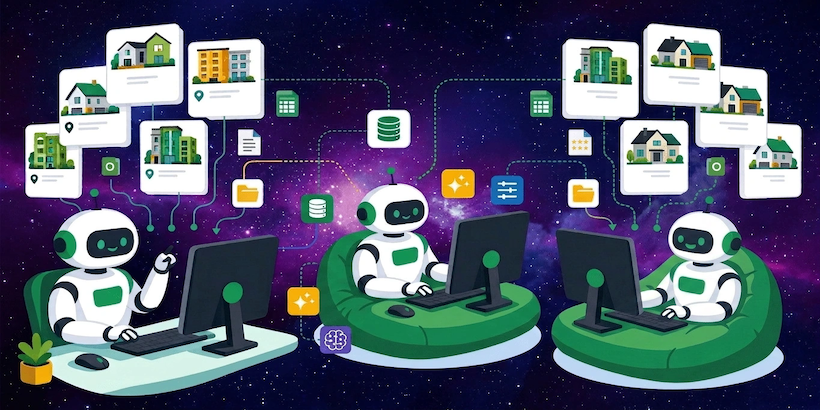
    Existing user personalization systems fail to systematically account for residential property values, leading to one-dimensional profiles and regional blind spots. A conceptual four-step method is proposed that combines public property data, large language models, building-level price estimation, and hierarchical clustering to classify user affluence. The approach remains unimplemented, with future viability depending on technical validation, data quality, and privacy approvals.

    DEPTH ■■■■■4 min read2 weeks ago

    Data EngineeringMachine Learning

    Sign in to save and rate

  6. Data Mesh at Grab (Part III): Operationalizing data reliability with automated DPIs

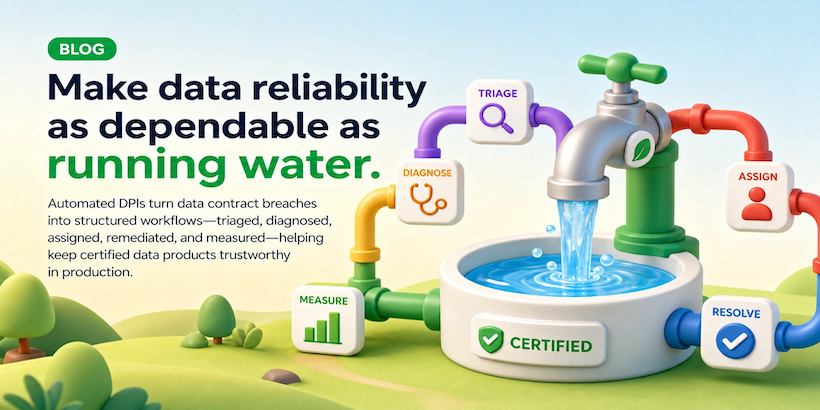
    Grab addressed runtime data reliability issues in its data mesh by implementing automated Data Production Issues (DPIs). The system uses an incident orchestrator to detect contract breaches, a Data Health API for cross-platform root cause analysis, and Hugo for automated remediation. This approach resolved 86.9 percent of incidents automatically and made mean time to resolve six times faster.

    DEPTH ■■■■■12 min read8 weeks ago

    DatabasesObservability

    Sign in to save and rate

  7. GrabMart data for faster disease outbreak detection

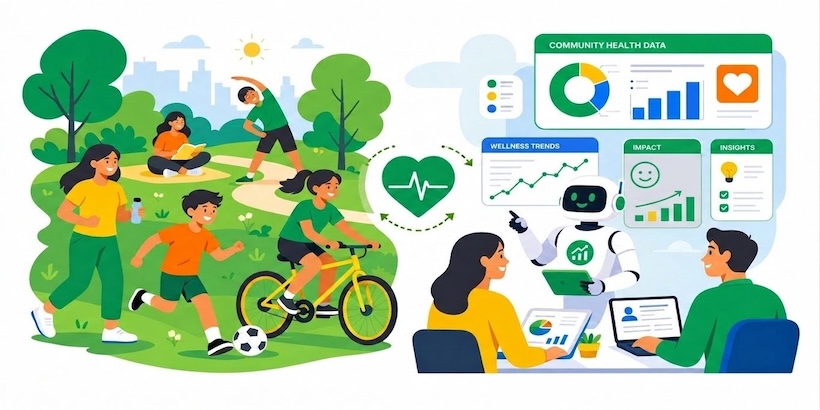
    The organization proposes a conceptual data pipeline to analyze aggregated GrabMart transaction data for symptom-related product demand, aiming to supplement clinical surveillance for disease outbreaks. The design relies on data aggregation, statistical baseline comparisons, and privacy safeguards like differential privacy without involving individual health inference. The system remains in an early planning phase requiring rigorous validation, privacy review, and public health oversight.

    DEPTH ■■■■■5 min read13 days ago

    Data EngineeringMachine Learning

    Sign in to save and rate

  8. Taking a look under your agent’s hood

    This post discusses the challenges and methods of applying observability to AI agents, which combine traditional distributed systems telemetry with new requirements for monitoring LLMs and multi-step tool calls. The discussion highlights how non-deterministic agent behavior and increased speed of execution make continuous production feedback loops essential for upstream development. Ultimately, integrating observability data into automated testing and development loops helps teams iterate on agent performance.

    DEPTH ■■■■■25 min read2 weeks ago

    Machine LearningObservability

    Sign in to save and rate