/ THE FEED /

Read what ships.

Deep, recent reads ranked by depth and freshness.

  1. Origin Range Requests: Serving large files without range-request tuning

    Cloudflare replaced a legacy, fixed-size range caching design that suffered from bandwidth waste and memory pressure with a Pingora-based chunk coordinator. The new implementation dynamically combines cached chunks and aligned origin fetches to serve range requests accurately without manual tuning. This approach cut p99 time to first byte in half for R2 storage and reduced tiered cache traffic by six percent.

    DEPTH ■■■■■8 min read2 days ago

    DatabasesPerformanceRedis

    Sign in to save and rate

  2. App stability at scale with a layered defense

    To maintain app stability amidst rapid weekly releases and AI-generated code, Grab uses a layered defense strategy covering prevention, release gates, and incident response. This pipeline includes static analysis via custom lint rules, multiple tiers of automated and manual testing, a pre-production early access build, staged rollouts, and feature flags with instant kill switches. As a result, critical defects are caught early in the development lifecycle before reaching the wider production user base.

    DEPTH ■■■■■16 min read4 days ago

    MobileReliability

    Sign in to save and rate

  3. Under the hood, off the hot path: How D1 scales to millions of databases

    Cloudflare scaled its serverless SQLite database, D1, to support millions of databases by decoupling the control plane from the data plane. The team used distributed metadata caching via Workers KV, optimized database connections through Hyperdrive, and implemented a self-correcting heartbeat mechanism. This architecture prevents centralized bottlenecks and allows D1 to handle rapid on-demand database creation efficiently.

    DEPTH ■■■■■22 min read12 days ago

    Databases

    Sign in to save and rate

  4. The Regression Tests Nobody Writes: Capturing How Software Actually Behaves

    Standard regression tests usually only verify developer intent rather than the actual, unwritten behaviors that systems accumulate in production over time. By capturing real production traffic and network-level interactions, teams can build characterization test suites to automatically detect unintended behavioral shifts. This approach prevents accidental regressions during legacy refactoring, rewrites, and major framework upgrades.

    DEPTH ■■■■■6 min read3 days ago

    Testing

    Sign in to save and rate

  5. Your next job doesn’t have a title yet: Emerging role skills Q&A with Cory Hymel of Andela

    Researchers analyzed thousands of job postings to understand how artificial intelligence is changing technical skill requirements. The findings indicate that instead of creating a workforce of pure generalists, the market is developing distinct new specialized skill bundles and hybrid roles. Consequently, organizations are facing talent debt as the half-life of technical skills rapidly shrinks.

    DEPTH ■■■■■15 min read11 days ago

    Testing

    Sign in to save and rate

  6. Data Mesh at Grab (Part III): Operationalizing data reliability with automated DPIs

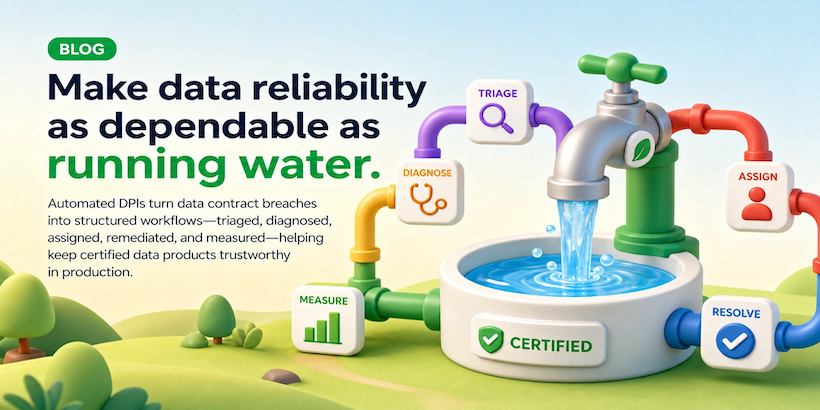
    Grab addressed runtime data reliability issues in its data mesh by implementing automated Data Production Issues (DPIs). The system uses an incident orchestrator to detect contract breaches, a Data Health API for cross-platform root cause analysis, and Hugo for automated remediation. This approach resolved 86.9 percent of incidents automatically and made mean time to resolve six times faster.

    DEPTH ■■■■■12 min read8 weeks ago

    DatabasesObservability

    Sign in to save and rate