/ THE FEED /

Read what ships.

Deep, recent reads ranked by depth and freshness.

  1. Inside Hyperdrive: How we solved a rare Hyperdrive MySQL caching bug

    During the beta of MySQL support for Hyperdrive, engineers investigated rare empty query responses and connection hangs occurring in 0.001% of requests. They discovered that sharing the data center cache between client and endpoint nodes caused protocol capability mismatches when translating MySQL wire messages. The team resolved the issue by standardizing the cache to always store responses encoded with canonical Hyperdrive capabilities.

    DEPTH ■■■■■9 min read11 days ago

    MySQL

    Sign in to save and rate

  2. Smarter personalization: How property data helps us understand user price sensitivity

    Existing user personalization systems fail to systematically account for residential property values, leading to one-dimensional profiles and regional blind spots. A conceptual four-step method is proposed that combines public property data, large language models, building-level price estimation, and hierarchical clustering to classify user affluence. The approach remains unimplemented, with future viability depending on technical validation, data quality, and privacy approvals.

    DEPTH ■■■■■4 min read2 weeks ago

    Data EngineeringMachine Learning

    Sign in to save and rate

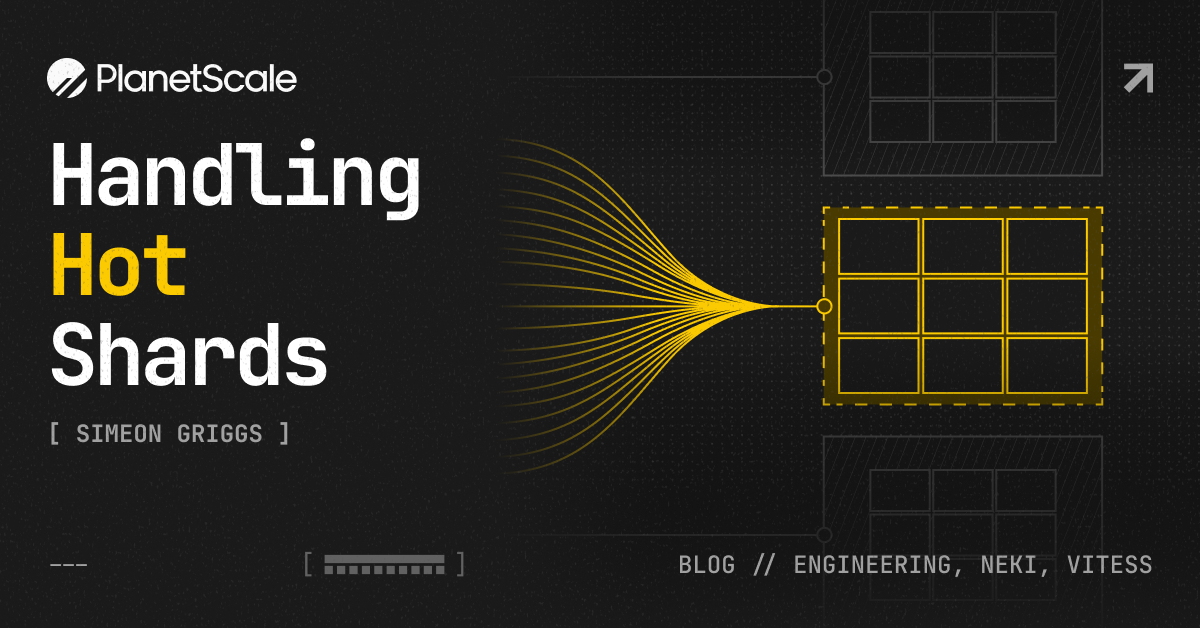
  3. Handling hot shards

    Growing applications often encounter hot shards when certain tenants or data subsets outgrow initial sharding strategies based on workspace IDs. To mitigate this, teams can scale up resources, isolate large tenants into specific key ranges, or fundamentally change the shard key for problematic tables based on access patterns. Neki facilitates these adjustments by allowing declarative data topologies and online resharding without downtime.

    DEPTH ■■■■■7 min read3 weeks ago

    MySQLPostgreSQL

    Sign in to save and rate

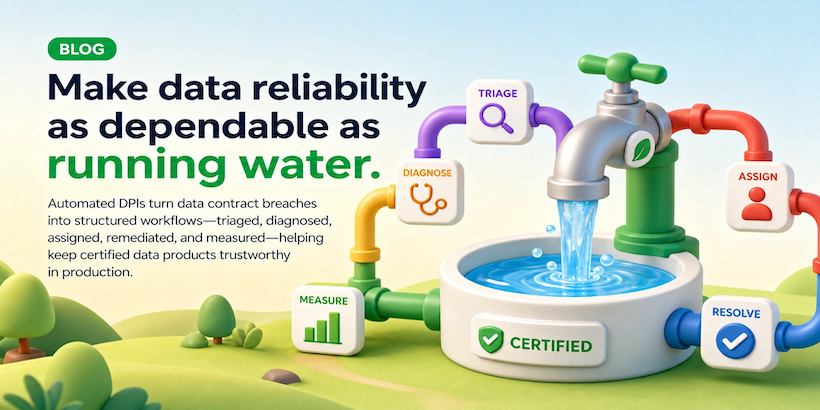
  4. Data Mesh at Grab (Part III): Operationalizing data reliability with automated DPIs

    Grab addressed runtime data reliability issues in its data mesh by implementing automated Data Production Issues (DPIs). The system uses an incident orchestrator to detect contract breaches, a Data Health API for cross-platform root cause analysis, and Hugo for automated remediation. This approach resolved 86.9 percent of incidents automatically and made mean time to resolve six times faster.

    DEPTH ■■■■■12 min read8 weeks ago

    DatabasesObservability

    Sign in to save and rate

  5. Taking a look under your agent’s hood

    This post discusses the challenges and methods of applying observability to AI agents, which combine traditional distributed systems telemetry with new requirements for monitoring LLMs and multi-step tool calls. The discussion highlights how non-deterministic agent behavior and increased speed of execution make continuous production feedback loops essential for upstream development. Ultimately, integrating observability data into automated testing and development loops helps teams iterate on agent performance.

    DEPTH ■■■■■25 min read2 weeks ago

    Machine LearningObservability

    Sign in to save and rate

  6. GrabMart data for faster disease outbreak detection

    The organization proposes a conceptual data pipeline to analyze aggregated GrabMart transaction data for symptom-related product demand, aiming to supplement clinical surveillance for disease outbreaks. The design relies on data aggregation, statistical baseline comparisons, and privacy safeguards like differential privacy without involving individual health inference. The system remains in an early planning phase requiring rigorous validation, privacy review, and public health oversight.

    DEPTH ■■■■■5 min read12 days ago

    Data EngineeringMachine Learning

    Sign in to save and rate