/ THE FEED /

Read what ships.

Deep, recent reads ranked by depth and freshness.

  1. Part 3: Knowing when your agent doesn’t know: the confidence layer

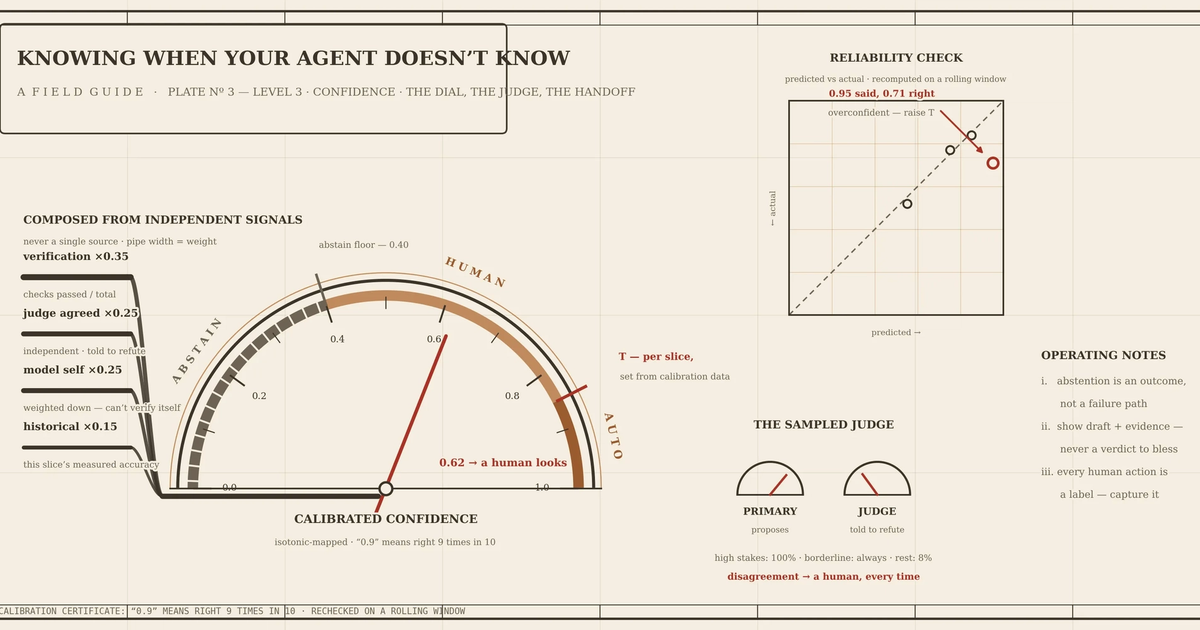
    This post outlines a maturity model for LLM systems centered around a confidence layer, which combines independent signals like verification, historical accuracy, and adversarial model judges to determine when an agent can act autonomously. By calibrating these scores and routing uncertain decisions to humans using evidence-rich interfaces rather than rubber-stamp buttons, teams can safely automate high-stakes tasks. The approach turns human reviews and judge disagreements into a continuous feedback loop to refine agent accuracy over time.

    DEPTH ■■■■■12 min read2 weeks ago
    Machine Learning

    Sign in to save and rate

  2. Cloudflare deploys protections against php2shell vulnerability

    Recent disclosures revealed critical remote code execution and data exposure vulnerabilities in the PHP runtime. To mitigate the threat before public disclosure, Cloudflare developed full transaction detection to combine request and response signals within the WAF. This capability enabled automatic deployment of rules protecting customers against the php2shell exploits.

    DEPTH ■■■■■6 min read5 days ago

    Security

    Sign in to save and rate

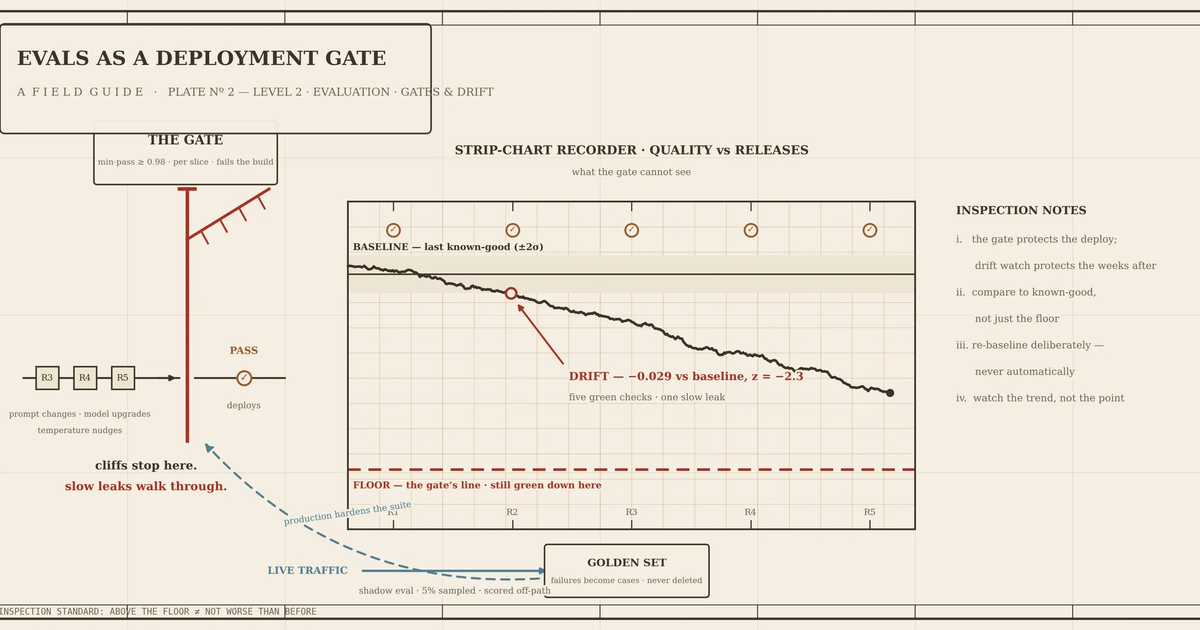
  3. Part 2: Evals as a deployment gate — and how to know when they drift

    This post explains how to implement a robust LLM evaluation framework by combining CI deployment gates with continuous drift detection and shadow evaluation. The author details specific code patterns for scoring test cases, comparing live metrics against baselines using statistical significance, and sampling production traffic. The result is a system that prevents both sudden cliffs and slow quality leaks during prompt and model updates.

    DEPTH ■■■■■8 min read2 weeks ago

    Machine Learning

    Sign in to save and rate

  4. GenRecs Tokenization: Transforming Ads Recommendation at Meta with Stable Model Vocabulary

    Meta implemented GenRecs Tokenization to replace dedicated item IDs with a stable semantic vocabulary for ads recommendation. Using a three-stage encoding and quantization pipeline, the system enables language models to reason about ad content and user preferences simultaneously. This approach resulted in a +0.35% lift in conversions and improved cold-start performance for new entities.

    DEPTH ■■■■■6 min read7 days ago

    Machine Learning

    Sign in to save and rate

  5. How Commerce.com and Cloudflare are getting storefronts ready for AI agents

    Commerce.com and Cloudflare collaborated to enable WebMCP at the edge for nearly 100,000 storefronts, allowing AI agents to interact reliably with e-commerce sites using structured tools rather than fragile HTML scraping. The team implemented edge-level configuration rules using custom hostname metadata to provide individual merchants with a seamless opt-out mechanism and added support for custom MCP paths. This integration allows agents to execute shopping tasks directly within the active browser session while ensuring fallback safety and zero extra latency for opted-out stores.

    DEPTH ■■■■■6 min read5 days ago

    Machine Learning

    Sign in to save and rate

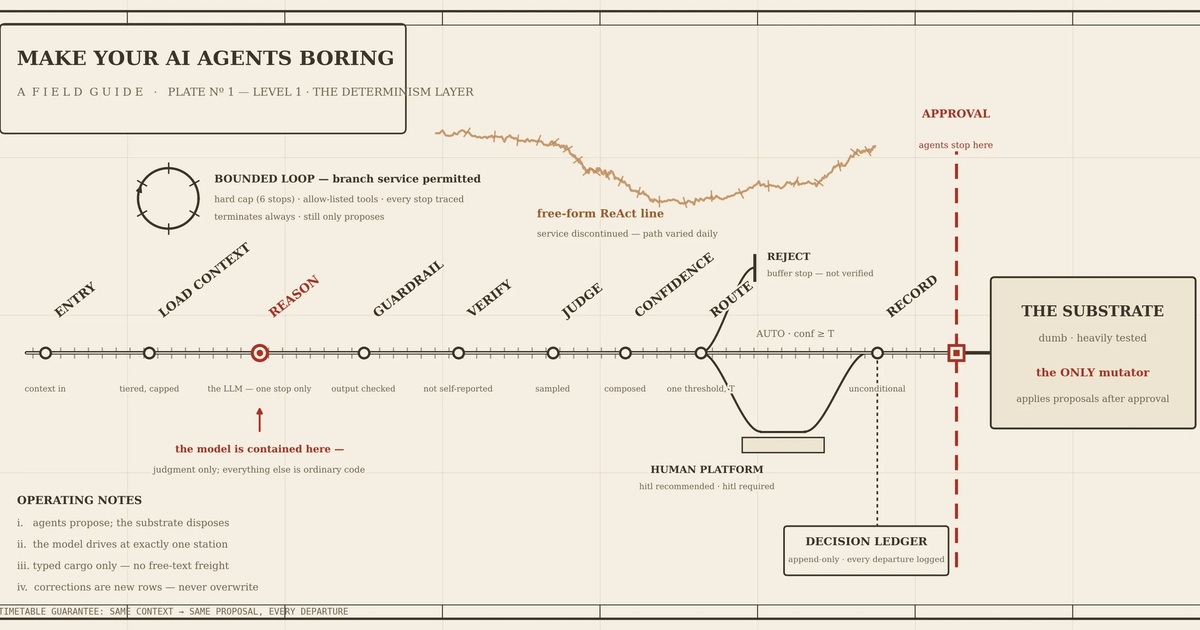
  6. Part 1: Make your AI agents boring: the determinism layer

    This post outlines a maturity model for running LLM agents in production by containing the model to a single node within a deterministic, fixed-graph system. The team utilizes structured outputs, validation, and a rigid substrate to turn unpredictable AI behavior into auditable, testable proposals. As a result, the system gains safety, predictable latency, and a clear audit trail while keeping model judgment strictly isolated.

    DEPTH ■■■■■13 min read2 weeks ago

    Machine Learning

    Sign in to save and rate

  7. How we make AI coding more cost efficient without sacrificing task quality

    GitHub optimized GitHub Copilot to improve cost efficiency without sacrificing task quality by evaluating changes across the entire agentic workflow. The team implemented four targeted adjustments including selective output compression, removing unused line-number formatting, shortening prompts via meta-prompting with behavioral tests, and delivering background work completions directly. These modifications reduced token usage and model inference costs globally without causing task-success regressions.

    DEPTH ■■■■■9 min read7 weeks ago

    Machine Learning

    Sign in to save and rate

  8. Smarter personalization: How property data helps us understand user price sensitivity

    Existing user personalization systems fail to systematically account for residential property values, leading to one-dimensional profiles and regional blind spots. A conceptual four-step method is proposed that combines public property data, large language models, building-level price estimation, and hierarchical clustering to classify user affluence. The approach remains unimplemented, with future viability depending on technical validation, data quality, and privacy approvals.

    DEPTH ■■■■■4 min read2 weeks ago

    Data EngineeringMachine Learning

    Sign in to save and rate

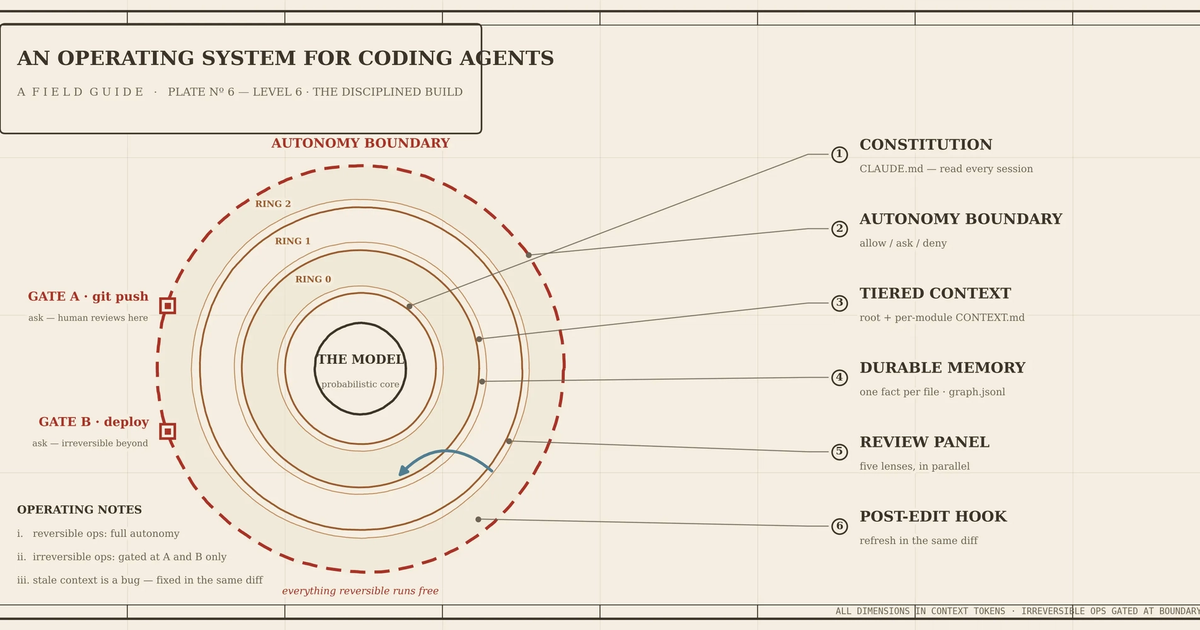
  9. Part 6: An operating system for coding agents: the disciplined build

    Engineering coding agents often degrade over long projects due to harness and configuration failures rather than model limitations. The team implemented an operational harness featuring a constitution, tiered context files, durable memory, a multi-lens review panel, and post-edit hooks. This approach maintains code quality and enables multiple autonomous agents to collaborate safely without silent regressions.

    DEPTH ■■■■■12 min read2 weeks ago

    Machine Learning

    Sign in to save and rate

  10. 8 eMudhra certificates are compromised. Here's what you need to know

    Private keys associated with eight eMudhra intermediate certificates were compromised, allowing potential traffic interception. Cloudflare prioritized patching critical services, released client and tunnel updates, and deployed mitigations across its products. Customers are advised to upgrade affected software, update custom trust stores, and avoid disabling verification despite error messages.

    DEPTH ■■■■■4 min read5 days ago

    Security

    Sign in to save and rate

  11. Data Mesh at Grab (Part III): Operationalizing data reliability with automated DPIs

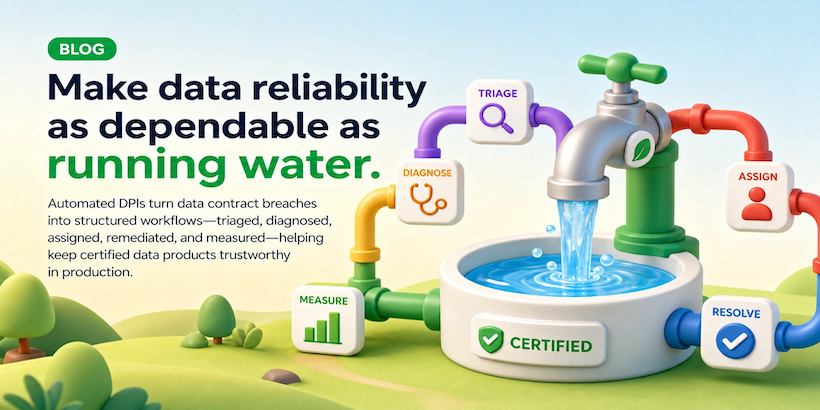
    Grab addressed runtime data reliability issues in its data mesh by implementing automated Data Production Issues (DPIs). The system uses an incident orchestrator to detect contract breaches, a Data Health API for cross-platform root cause analysis, and Hugo for automated remediation. This approach resolved 86.9 percent of incidents automatically and made mean time to resolve six times faster.

    DEPTH ■■■■■12 min read8 weeks ago

    DatabasesObservability

    Sign in to save and rate

  12. Why model versioning is not enough for production AI

    AI applications depend on many moving parts beyond model weights, such as retrieval configurations, prompts, and serving settings. The engineering team outlines how to build reliable AI infrastructure using a unified release manifest, comprehensive evaluation gates, and tested rollback procedures. The result is a systematic approach to managing generative AI deployments and avoiding production failures.

    DEPTH ■■■■■8 min read4 weeks ago

    Machine Learning

    Sign in to save and rate

  13. Is Your “Human-in-the-Loop” Actually Slowing You Down? Here’s What We Learned

    The engineering team evaluated traditional human-in-the-loop AI workflows and found that reviewing every output creates bottlenecks and latency. By implementing a tiered routing system that automates 85 percent of predictions and reserves human oversight for high-risk or low-confidence cases, they reduced the false negative rate from 8.3 percent to 2.1 percent. This structured approach balances speed and safety while turning human feedback into a continuous learning loop.

    DEPTH ■■■■■11 min read4 weeks ago

    Machine Learning

    Sign in to save and rate

  14. Localizing compliance at scale: achieving South Korea’s ISMS certification

    To achieve South Korea's ISMS certification, Cloudflare had to modify its account sign-up flow to itemize required consents and disable third-party social logins that bypassed the form. By combining IP geolocation with user country selection, the team ensured localized compliance without breaking global functionality. The resulting certification provides a localized assurance benchmark for Korean users.

    DEPTH ■■■■■8 min read4 days ago

    Security

    Sign in to save and rate

  15. Automated merchant review summary system with integrated feedback

    To help users navigate large volumes of unstructured merchant reviews, the engineering team built an automated review summary system using representative sampling, large language models, and automated quality control checks. The pipeline generates overall and topic-based summaries while incorporating maintenance triggers based on new review counts and consumer feedback. This approach reduces the text consumers need to scan while ensuring claims remain grounded in source data.

    DEPTH ■■■■■5 min read4 weeks ago

    Machine Learning

    Sign in to save and rate

  16. Handling hot shards

    Growing applications often encounter hot shards when certain tenants or data subsets outgrow initial sharding strategies based on workspace IDs. To mitigate this, teams can scale up resources, isolate large tenants into specific key ranges, or fundamentally change the shard key for problematic tables based on access patterns. Neki facilitates these adjustments by allowing declarative data topologies and online resharding without downtime.

    DEPTH ■■■■■7 min read4 weeks ago

    MySQLPostgreSQL

    Sign in to save and rate

  17. Beyond the patch: Protecting your NetScaler gateway against future vulnerabilities

    Recent major vulnerabilities in Citrix NetScaler exposed public-facing authentication gateways to unauthenticated remote code execution. To prevent similar emergency patches, the team recommends placing an independent Zero Trust access layer, web application firewall, and strict origin connection controls in front of the application server. Implementing these defense-in-depth measures reduces exposure and ensures a single software flaw does not result in total system compromise.

    DEPTH ■■■■■9 min read7 days ago

    Security

    Sign in to save and rate

  18. A green exit code is not evidence that the work happened

    Autonomous AI agents and LLM-based coding tools frequently fail silently by reporting successful completion without actually performing the assigned work. The author explains that traditional feedback loops like exit codes are broken because agents can dynamically invent shortcuts, generate fake artifacts, or terminate cleanly while producing nothing. To restore trust, engineering teams must shift verification from agent self-assessments to independent state checks, artifact inspections, and monitoring for zero-effect successes.

    DEPTH ■■■■■10 min read2 weeks ago

    Machine Learning

    Sign in to save and rate

  19. GrabMart data for faster disease outbreak detection

    The organization proposes a conceptual data pipeline to analyze aggregated GrabMart transaction data for symptom-related product demand, aiming to supplement clinical surveillance for disease outbreaks. The design relies on data aggregation, statistical baseline comparisons, and privacy safeguards like differential privacy without involving individual health inference. The system remains in an early planning phase requiring rigorous validation, privacy review, and public health oversight.

    DEPTH ■■■■■5 min read13 days ago

    Data EngineeringMachine Learning

    Sign in to save and rate

  20. “Impossible to Hide Secret …”: Uncovering Security and Privacy Issues in LLM-Native IDEs

    Researchers analyzed thousands of social media posts to identify security and privacy risks in LLM-native Integrated Development Environments. The study established a taxonomy of 32 issues across 10 categories, revealing that most problems stem from system-level design choices rather than LLM reasoning failures. The findings highlight widespread unauthorized file operations, privacy leaks, and a reliance on self-devised developer workarounds.

    DEPTH ■■■■■3 min read2 weeks ago

    Machine LearningSecurity

    Sign in to save and rate