/ THE FEED /

Read what ships.

Deep, recent reads ranked by depth and freshness.

  1. Bringing post-quantum cryptography to geographically fenced key management

    Cloudflare introduced a post-quantum geographically restricted key manager in closed beta to enforce data sovereignty and protect customers against harvest-now-decrypt-later attacks. The team implemented a hybrid ML-KEM-768 and X25519 cryptographic design that separates globally distributed wrapped private keys from regionally restricted root keys. This ensures that decryption keys are only accessible within authorized geographical boundaries and fails closed if validation fails.

    DEPTH ■■■■■12 min read2 days ago

    Security

    Sign in to save and rate

  2. PHP2Shell: GitLab helps find and remediate critical PHP flaws

    Critical remote code execution vulnerabilities known as PHP2Shell affect the PHP engine across multiple versions, requiring immediate runtime updates to fixed versions or patched distribution packages. The team utilized platform features like container scanning, code search, and automated agent workflows to locate PHP projects and remediate vulnerabilities. Operators must also check logs and environments for signs of compromise as framework updates and input validations cannot prevent these engine-level flaws.

    DEPTH ■■■■■10 min read3 days ago

    ArchitectureSecurity

    Sign in to save and rate

  3. From 2,500 requests to 24: Rebuilding star history without the stargazers

    GitHub faced abuse and performance issues because tools were scraping user identities to reconstruct repository star history. The engineering team collaborated with maintainers to build a purpose-built aggregate endpoint that returns daily star counts without identities and filters by time before aggregation. This reduced request volume from thousands to a few dozen and eliminated heavy database scans.

    DEPTH ■■■■■8 min read11 days ago

    Microservices

    Sign in to save and rate

  4. Cloudflare deploys protections against php2shell vulnerability

    Recent disclosures revealed critical remote code execution and data exposure vulnerabilities in the PHP runtime. To mitigate the threat before public disclosure, Cloudflare developed full transaction detection to combine request and response signals within the WAF. This capability enabled automatic deployment of rules protecting customers against the php2shell exploits.

    DEPTH ■■■■■6 min read4 days ago

    Security

    Sign in to save and rate

  5. 8 eMudhra certificates are compromised. Here's what you need to know

    Private keys associated with eight eMudhra intermediate certificates were compromised, allowing potential traffic interception. Cloudflare prioritized patching critical services, released client and tunnel updates, and deployed mitigations across its products. Customers are advised to upgrade affected software, update custom trust stores, and avoid disabling verification despite error messages.

    DEPTH ■■■■■4 min read5 days ago

    Security

    Sign in to save and rate

  6. “Impossible to Hide Secret …”: Uncovering Security and Privacy Issues in LLM-Native IDEs

    Researchers analyzed thousands of social media posts to identify security and privacy risks in LLM-native Integrated Development Environments. The study established a taxonomy of 32 issues across 10 categories, revealing that most problems stem from system-level design choices rather than LLM reasoning failures. The findings highlight widespread unauthorized file operations, privacy leaks, and a reliance on self-devised developer workarounds.

    DEPTH ■■■■■3 min read2 weeks ago

    Machine LearningSecurity

    Sign in to save and rate

  7. Data Mesh at Grab (Part III): Operationalizing data reliability with automated DPIs

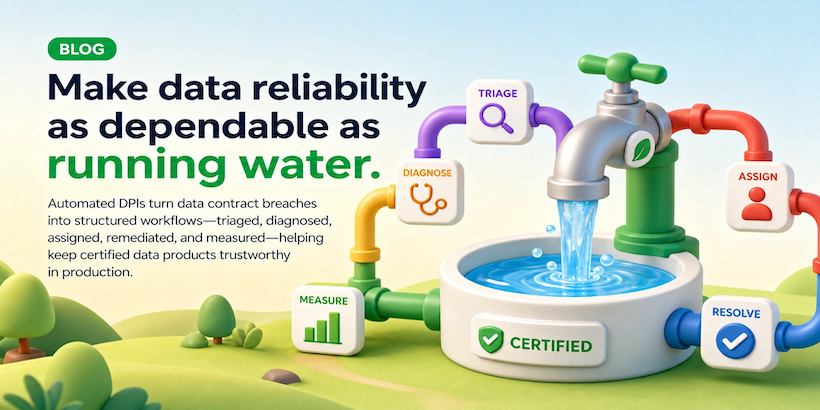
    Grab addressed runtime data reliability issues in its data mesh by implementing automated Data Production Issues (DPIs). The system uses an incident orchestrator to detect contract breaches, a Data Health API for cross-platform root cause analysis, and Hugo for automated remediation. This approach resolved 86.9 percent of incidents automatically and made mean time to resolve six times faster.

    DEPTH ■■■■■12 min read8 weeks ago

    DatabasesObservability

    Sign in to save and rate