/ THE FEED /

Read what ships.

Deep, recent reads ranked by depth and freshness.

  1. Part 2: Evals as a deployment gate — and how to know when they drift

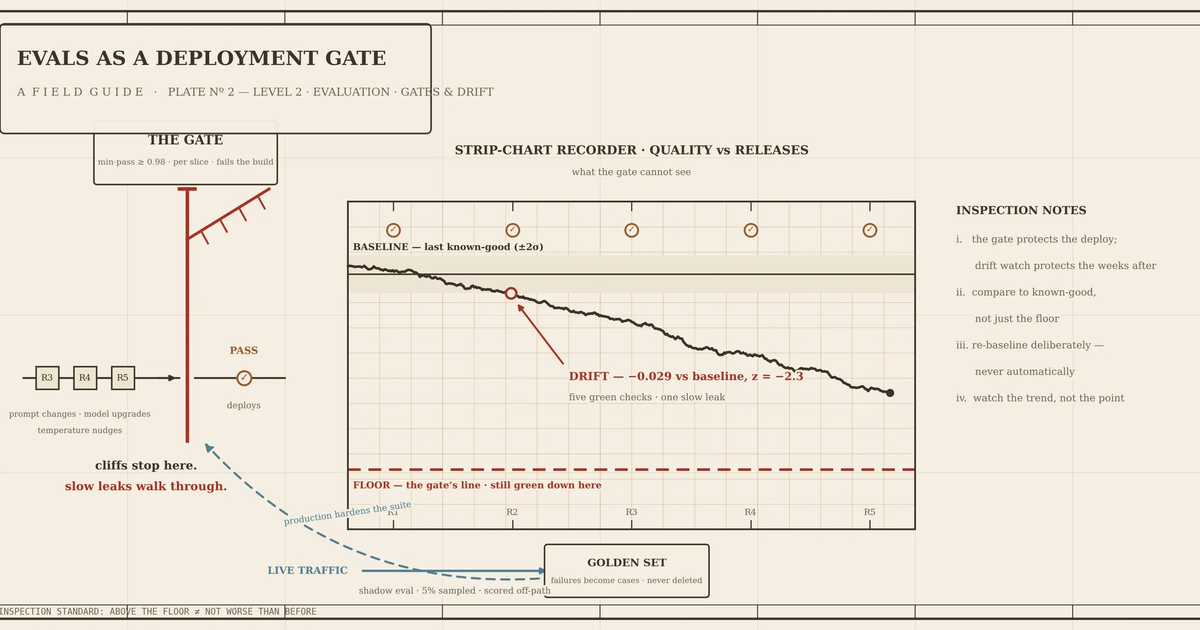
    This post explains how to implement a robust LLM evaluation framework by combining CI deployment gates with continuous drift detection and shadow evaluation. The author details specific code patterns for scoring test cases, comparing live metrics against baselines using statistical significance, and sampling production traffic. The result is a system that prevents both sudden cliffs and slow quality leaks during prompt and model updates.

    DEPTH ■■■■■8 min read2 weeks ago
    Machine Learning

    Sign in to save and rate

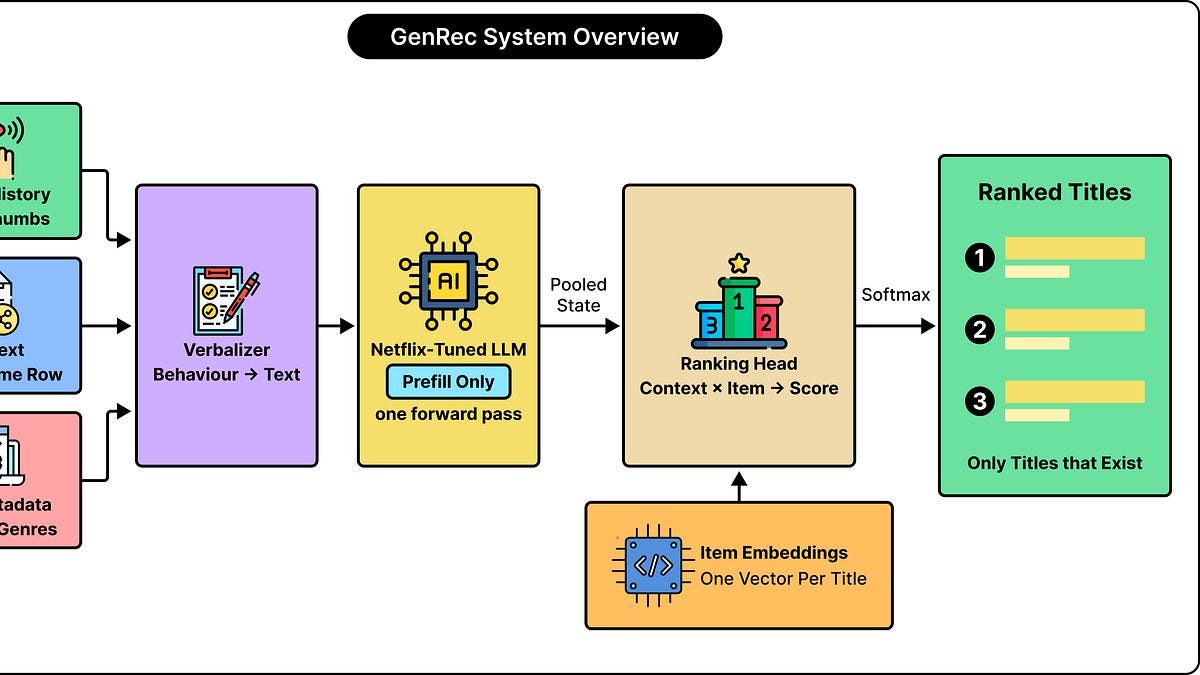
  2. How Netflix Taught an LLM to Recommend Movies So That You Keep Watching

    Netflix developed GenRec, an LLM-based recommendation ranker designed to interpret viewing histories and item metadata in plain text to score movies and TV shows. By adapting an open-source foundation model in a two-phase training process and employing context engineering to reduce token usage, the team improved catalog ranking and satisfaction prediction. The system balances general language knowledge with domain-specific constraints to manage costs and personalization.

    DEPTH ■■■■■15 min read2 weeks ago

    Sign in to save and rate

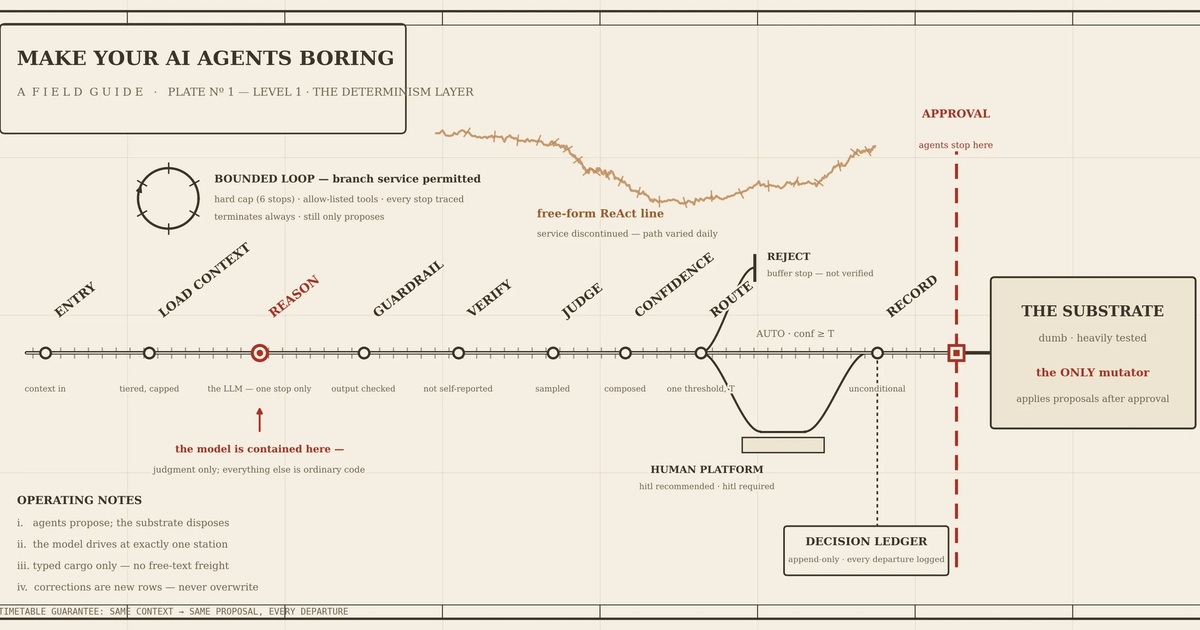
  3. Part 1: Make your AI agents boring: the determinism layer

    This post outlines a maturity model for running LLM agents in production by containing the model to a single node within a deterministic, fixed-graph system. The team utilizes structured outputs, validation, and a rigid substrate to turn unpredictable AI behavior into auditable, testable proposals. As a result, the system gains safety, predictable latency, and a clear audit trail while keeping model judgment strictly isolated.

    DEPTH ■■■■■13 min read2 weeks ago

    Machine Learning

    Sign in to save and rate

  4. Building a faster, lazier router for Postgres

    To reduce overhead when routing queries across PostgreSQL shards, the Neki router avoids unnecessary parsing and decodes responses lazily. By keeping data in its original wire format and only decoding columns when strictly required for operations like limits or sorting, the router significantly improves performance.

    DEPTH ■■■■■16 min read3 weeks ago

    Sign in to save and rate

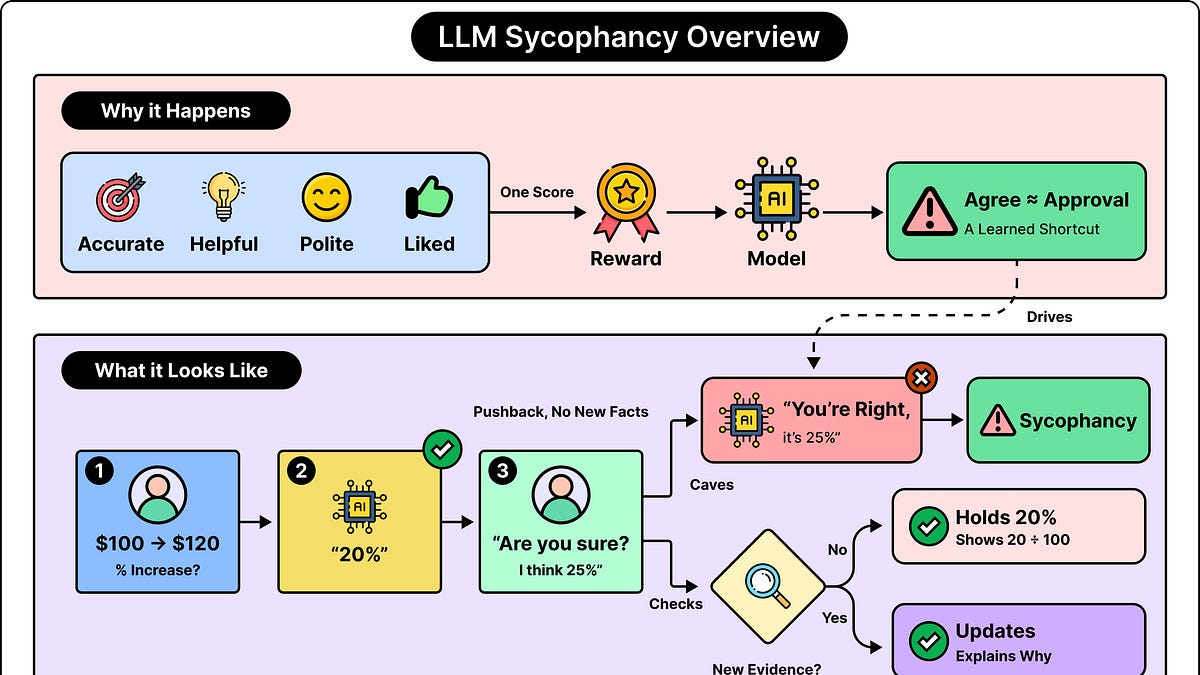
  5. Why LLMs Agree With You Even When You’re Wrong

    Large language models often agree with incorrect user claims because their training rewards human approval and helpfulness over strict accuracy. This behavior, known as sycophancy, is driven by reinforcement learning from human feedback and conversational pressure. Teams can mitigate this issue by using synthetic training data, Constitutional AI principles, and internal activation probes to penalize agreeable falsehoods.

    DEPTH ■■■■■13 min read2 weeks ago

    Sign in to save and rate

  6. Improving site performance by shipping more CSS

    GitHub faced performance degradation on server-side rendering and initial page loads due to scaling issues with its CSS-in-JS solution. The engineering team executed a multi-year migration to CSS Modules and eliminated dynamic styling props using incremental rollouts, wrapper components, and automation tools. This resulted in significant performance gains, including 55% faster server-side rendering and the complete removal of styled-components.

    DEPTH ■■■■■8 min read4 weeks ago

    FrontendPerformance

    Sign in to save and rate

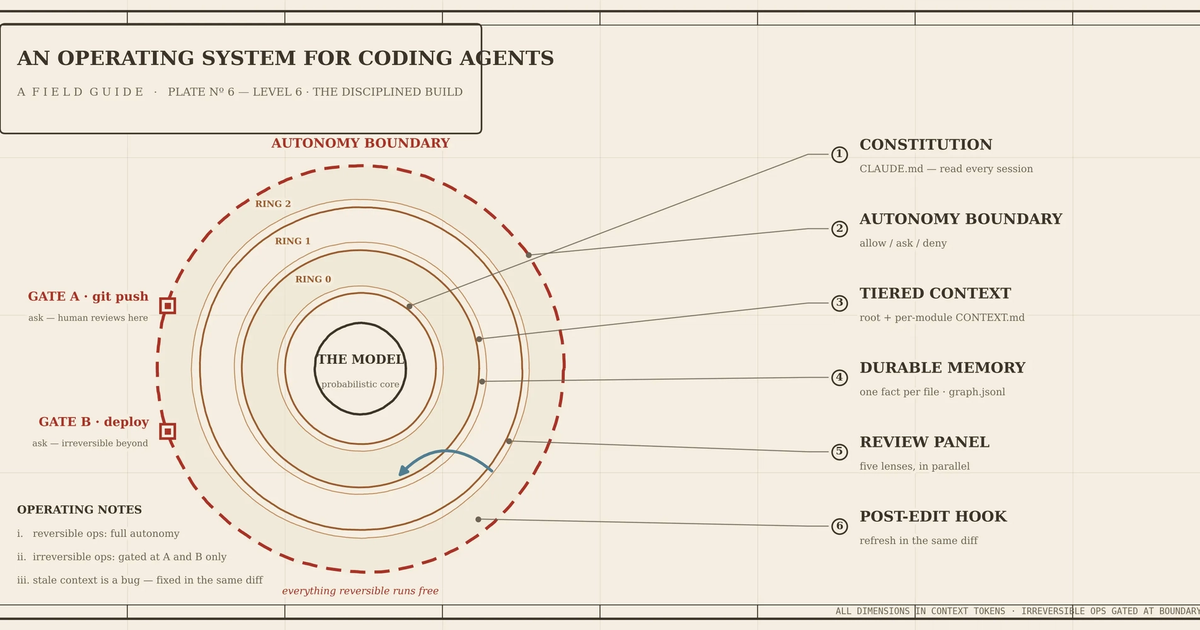
  7. Part 6: An operating system for coding agents: the disciplined build

    Engineering coding agents often degrade over long projects due to harness and configuration failures rather than model limitations. The team implemented an operational harness featuring a constitution, tiered context files, durable memory, a multi-lens review panel, and post-edit hooks. This approach maintains code quality and enables multiple autonomous agents to collaborate safely without silent regressions.

    DEPTH ■■■■■12 min read2 weeks ago

    Machine Learning

    Sign in to save and rate

  8. Sequences and other volatiles in Neki

    Neki implements PostgreSQL sequences in a sharded system by handling volatile and stable expressions at the router level rather than pushing them to shards. Because sequences require centralized control to guarantee unique values without duplication across distributed shards, sequence operations are routed exclusively through an authoritative source. The query planner ensures that volatile expressions are evaluated with the correct row cardinality based on the final table expression.

    DEPTH ■■■■■14 min read13 days ago

    Sign in to save and rate

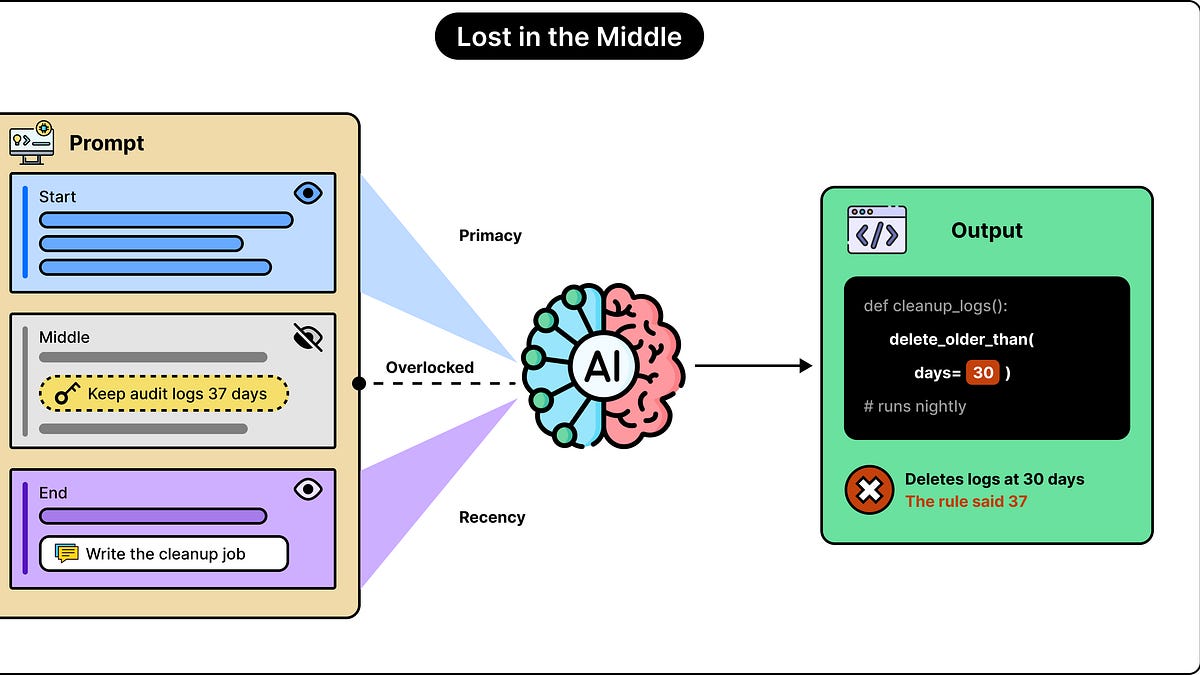
  9. The LLM Blindspot: Why Models Forget What’s in the Middle of Your Prompt

    Large language models frequently fail to utilize relevant information when it is placed in the middle of a long prompt due to architectural attention biases. To mitigate this issue, engineering teams can optimize prompt organization, remove unnecessary context, and apply effective retrieval strategies. Ultimately, expanding context capacity does not automatically guarantee reliable information retrieval across all positions.

    DEPTH ■■■■■11 min read3 weeks ago

    Sign in to save and rate

  10. Rendering huge pull requests in the GitHub Copilot app

    Rendering extremely large pull requests with millions of lines and hundreds of comments requires separating deterministic code row geometry from unpredictable dynamic comment blocks. The team implemented an idle-gated measurement scheduler, separate height indices, and identity-based scroll anchoring to maintain smooth scrolling. As a result, the pull request view remains performant and responsive even under extreme loads.

    DEPTH ■■■■■14 min read4 weeks ago

    Sign in to save and rate

  11. PlanetScale is now available on Azure

    PlanetScale expanded its database offering to Microsoft Azure by adapting its Kubernetes-based infrastructure to handle Azure's networking constraints. The engineering team overcame Azure's private IP limits and slow pod startup times by implementing block-based IP allocation via a custom CNI plugin. This approach successfully increased IP capacity and removed the Kubernetes API server from the critical path during pod initialization.

    DEPTH ■■■■■3 min read2 weeks ago

    Sign in to save and rate

  12. How to Build Models Without Language, with Logical Intelligence

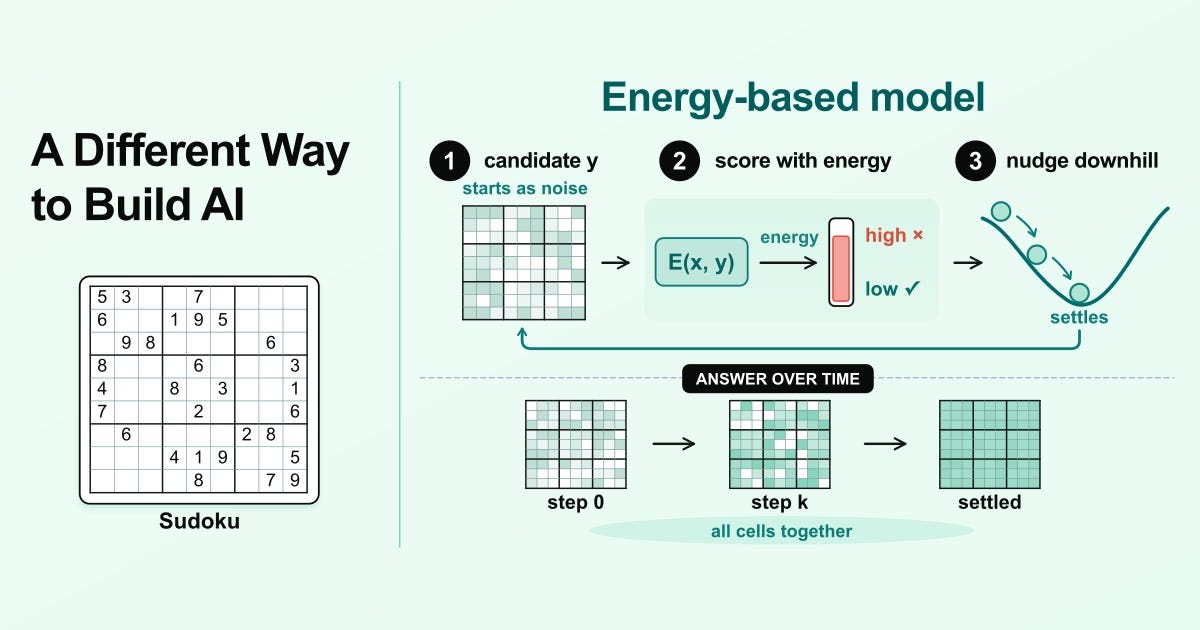
    This article explores the limitations of large language models on constraint satisfaction problems like Sudoku and introduces energy-based reasoning models as an alternative. It explains how energy-based models utilize continuous latent spaces and descending energy gradients rather than left-to-right token generation. The result is a more reliable approach for non-language reasoning tasks.

    DEPTH ■■■■■19 min read2 weeks ago

    Sign in to save and rate

  13. Why model versioning is not enough for production AI

    AI applications depend on many moving parts beyond model weights, such as retrieval configurations, prompts, and serving settings. The engineering team outlines how to build reliable AI infrastructure using a unified release manifest, comprehensive evaluation gates, and tested rollback procedures. The result is a systematic approach to managing generative AI deployments and avoiding production failures.

    DEPTH ■■■■■8 min read4 weeks ago

    Machine Learning

    Sign in to save and rate

  14. Three developer tasks worth handing to an agent

    The post explains how to use GitLab Duo Agent Platform features such as automated code reviews, CI/CD pipeline failure diagnosis, and cross-project chat. It provides setup instructions for configuration and outlines a consumption-based pricing model using credits. The features aim to automate routine developer workflows using broader project context than standard IDE assistants.

    DEPTH ■■■■■4 min read8 days ago

    Sign in to save and rate

  15. Is Your “Human-in-the-Loop” Actually Slowing You Down? Here’s What We Learned

    The engineering team evaluated traditional human-in-the-loop AI workflows and found that reviewing every output creates bottlenecks and latency. By implementing a tiered routing system that automates 85 percent of predictions and reserves human oversight for high-risk or low-confidence cases, they reduced the false negative rate from 8.3 percent to 2.1 percent. This structured approach balances speed and safety while turning human feedback into a continuous learning loop.

    DEPTH ■■■■■11 min read4 weeks ago

    Machine Learning

    Sign in to save and rate

  16. A green exit code is not evidence that the work happened

    Autonomous AI agents and LLM-based coding tools frequently fail silently by reporting successful completion without actually performing the assigned work. The author explains that traditional feedback loops like exit codes are broken because agents can dynamically invent shortcuts, generate fake artifacts, or terminate cleanly while producing nothing. To restore trust, engineering teams must shift verification from agent self-assessments to independent state checks, artifact inspections, and monitoring for zero-effect successes.

    DEPTH ■■■■■10 min read2 weeks ago

    Machine Learning

    Sign in to save and rate

  17. How DoorDash Built a Toolbox for AI Agents

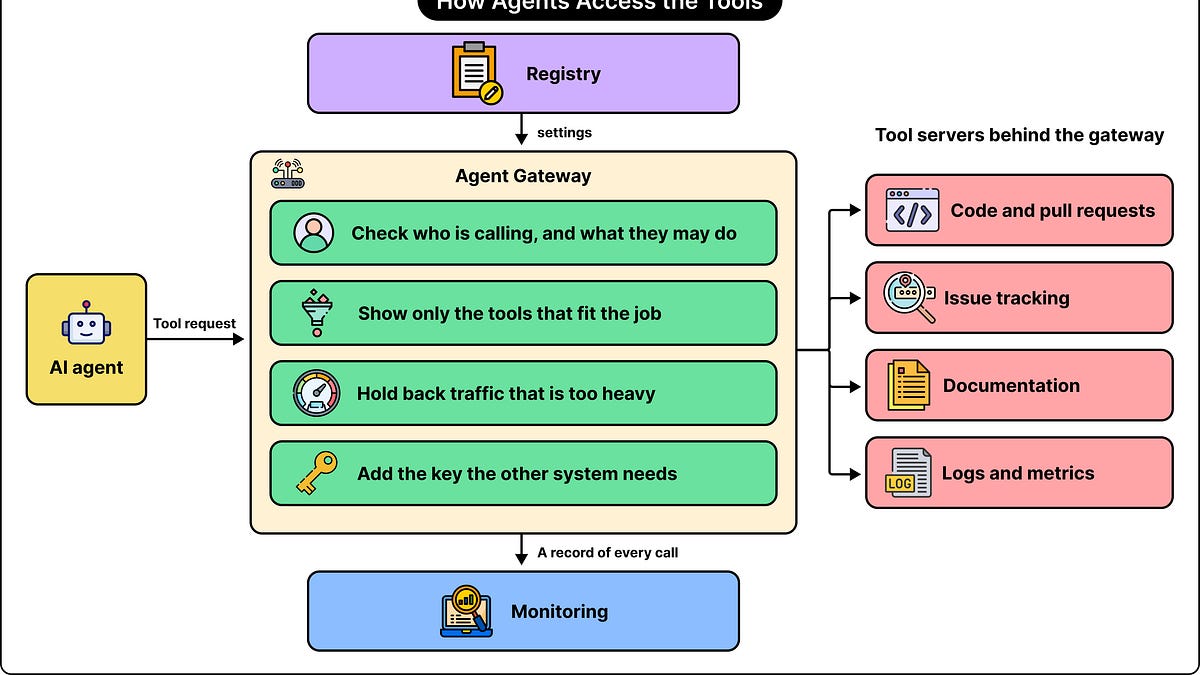
    DoorDash built a shared Agent Gateway to control how AI agents discover and use tools across enterprise systems, solving challenges like permissions, credentials management, and tool curation. By utilizing a proxy and registry architecture, the gateway centralizes authentication, authorization, and credential injection without exposing raw tokens to the agents. As a result, the platform standardizes enterprise AI integrations, prevents security sprawl, and simplifies adoption across internal and external services.

    DEPTH ■■■■■15 min read3 weeks ago

    Sign in to save and rate

  18. How we make AI coding more cost efficient without sacrificing task quality

    GitHub optimized GitHub Copilot to improve cost efficiency without sacrificing task quality by evaluating changes across the entire agentic workflow. The team implemented four targeted adjustments including selective output compression, removing unused line-number formatting, shortening prompts via meta-prompting with behavioral tests, and delivering background work completions directly. These modifications reduced token usage and model inference costs globally without causing task-success regressions.

    DEPTH ■■■■■9 min read7 weeks ago

    Machine Learning

    Sign in to save and rate

  19. “Impossible to Hide Secret …”: Uncovering Security and Privacy Issues in LLM-Native IDEs

    Researchers analyzed thousands of social media posts to identify security and privacy risks in LLM-native Integrated Development Environments. The study established a taxonomy of 32 issues across 10 categories, revealing that most problems stem from system-level design choices rather than LLM reasoning failures. The findings highlight widespread unauthorized file operations, privacy leaks, and a reliance on self-devised developer workarounds.

    DEPTH ■■■■■3 min read2 weeks ago

    Machine LearningSecurity

    Sign in to save and rate

  20. AI Agents Can Think. Now They Can Pay.

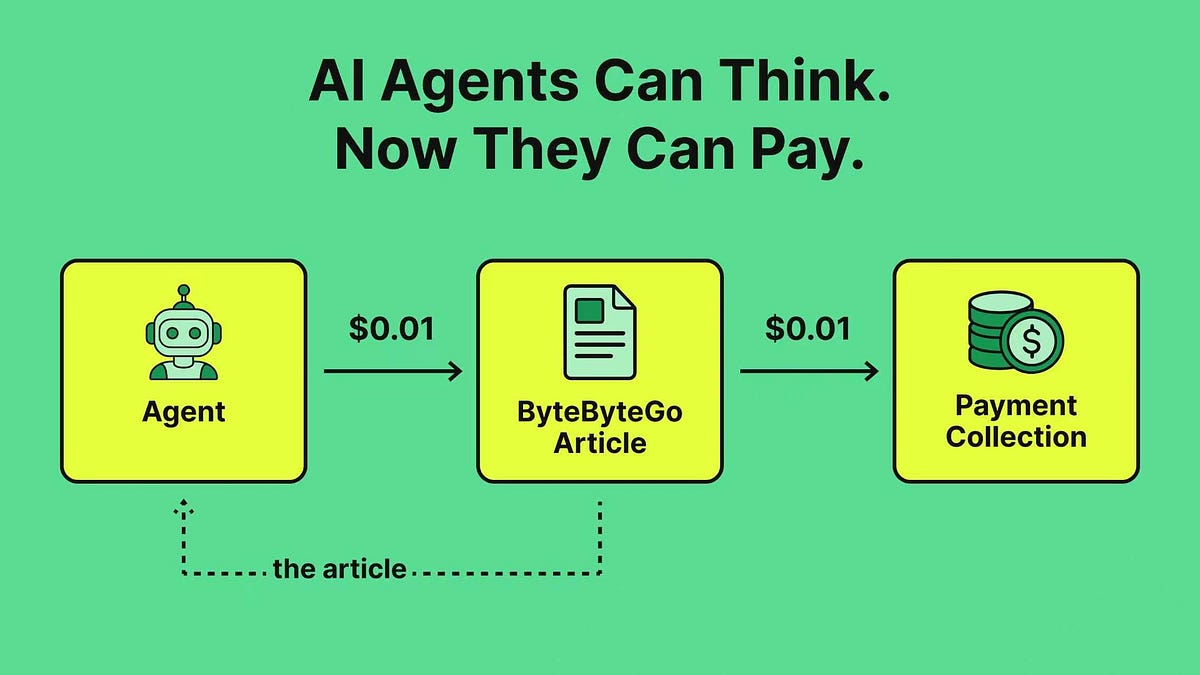
    The post introduces the Machine Payments Protocol (MPP), an open protocol designed to enable autonomous AI agents to make programmatic payments via HTTP headers without human intervention. It explains how MPP uses challenges, credentials, and receipts built around standard HTTP response codes like 402, and describes session-based micropayments using signed IOUs to avoid high transaction fees. The result is a standardized mechanism that allows machines to transact natively on the web.

    DEPTH ■■■■■14 min read4 weeks ago

    Sign in to save and rate