/ THE FEED /

Read what ships.

Deep, recent reads ranked by depth and freshness.

  1. We gave AI agents a mobile dev environment

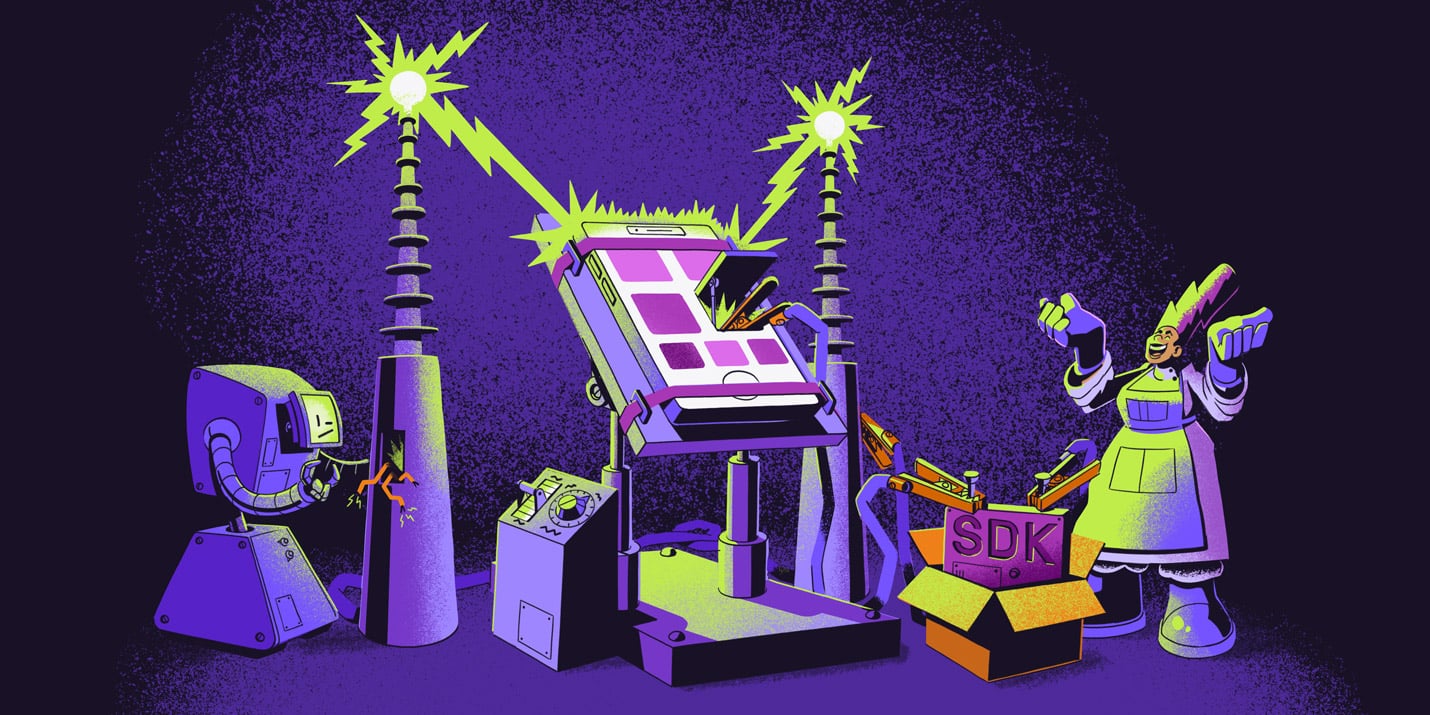
    Engineering teams outgrew their local machines while running parallel AI mobile development agents, constrained by heavy builds and lack of iOS tools on Linux. To solve this, they built Remote Dev using warm pools of remote Macs connected via SSH alongside separate Linux VMs for Android virtualization, paired with agent skills and live browser streaming. This setup shifted workflow bottlenecks, increasing AI-merged pull requests from 6 percent to 61 percent.

    DEPTH ■■■■■9 min read3 days ago

    ArchitectureMobile

    Sign in to save and rate

  2. How Shopify turns open models into task experts

    Shopify uses a continual learning flywheel to post-train open models, such as NVIDIA Nemotron, to serve as dedicated subagents for specific tasks like GraphQL generation. By optimizing inference and utilizing automated self-healing to generate training data from production failures, the team successfully created task experts that outperform frontier models while reducing serving costs by 90-98% and improving response times.

    DEPTH ■■■■■5 min read4 days ago

    Architecture

    Sign in to save and rate

  3. Sentry JavaScript SDK v11 adds tracing for all JS platforms

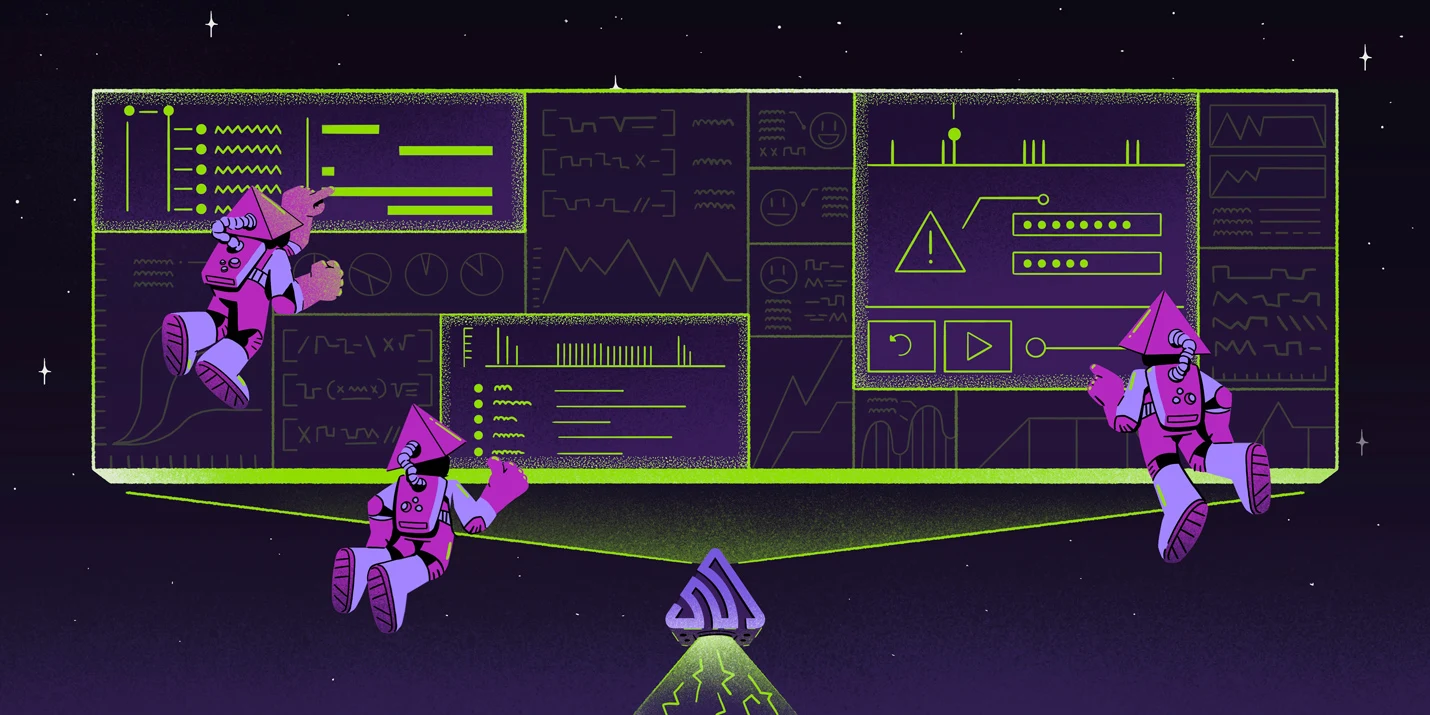
    Sentry replaced its OpenTelemetry-based JavaScript SDK instrumentation with a source-code transformation approach using diagnostics channels in version 11. This change removes reliance on Node-specific module loader hooks, enabling reliable tracing across non-Node runtimes like Deno, Bun, and Cloudflare Workers, while also supporting bundled applications. The result is a simplified architecture that reduces bundle weight and fixes previous limitations with load order and immutable exports.

    DEPTH ■■■■■13 min read2 weeks ago

    Sign in to save and rate

  4. OpenTelemetry Collector Configuration for LLM Observability

    LLM applications emit bulky telemetry containing sensitive user content and disparate attribute names. The team uses an OpenTelemetry Collector pipeline to normalize, enrich, redact, and export this data to Honeycomb. This centralizes control, protects data before it leaves the network, and maintains consistent observability.

    DEPTH ■■■■■12 min read2 weeks ago

    Sign in to save and rate

  5. Cross-store product clustering across millions of stores

    Shopify needed to group identical product listings from millions of different merchants under a single global identifier. To solve this at scale without comparing every possible pair, the team implemented a multi-stage pipeline using vector retrieval, a tiered scoring system of ML models, and a bounded graph clustering approach. This architecture successfully standardizes product data across the entire platform while controlling computational costs.

    DEPTH ■■■■■13 min read5 days ago

    Architecture

    Sign in to save and rate

  6. Reducing Android scope-sync overhead in Sentry Flutter

    The Sentry Flutter team investigated scope-sync overhead on Android and found redundant data normalization across isolates alongside unnecessary buffer copies during JSON encoding. By removing the duplicate normalization and encoding directly to UTF-8 bytes, the team reduced processing time by 27 to 30 percent across benchmarked payloads.

    DEPTH ■■■■■4 min read2 weeks ago

    Sign in to save and rate

  7. Building Overexposed: understanding application exposure

    The team built an automated scanner called Overexposed to track internet-facing services and verify access controls across Kubernetes and Cloud Run. By querying live cloud inventories and probing endpoints like an outsider, the scanner classifies exposure while avoiding false assumptions from static config files. As a result, the engineering organization improved accuracy and significantly reduced inconclusive findings over time.

    DEPTH ■■■■■8 min read5 days ago

    Sign in to save and rate

  8. The Sentry Android SDK is now 20-30% faster!

    The Sentry team optimized the Android SDK to reduce initialization time by 20-30% and background CPU usage by up to 10%. Improvements were achieved by profiling with Perfetto, replacing slow runtime manifest parsing and DSN parsing with build-time bytecode writing and lightweight parsers, and reusing thread pools. Upgrading to the latest SDK version allows applications to realize these startup performance gains.

    DEPTH ■■■■■4 min read5 days ago

    Sign in to save and rate

  9. How Honeycomb Private Cloud Drinks From the Fire Hose

    The Honeycomb Private Cloud team struggled to manually track and integrate rapid infrastructure and configuration changes produced by upstream teams. To solve this, they built custom scripts to generate automated drift reports and eventually integrated AI to help triage and track the necessary follow-up work. As a result, the team successfully scaled their integration process into a reliable daily workflow.

    DEPTH ■■■■■10 min read2 weeks ago

    Sign in to save and rate

  10. ShopGym: Realistic, reproducible sandboxes for shopping agents

    Training and evaluating shopping agents is difficult due to changing live store environments, bot detection, and limited hand-built test stores. The team developed ShopGym, a framework that converts live storefronts into self-contained, anonymized sandbox shops and generates benchmark tasks. Evaluation showed that synthetic shops preserve key structural properties and behavioral alignment with live stores, giving agents a reliable environment to practice and improve.

    DEPTH ■■■■■6 min read3 weeks ago

    Sign in to save and rate

  11. Unreal MCP now speaks Sentry

    The Sentry team integrated their crash reporting plugin with Unreal Engine's new experimental Model Context Protocol (MCP) server, allowing coding agents to fully automate setup and debugging. By combining editor tools and Sentry MCP, an agent successfully configured the SDK, uploaded debug symbols, packaged a build, induced a crash, and traced the root cause without manual file editing. The integration streamlines crash reporting setup, though it currently suffers from occasional agent tool-discovery issues and server fragility across editor restarts.

    DEPTH ■■■■■7 min read2 weeks ago

    Sign in to save and rate

  12. Should you use a log or a metric?

    This post explains the distinction between logs and metrics in application monitoring, noting that logs capture what was true during specific events for debugging while metrics track ongoing numerical trends over time. The author demonstrates how to implement both using Sentry SDKs during a user signup flow and outlines criteria for choosing between them. The resulting takeaway helps engineers decide whether to log an event or track it as a metric based on the questions they need to answer.

    DEPTH ■■■■■12 min read3 days ago

    Sign in to save and rate

  13. Helix: The internal tool powering our Shopify app's native migration

    Shopify is migrating its mobile apps from React Native to native Swift and Kotlin using an internal LLM-powered tool called Helix. Helix breaks migrations down into small checkpoints and enforces strict quality gates covering behavior, UI equivalence, architectural compliance, and human review. This iterative loop allows the team to reliably generate and migrate hundreds of screens to native code.

    DEPTH ■■■■■8 min read4 weeks ago

    Sign in to save and rate

  14. How Etsy gets its mobile apps ready for peak traffic

    Etsy prepares its mobile apps for peak holiday traffic through advance planning, operational guardrails, and risk management rather than relying on capacity scaling or the ability to quickly revert binaries. The engineering team utilizes a phased code slush, dual crash reporting, remote feature flags, and custom error tagging to surface and mitigate issues effectively under heavy loads. By connecting crash rates to business metrics and automating manual triage workflows incrementally, the organization maintains high visibility and reliability when updates cannot be instantly rolled back.

    DEPTH ■■■■■11 min read3 weeks ago

    Sign in to save and rate

  15. Our Limits Are Not Our Imagination

    Software development practices are shifting as artificial intelligence makes advanced rigor, such as formal verification and property-based testing, an affordable default for greenfield projects. Developers can leverage AI agents to thoroughly review code and enforce strict architectural boundaries rather than just writing code faster. However, successful outcomes require comprehensive development systems and thinking rather than relying on AI alone.

    DEPTH ■■■■■3 min read5 days ago

    Sign in to save and rate

  16. Migrating Shop app from React Native to native

    Shop migrated its mobile app from React Native to native Swift and Kotlin by leveraging AI coding agents to accelerate the rewrite. The migration resulted in improved startup times, higher session stability, smaller Android app sizes, and smoother rendering performance.

    DEPTH ■■■■■5 min read6 weeks ago

    Sign in to save and rate

  17. Native is now the future of mobile at Shopify

    Shopify is migrating its mobile applications from React Native back to native Swift and Kotlin. The team determined that the emergence of advanced coding agents significantly reduces the cost of maintaining platform parity, making native development the superior choice again. To execute this migration efficiently, Shopify developed a system called Helix and a CLI-driven, agent-addressable architecture to enable fast, autonomous testing.

    DEPTH ■■■■■10 min read6 weeks ago

    Sign in to save and rate

  18. Application Metrics caught my broken size estimator

    An engineer integrated application metrics into a client-side video conversion tool to monitor file size estimation accuracy without using invasive telemetry. By tracking key performance indicators and analyzing the metric distributions, they discovered that an AI-generated estimation formula was flawed and producing results off by up to 83 percent. Replacing the broken logic with a correct bitrate-based formula brought the size estimation accuracy to within five percent of real-world results.

    DEPTH ■■■■■15 min read7 weeks ago

    Sign in to save and rate

  19. Dr. Cat Hicks on the Psychology of Software Teams

    Engineering leaders must establish clear structures and cultural norms to reduce the psychological identity threat and anxiety developers experience when adopting AI tools. Research indicates that organizational trust regarding AI is currently fractured but repairable through realigned expectations and accountability. Furthermore, engineers are advised to build durable sources of professional identity rather than relying solely on mastery of specific languages or legacy codebases.

    DEPTH ■■■■■3 min read3 weeks ago

    Sign in to save and rate

  20. Seer, the Sentry MCP and CLI, or your own coding agent: where each one fits

    Engineers often struggle to choose between native debugging agents, Model Context Protocols, and command-line tools when integrating error tracking into their workflows. Sentry demonstrates how its debugging assistant Seer, the Sentry MCP, the Sentry CLI, and various coding agent integrations complement each other rather than compete. The resulting setup allows teams to diagnose complex application errors and automatically generate pull requests through whichever surface they prefer.

    DEPTH ■■■■■11 min read3 weeks ago

    Sign in to save and rate