/ THE FEED /

Read what ships.

Deep, recent reads ranked by depth and freshness.

  1. Better HTTP/1 connection reuse

    Failing to read an HTTP/1 response body completely prevents connection reuse, forcing clients to repeatedly pay the high cost of TCP and TLS handshakes. While developers previously had to implement complex manual body-draining logic, Go 1.27 introduces automatic asynchronous response draining in the net/http package. This improvement allows developers to simply close response bodies without worrying about connection pooling performance.

    DEPTH ■■■■■7 min read11 days ago

    Sign in to save and rate

  2. The Shift to cgroup v2 in Kubernetes: What You Need to Know

    Kubernetes has deprecated cgroup v1 in favor of cgroup v2, with complete removal scheduled for future releases. The transition requires migrating Linux nodes, updating container runtimes, and verifying kernel compatibility. Adopting cgroup v2 enables advanced features such as Memory QoS, improved OOM handling, and pressure stall information metrics.

    DEPTH ■■■■■12 min read2 weeks ago

    Sign in to save and rate

  3. Scaling Kubernetes Workloads with Node Swap

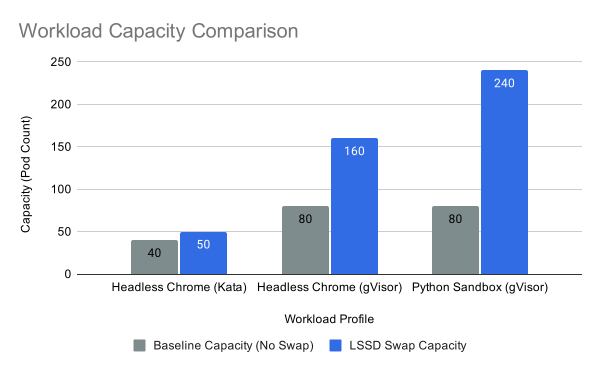
    Kubernetes memory limits often cap node density for bursty agentic AI workloads that sit idle with large memory footprints. To solve this, the engineering team benchmarked Kubernetes v1.34 node swap backed by fast NVMe Local SSDs across CI/CD builds, headless browsers, and Python sandboxes. The approach successfully increased pod density up to three times without significant latency costs.

    DEPTH ■■■■■6 min read2 weeks ago

    Sign in to save and rate

  4. Arch-specific SIMD in Go

    Go 1.27 introduces the archsimd package to provide low-level architecture-specific SIMD intrinsics for amd64, arm64, and wasm without requiring assembly. The API uses sensible naming conventions, zero-cost type reinterpretation, and opaque masks to improve usability and maintainability while achieving high performance. The resulting design enables developers to write optimized vectorized code safely with proper runtime CPU feature checking and compiler optimizations.

    DEPTH ■■■■■12 min read3 weeks ago

    Sign in to save and rate

  5. Why Is My Kubernetes Job Still Pending? Tracing Kueue Admission with Headlamp

    Kubernetes jobs managed by Kueue can remain pending while waiting for admission checks and resource allocation. The team implemented a Kueue plugin for Headlamp to trace pending workloads through local queues, cluster queues, and resource flavors within a unified interface. This approach allows engineers to quickly determine whether a job is blocked by admission policies or standard pod scheduling.

    DEPTH ■■■■■9 min read11 days ago

    Sign in to save and rate

  6. Replacing the old battery on rechargeable bike lights

    An individual attempted to repair old rechargeable bike lights with degraded batteries by cutting open the casing, desoldering the dead cells, and soldering in replacements. Despite lacking electronics experience and losing some screws, the repair was successful and restored the functionality of the lights.

    DEPTH ■■■■■5 min read4 weeks ago

    Sign in to save and rate