/ THE FEED /

Read what ships.

Deep, recent reads ranked by depth and freshness.

  1. PHP2Shell: GitLab helps find and remediate critical PHP flaws

    Critical remote code execution vulnerabilities known as PHP2Shell affect the PHP engine across multiple versions, requiring immediate runtime updates to fixed versions or patched distribution packages. The team utilized platform features like container scanning, code search, and automated agent workflows to locate PHP projects and remediate vulnerabilities. Operators must also check logs and environments for signs of compromise as framework updates and input validations cannot prevent these engine-level flaws.

    DEPTH ■■■■■10 min read3 days ago

    ArchitectureSecurity

    Sign in to save and rate

  2. OpenTelemetry Collector Configuration for LLM Observability

    LLM applications emit bulky telemetry containing sensitive user content and disparate attribute names. The team uses an OpenTelemetry Collector pipeline to normalize, enrich, redact, and export this data to Honeycomb. This centralizes control, protects data before it leaves the network, and maintains consistent observability.

    DEPTH ■■■■■12 min read2 weeks ago

    Sign in to save and rate

  3. Make every AI credit count: See, cap, and reduce agent spend

    Uncontrolled AI agent spending can be mitigated by combining open-weight models, centralized context graphs to reduce retries, and usage analytics with credit caps. GitLab introduced these capabilities in its Duo Agent Platform to help platform teams trace, limit, and optimize AI credit consumption. The resulting architecture matches specific tasks to lower-cost models while maintaining task completion quality.

    DEPTH ■■■■■6 min read12 days ago

    Sign in to save and rate

  4. How Honeycomb Private Cloud Drinks From the Fire Hose

    The Honeycomb Private Cloud team struggled to manually track and integrate rapid infrastructure and configuration changes produced by upstream teams. To solve this, they built custom scripts to generate automated drift reports and eventually integrated AI to help triage and track the necessary follow-up work. As a result, the team successfully scaled their integration process into a reliable daily workflow.

    DEPTH ■■■■■10 min read2 weeks ago

    Sign in to save and rate

  5. Our Limits Are Not Our Imagination

    Software development practices are shifting as artificial intelligence makes advanced rigor, such as formal verification and property-based testing, an affordable default for greenfield projects. Developers can leverage AI agents to thoroughly review code and enforce strict architectural boundaries rather than just writing code faster. However, successful outcomes require comprehensive development systems and thinking rather than relying on AI alone.

    DEPTH ■■■■■3 min read5 days ago

    Sign in to save and rate

  6. Three developer tasks worth handing to an agent

    The post explains how to use GitLab Duo Agent Platform features such as automated code reviews, CI/CD pipeline failure diagnosis, and cross-project chat. It provides setup instructions for configuration and outlines a consumption-based pricing model using credits. The features aim to automate routine developer workflows using broader project context than standard IDE assistants.

    DEPTH ■■■■■4 min read6 days ago

    Sign in to save and rate

  7. Why I tried to kill token billing (and why we kept it)

    The author examines the limitations of token-based billing as a customer-facing pricing model, noting that it exposes internal margins and commoditizes AI products. The company explored abandoning token billing entirely but realized its necessity for backend cost tracking and margin management. Ultimately, the piece proposes unified credits and output-based pricing as better ways to align invoices with customer value.

    DEPTH ■■■■■7 min read3 weeks ago

    Sign in to save and rate

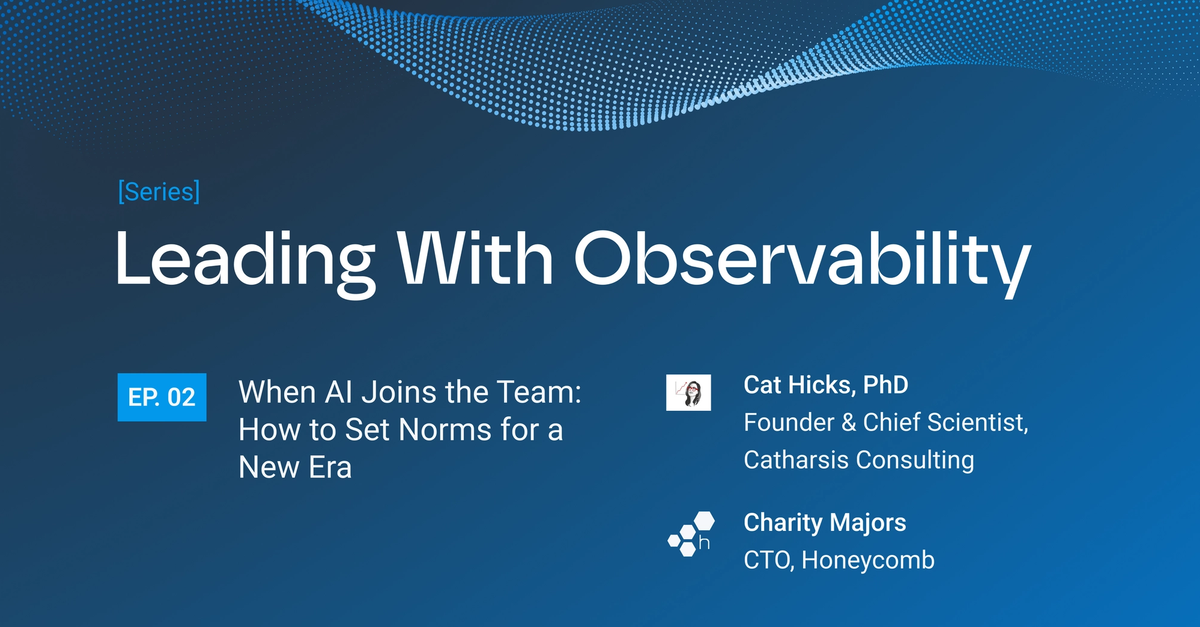
  8. Dr. Cat Hicks on the Psychology of Software Teams

    Engineering leaders must establish clear structures and cultural norms to reduce the psychological identity threat and anxiety developers experience when adopting AI tools. Research indicates that organizational trust regarding AI is currently fractured but repairable through realigned expectations and accountability. Furthermore, engineers are advised to build durable sources of professional identity rather than relying solely on mastery of specific languages or legacy codebases.

    DEPTH ■■■■■3 min read3 weeks ago

    Sign in to save and rate