/ THE FEED /

Read what ships.

Deep, recent reads ranked by depth and freshness.

  1. App stability at scale with a layered defense

    To maintain app stability amidst rapid weekly releases and AI-generated code, Grab uses a layered defense strategy covering prevention, release gates, and incident response. This pipeline includes static analysis via custom lint rules, multiple tiers of automated and manual testing, a pre-production early access build, staged rollouts, and feature flags with instant kill switches. As a result, critical defects are caught early in the development lifecycle before reaching the wider production user base.

    DEPTH ■■■■■16 min read4 days ago

    MobileReliability

    Sign in to save and rate

  2. The Thin Orchestrator: How We Made Our AI Agents More Reliable by Giving the Router Less to Do

    Meta engineers reduced hallucinations and improved reliability in their data pipeline agents by replacing a single heavyweight LLM orchestrator with a thin deterministic router and fourteen specialized subagents. The thin orchestrator handles routing and reliability checks through a fixed protocol, while isolated subagents execute domain reasoning. This architecture reduced configuration preparation time from a day to under an hour.

    DEPTH ■■■■■7 min read6 days ago

    Machine Learning

    Sign in to save and rate

  3. Inside Prometheus: Meta’s Journey to a Gigawatt-Scale Supercluster

    Meta built Prometheus, a gigawatt-scale AI supercluster designed to scale up to one million GPUs using multi-generation NVIDIA hardware and specialized backend Ethernet networks. The team achieved high goodput and significantly reduced system interruptions by implementing an in-rack sparing strategy, parallelism-aware fault tolerance, and close co-engineering with vendors. These infrastructure advancements allowed the team to successfully train frontier foundational models like Muse Wonder.

    DEPTH ■■■■■17 min read6 days ago

    InfrastructureMachine Learning

    Sign in to save and rate

  4. Meta’s Generative Ads Model (GEM): Scaling the Central Model and Compute Engine for Frontier Ads AI

    Meta developed GEM, a unified recommendation foundation model using an LLM-style architecture called Kunlun to handle heterogeneous ads data across multiple surfaces. The team implemented block attention, custom low-precision kernels, and post-training intelligence transfer techniques like LoopFM and Solaris to scale training efficiency and bypass real-time serving latency bottlenecks. The resulting system delivered an 18.9% conversion improvement and a 12% click-through rate increase across Meta ads surfaces.

    DEPTH ■■■■■15 min read12 days ago

    Machine Learning

    Sign in to save and rate

  5. Powering AI-led research through simulation

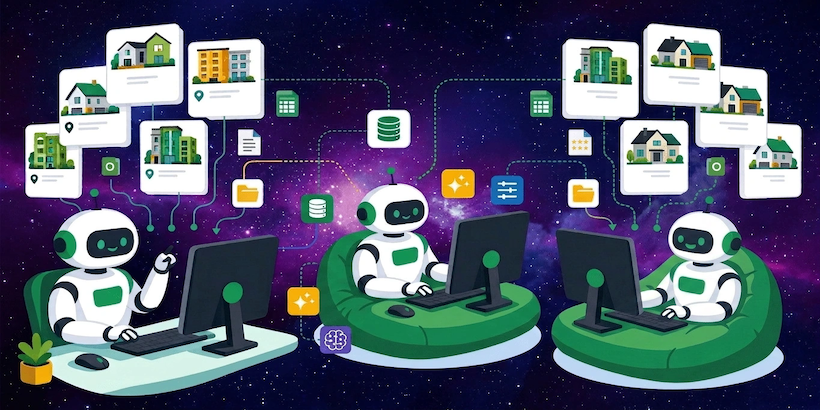
    The engineering team built a self-contained simulation platform called sim-rs to model marketplace dispatch dynamics and accelerate experimentation. By connecting automated software agents to this simulator with strict safety safeguards, the team successfully optimized strategy policies and simulator performance. This closed-loop lab environment allows agents to test ideas rapidly while ensuring that only valid, production-ready improvements are produced.

    DEPTH ■■■■■10 min read2 weeks ago

    Machine Learning

    Sign in to save and rate

  6. OCP Summit 2026: Powering AI with Open Innovations in Scale-Up, Scale-Out, and Scale-Across Networks

    Meta shared its next-generation open networking infrastructure for AI at the OCP Summit 2026, including liquid-cooled 102.4T switch platforms, multiplane scale-out fabrics, and Ethernet-based scale-up solutions. The team also highlighted collaborative industry standards like ESUN and OSPA to unify hardware and transport layers. These open innovations aim to support massive gigawatt-scale AI clusters across diverse data center environments.

    DEPTH ■■■■■12 min read12 days ago

    Machine Learning

    Sign in to save and rate

  7. GenRecs Tokenization: Transforming Ads Recommendation at Meta with Stable Model Vocabulary

    Meta implemented GenRecs Tokenization to replace dedicated item IDs with a stable semantic vocabulary for ads recommendation. Using a three-stage encoding and quantization pipeline, the system enables language models to reason about ad content and user preferences simultaneously. This approach resulted in a +0.35% lift in conversions and improved cold-start performance for new entities.

    DEPTH ■■■■■6 min read6 days ago

    Machine Learning

    Sign in to save and rate

  8. Smarter personalization: How property data helps us understand user price sensitivity

    Existing user personalization systems fail to systematically account for residential property values, leading to one-dimensional profiles and regional blind spots. A conceptual four-step method is proposed that combines public property data, large language models, building-level price estimation, and hierarchical clustering to classify user affluence. The approach remains unimplemented, with future viability depending on technical validation, data quality, and privacy approvals.

    DEPTH ■■■■■4 min read2 weeks ago

    Data EngineeringMachine Learning

    Sign in to save and rate

  9. Automated merchant review summary system with integrated feedback

    To help users navigate large volumes of unstructured merchant reviews, the engineering team built an automated review summary system using representative sampling, large language models, and automated quality control checks. The pipeline generates overall and topic-based summaries while incorporating maintenance triggers based on new review counts and consumer feedback. This approach reduces the text consumers need to scan while ensuring claims remain grounded in source data.

    DEPTH ■■■■■5 min read4 weeks ago

    Machine Learning

    Sign in to save and rate

  10. GrabMart data for faster disease outbreak detection

    The organization proposes a conceptual data pipeline to analyze aggregated GrabMart transaction data for symptom-related product demand, aiming to supplement clinical surveillance for disease outbreaks. The design relies on data aggregation, statistical baseline comparisons, and privacy safeguards like differential privacy without involving individual health inference. The system remains in an early planning phase requiring rigorous validation, privacy review, and public health oversight.

    DEPTH ■■■■■5 min read12 days ago

    Data EngineeringMachine Learning

    Sign in to save and rate