/ THE FEED /

Read what ships.

Deep, recent reads ranked by depth and freshness.

  1. App stability at scale with a layered defense

    To maintain app stability amidst rapid weekly releases and AI-generated code, Grab uses a layered defense strategy covering prevention, release gates, and incident response. This pipeline includes static analysis via custom lint rules, multiple tiers of automated and manual testing, a pre-production early access build, staged rollouts, and feature flags with instant kill switches. As a result, critical defects are caught early in the development lifecycle before reaching the wider production user base.

    DEPTH ■■■■■16 min read4 days ago

    MobileReliability

    Sign in to save and rate

  2. The Shift to cgroup v2 in Kubernetes: What You Need to Know

    Kubernetes has deprecated cgroup v1 in favor of cgroup v2, with complete removal scheduled for future releases. The transition requires migrating Linux nodes, updating container runtimes, and verifying kernel compatibility. Adopting cgroup v2 enables advanced features such as Memory QoS, improved OOM handling, and pressure stall information metrics.

    DEPTH ■■■■■12 min read2 weeks ago

    Sign in to save and rate

  3. Scaling Kubernetes Workloads with Node Swap

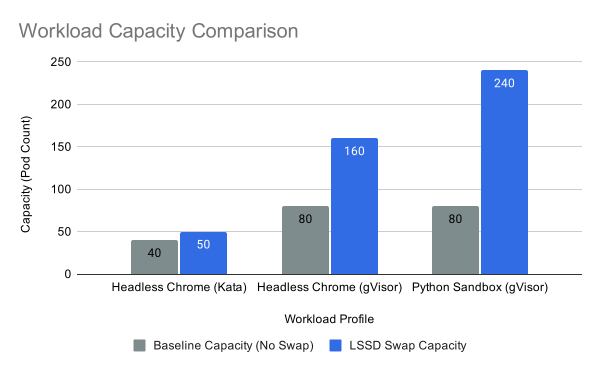
    Kubernetes memory limits often cap node density for bursty agentic AI workloads that sit idle with large memory footprints. To solve this, the engineering team benchmarked Kubernetes v1.34 node swap backed by fast NVMe Local SSDs across CI/CD builds, headless browsers, and Python sandboxes. The approach successfully increased pod density up to three times without significant latency costs.

    DEPTH ■■■■■6 min read2 weeks ago

    Sign in to save and rate

  4. Powering AI-led research through simulation

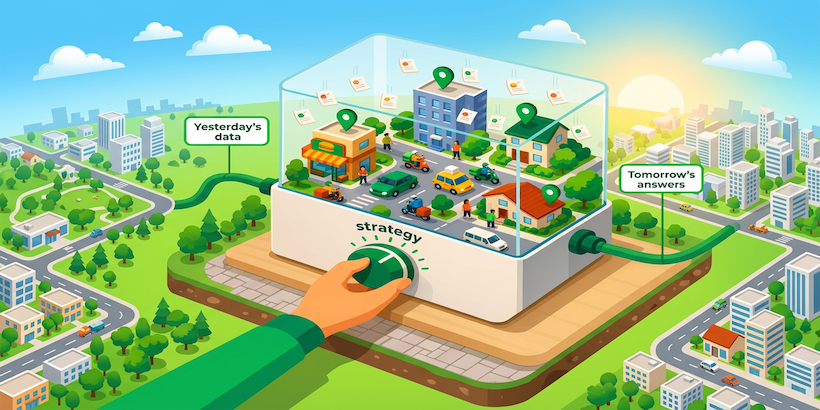
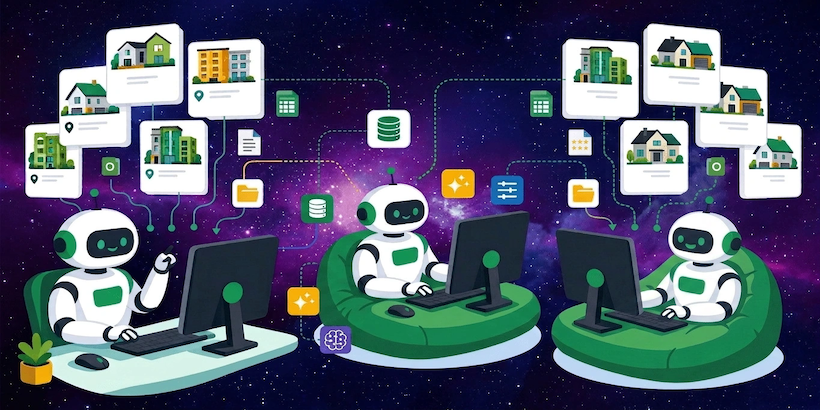
    The engineering team built a self-contained simulation platform called sim-rs to model marketplace dispatch dynamics and accelerate experimentation. By connecting automated software agents to this simulator with strict safety safeguards, the team successfully optimized strategy policies and simulator performance. This closed-loop lab environment allows agents to test ideas rapidly while ensuring that only valid, production-ready improvements are produced.

    DEPTH ■■■■■10 min read2 weeks ago

    Machine Learning

    Sign in to save and rate

  5. Front-End Web Deep Dive: Runtime Config

    Front-end web applications traditionally bake environment variables into build artifacts, requiring a full rebuild to change configurations across environments. To solve this, a new approach injects runtime environment variables directly into the HTML document's head element as data attributes via a Cloud Native Buildpack. This enables zero-rebuild configuration changes while remaining compatible with browser security standards like CSP.

    DEPTH ■■■■■3 min read10 days ago

    Frontend

    Sign in to save and rate

  6. Why Is My Kubernetes Job Still Pending? Tracing Kueue Admission with Headlamp

    Kubernetes jobs managed by Kueue can remain pending while waiting for admission checks and resource allocation. The team implemented a Kueue plugin for Headlamp to trace pending workloads through local queues, cluster queues, and resource flavors within a unified interface. This approach allows engineers to quickly determine whether a job is blocked by admission policies or standard pod scheduling.

    DEPTH ■■■■■9 min read11 days ago

    Sign in to save and rate

  7. Smarter personalization: How property data helps us understand user price sensitivity

    Existing user personalization systems fail to systematically account for residential property values, leading to one-dimensional profiles and regional blind spots. A conceptual four-step method is proposed that combines public property data, large language models, building-level price estimation, and hierarchical clustering to classify user affluence. The approach remains unimplemented, with future viability depending on technical validation, data quality, and privacy approvals.

    DEPTH ■■■■■4 min read2 weeks ago

    Data EngineeringMachine Learning

    Sign in to save and rate

  8. Data Mesh at Grab (Part III): Operationalizing data reliability with automated DPIs

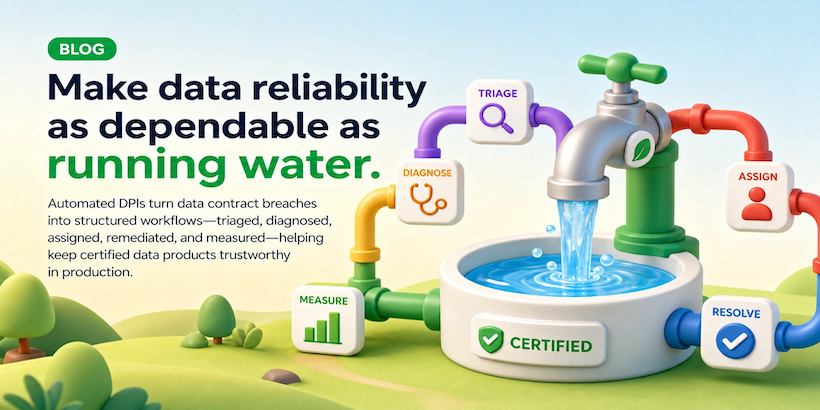
    Grab addressed runtime data reliability issues in its data mesh by implementing automated Data Production Issues (DPIs). The system uses an incident orchestrator to detect contract breaches, a Data Health API for cross-platform root cause analysis, and Hugo for automated remediation. This approach resolved 86.9 percent of incidents automatically and made mean time to resolve six times faster.

    DEPTH ■■■■■12 min read8 weeks ago

    DatabasesObservability

    Sign in to save and rate

  9. Automated merchant review summary system with integrated feedback

    To help users navigate large volumes of unstructured merchant reviews, the engineering team built an automated review summary system using representative sampling, large language models, and automated quality control checks. The pipeline generates overall and topic-based summaries while incorporating maintenance triggers based on new review counts and consumer feedback. This approach reduces the text consumers need to scan while ensuring claims remain grounded in source data.

    DEPTH ■■■■■5 min read4 weeks ago

    Machine Learning

    Sign in to save and rate

  10. GrabMart data for faster disease outbreak detection

    The organization proposes a conceptual data pipeline to analyze aggregated GrabMart transaction data for symptom-related product demand, aiming to supplement clinical surveillance for disease outbreaks. The design relies on data aggregation, statistical baseline comparisons, and privacy safeguards like differential privacy without involving individual health inference. The system remains in an early planning phase requiring rigorous validation, privacy review, and public health oversight.

    DEPTH ■■■■■5 min read12 days ago

    Data EngineeringMachine Learning

    Sign in to save and rate