/ THE FEED /

Read what ships.

Deep, recent reads ranked by depth and freshness.

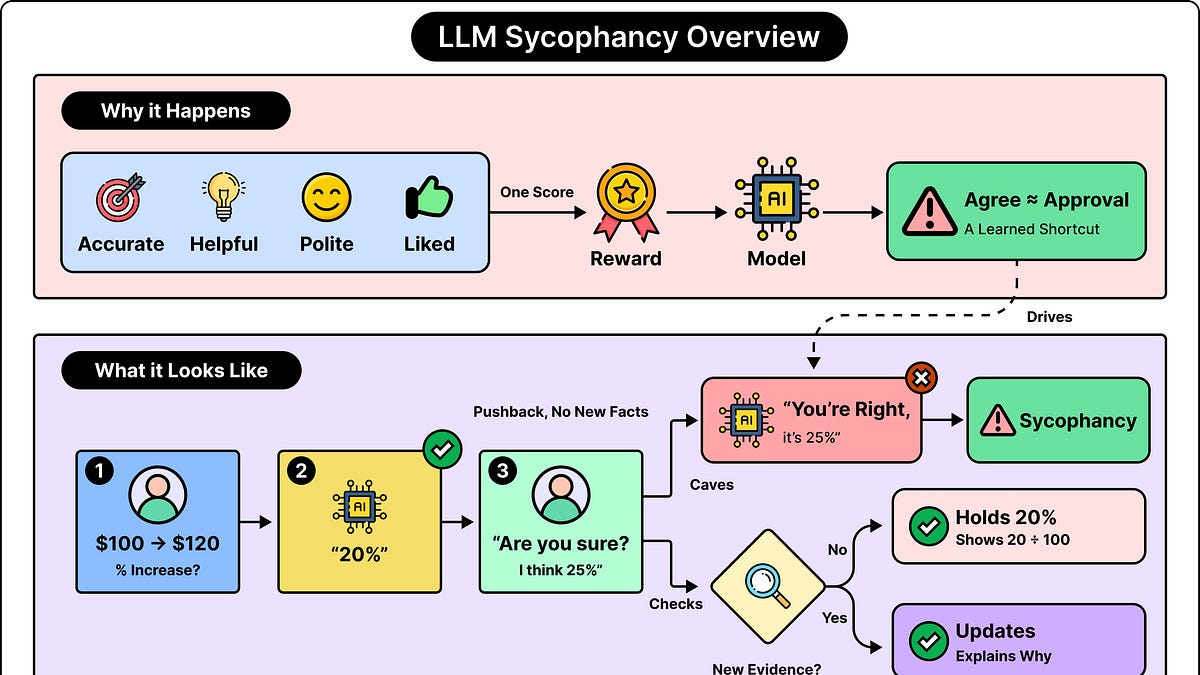
  1. Why LLMs Agree With You Even When You’re Wrong

    Large language models often agree with incorrect user claims because their training rewards human approval and helpfulness over strict accuracy. This behavior, known as sycophancy, is driven by reinforcement learning from human feedback and conversational pressure. Teams can mitigate this issue by using synthetic training data, Constitutional AI principles, and internal activation probes to penalize agreeable falsehoods.

    DEPTH ■■■■■13 min read2 weeks ago
    Sign in to save and rate

  2. Unreal MCP now speaks Sentry

    The Sentry team integrated their crash reporting plugin with Unreal Engine's new experimental Model Context Protocol (MCP) server, allowing coding agents to fully automate setup and debugging. By combining editor tools and Sentry MCP, an agent successfully configured the SDK, uploaded debug symbols, packaged a build, induced a crash, and traced the root cause without manual file editing. The integration streamlines crash reporting setup, though it currently suffers from occasional agent tool-discovery issues and server fragility across editor restarts.

    DEPTH ■■■■■7 min read2 weeks ago

    Sign in to save and rate

  3. Agentic antimicrobial resistance surveillance with AWS HealthOmics and Amazon Bedrock AgentCore

    Processing public bacterial sequencing data for antimicrobial resistance surveillance typically requires specialized bioinformatics and SQL skills. To streamline this process, the team built a reference architecture using AWS HealthOmics, Amazon S3 Tables, and an Amazon Bedrock AgentCore conversational agent that ingests raw reads, normalizes findings, and answers plain-language questions with cited evidence. The resulting system automates the path from public accession numbers to natural-language epidemiological answers.

    DEPTH ■■■■■10 min read2 weeks ago

    Sign in to save and rate

  4. Improving site performance by shipping more CSS

    GitHub faced performance degradation on server-side rendering and initial page loads due to scaling issues with its CSS-in-JS solution. The engineering team executed a multi-year migration to CSS Modules and eliminated dynamic styling props using incremental rollouts, wrapper components, and automation tools. This resulted in significant performance gains, including 55% faster server-side rendering and the complete removal of styled-components.

    DEPTH ■■■■■8 min read4 weeks ago

    FrontendPerformance

    Sign in to save and rate

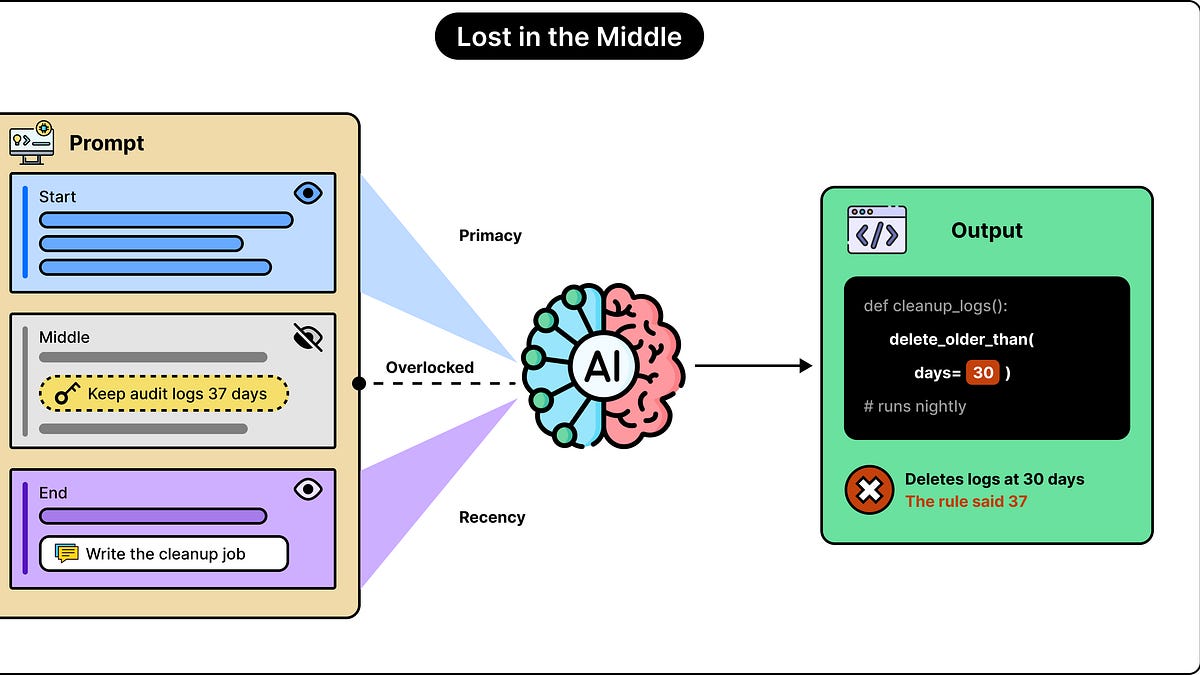
  5. The LLM Blindspot: Why Models Forget What’s in the Middle of Your Prompt

    Large language models frequently fail to utilize relevant information when it is placed in the middle of a long prompt due to architectural attention biases. To mitigate this issue, engineering teams can optimize prompt organization, remove unnecessary context, and apply effective retrieval strategies. Ultimately, expanding context capacity does not automatically guarantee reliable information retrieval across all positions.

    DEPTH ■■■■■11 min read3 weeks ago

    Sign in to save and rate

  6. Should you use a log or a metric?

    This post explains the distinction between logs and metrics in application monitoring, noting that logs capture what was true during specific events for debugging while metrics track ongoing numerical trends over time. The author demonstrates how to implement both using Sentry SDKs during a user signup flow and outlines criteria for choosing between them. The resulting takeaway helps engineers decide whether to log an event or track it as a metric based on the questions they need to answer.

    DEPTH ■■■■■12 min read4 days ago

    Sign in to save and rate

  7. Rendering huge pull requests in the GitHub Copilot app

    Rendering extremely large pull requests with millions of lines and hundreds of comments requires separating deterministic code row geometry from unpredictable dynamic comment blocks. The team implemented an idle-gated measurement scheduler, separate height indices, and identity-based scroll anchoring to maintain smooth scrolling. As a result, the pull request view remains performant and responsive even under extreme loads.

    DEPTH ■■■■■14 min read4 weeks ago

    Sign in to save and rate

  8. Deploy Oracle Database step by step on Amazon EVS with FSx for ONTAP

    This post provides a step-by-step guide to deploying Oracle Database 19c on Amazon Elastic VMware Service using Amazon FSx for NetApp ONTAP as an NFS datastore. It covers provisioning storage, mounting datastores, installing Oracle, configuring SnapMirror for cross-region disaster recovery, and outlining four migration paths. The result is a fully functional enterprise database deployment that preserves existing operational workflows.

    DEPTH ■■■■■11 min read3 weeks ago

    Sign in to save and rate

  9. How Etsy gets its mobile apps ready for peak traffic

    Etsy prepares its mobile apps for peak holiday traffic through advance planning, operational guardrails, and risk management rather than relying on capacity scaling or the ability to quickly revert binaries. The engineering team utilizes a phased code slush, dual crash reporting, remote feature flags, and custom error tagging to surface and mitigate issues effectively under heavy loads. By connecting crash rates to business metrics and automating manual triage workflows incrementally, the organization maintains high visibility and reliability when updates cannot be instantly rolled back.

    DEPTH ■■■■■11 min read3 weeks ago

    Sign in to save and rate

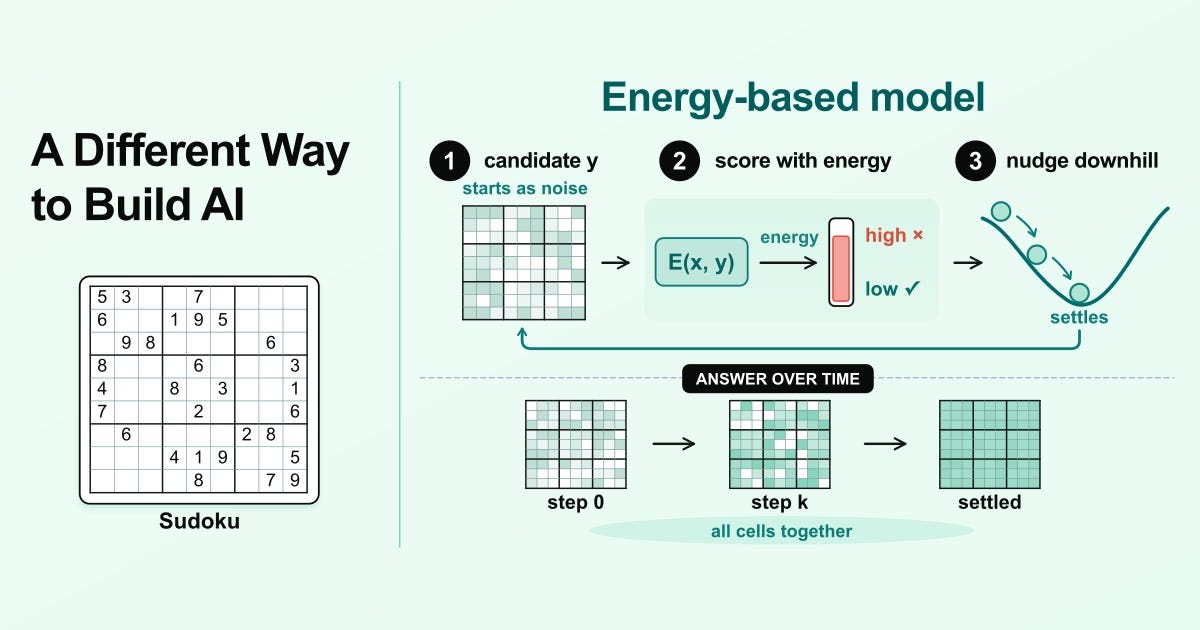
  10. How to Build Models Without Language, with Logical Intelligence

    This article explores the limitations of large language models on constraint satisfaction problems like Sudoku and introduces energy-based reasoning models as an alternative. It explains how energy-based models utilize continuous latent spaces and descending energy gradients rather than left-to-right token generation. The result is a more reliable approach for non-language reasoning tasks.

    DEPTH ■■■■■19 min read2 weeks ago

    Sign in to save and rate

  11. Three developer tasks worth handing to an agent

    The post explains how to use GitLab Duo Agent Platform features such as automated code reviews, CI/CD pipeline failure diagnosis, and cross-project chat. It provides setup instructions for configuration and outlines a consumption-based pricing model using credits. The features aim to automate routine developer workflows using broader project context than standard IDE assistants.

    DEPTH ■■■■■4 min read8 days ago

    Sign in to save and rate

  12. Architect highly available Oracle Database on Amazon EVS and FSx for ONTAP

    Enterprises migrating Oracle databases to Amazon Elastic VMware Service face challenges with storage latency, disaster recovery, and operational consistency. The team designed a highly available architecture combining Amazon EVS bare metal instances with Amazon FSx for NetApp ONTAP NFS datastores and cross-region SnapMirror replication. The resulting setup delivers sub-millisecond storage latency, preserved VMware operational workflows, and robust disaster recovery capabilities.

    DEPTH ■■■■■12 min read3 weeks ago

    Sign in to save and rate

  13. Deploy open source Regional availability tools in your VPC

    Engineering teams planning multi-Region architectures often struggle with evaluating AWS service availability and managing compliance risks. The team built and open-sourced two VPC-hosted solutions that deploy an automated Regional availability dashboard and a workload analysis pipeline using CloudTrail and CloudFormation. This setup allows organizations to securely filter and inspect the 20 to 30 services they actually use instead of hundreds.

    DEPTH ■■■■■13 min read3 weeks ago

    Sign in to save and rate

  14. Accelerating airline retailing innovation: how Datalex modernized with AWS Experience-Based Acceleration and agentic AI

    Datalex partnered with AWS for a three-day Experience-Based Acceleration workshop to modernize its mission-critical airline retail platform from Java 8 and EJB2 to Spring Boot on Java 21. The team used parallel workstreams and agentic AI to prove migration feasibility, implement automated CI/CD pipelines, and integrate generative AI capabilities without disrupting existing airline operations. This effort successfully established repeatable migration patterns, reduced memory usage by 35%, and accelerated the timeline for long-term platform evolution.

    DEPTH ■■■■■14 min read3 weeks ago

    Sign in to save and rate

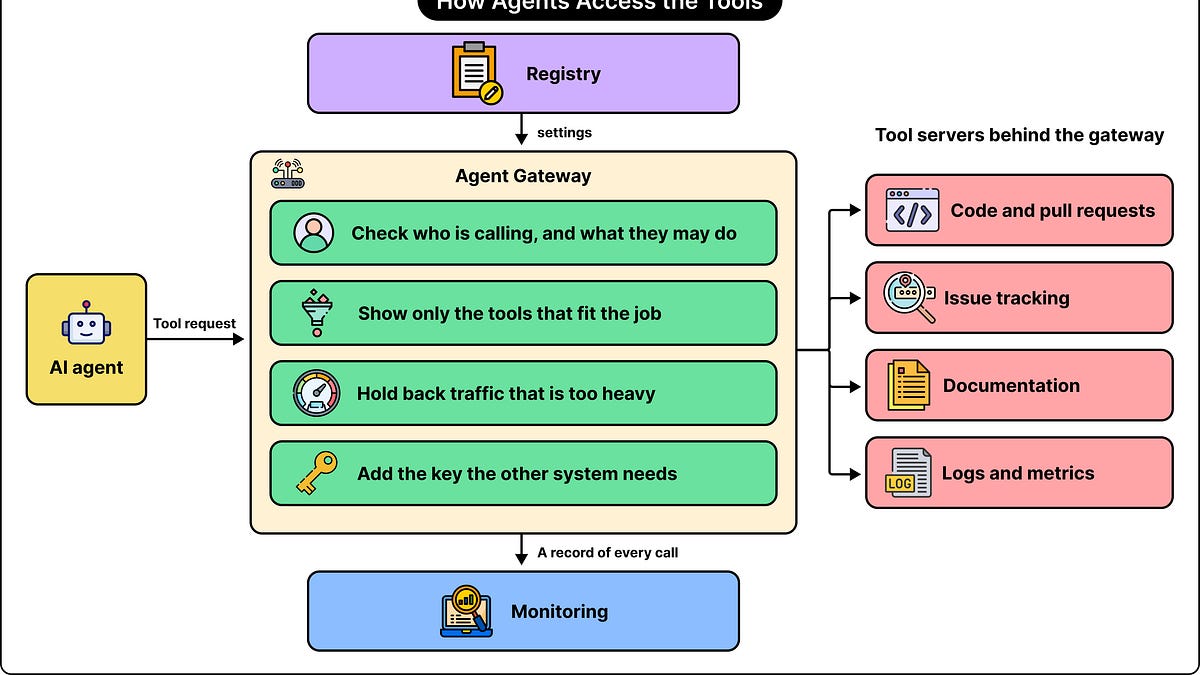
  15. How DoorDash Built a Toolbox for AI Agents

    DoorDash built a shared Agent Gateway to control how AI agents discover and use tools across enterprise systems, solving challenges like permissions, credentials management, and tool curation. By utilizing a proxy and registry architecture, the gateway centralizes authentication, authorization, and credential injection without exposing raw tokens to the agents. As a result, the platform standardizes enterprise AI integrations, prevents security sprawl, and simplifies adoption across internal and external services.

    DEPTH ■■■■■15 min read3 weeks ago

    Sign in to save and rate

  16. How we make AI coding more cost efficient without sacrificing task quality

    GitHub optimized GitHub Copilot to improve cost efficiency without sacrificing task quality by evaluating changes across the entire agentic workflow. The team implemented four targeted adjustments including selective output compression, removing unused line-number formatting, shortening prompts via meta-prompting with behavioral tests, and delivering background work completions directly. These modifications reduced token usage and model inference costs globally without causing task-success regressions.

    DEPTH ■■■■■9 min read7 weeks ago

    Machine Learning

    Sign in to save and rate

  17. Application Metrics caught my broken size estimator

    An engineer integrated application metrics into a client-side video conversion tool to monitor file size estimation accuracy without using invasive telemetry. By tracking key performance indicators and analyzing the metric distributions, they discovered that an AI-generated estimation formula was flawed and producing results off by up to 83 percent. Replacing the broken logic with a correct bitrate-based formula brought the size estimation accuracy to within five percent of real-world results.

    DEPTH ■■■■■15 min read7 weeks ago

    Sign in to save and rate

  18. Running multi-day AZ evacuation drills with ARC Zonal Shift

    This post explains how to run multi-day Availability Zone evacuation drills using ARC Zonal Shift to prove application resilience under sustained stress. The team details step-by-step procedures across ECS, EKS, and PostgreSQL databases to uncover hidden failure modes like unoptimized scaling and stale connections. The result is a practical framework for moving from theoretical multi-AZ architectures to proven operational resilience.

    DEPTH ■■■■■19 min read3 weeks ago

    Sign in to save and rate

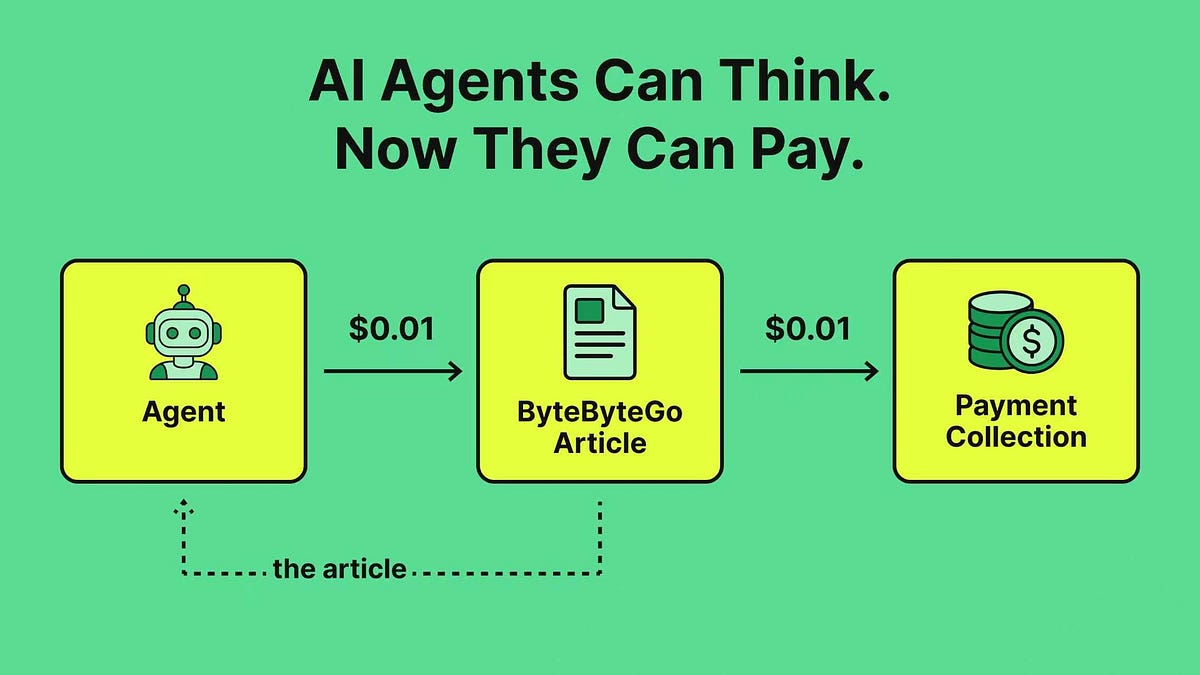
  19. AI Agents Can Think. Now They Can Pay.

    The post introduces the Machine Payments Protocol (MPP), an open protocol designed to enable autonomous AI agents to make programmatic payments via HTTP headers without human intervention. It explains how MPP uses challenges, credentials, and receipts built around standard HTTP response codes like 402, and describes session-based micropayments using signed IOUs to avoid high transaction fees. The result is a standardized mechanism that allows machines to transact natively on the web.

    DEPTH ■■■■■14 min read4 weeks ago

    Sign in to save and rate

  20. Seer, the Sentry MCP and CLI, or your own coding agent: where each one fits

    Engineers often struggle to choose between native debugging agents, Model Context Protocols, and command-line tools when integrating error tracking into their workflows. Sentry demonstrates how its debugging assistant Seer, the Sentry MCP, the Sentry CLI, and various coding agent integrations complement each other rather than compete. The resulting setup allows teams to diagnose complex application errors and automatically generate pull requests through whichever surface they prefer.

    DEPTH ■■■■■11 min read3 weeks ago

    Sign in to save and rate