/ THE FEED /

Read what ships.

Deep, recent reads ranked by depth and freshness.

  1. PHP2Shell: GitLab helps find and remediate critical PHP flaws

    Critical remote code execution vulnerabilities known as PHP2Shell affect the PHP engine across multiple versions, requiring immediate runtime updates to fixed versions or patched distribution packages. The team utilized platform features like container scanning, code search, and automated agent workflows to locate PHP projects and remediate vulnerabilities. Operators must also check logs and environments for signs of compromise as framework updates and input validations cannot prevent these engine-level flaws.

    DEPTH ■■■■■10 min read5 days ago

    ArchitectureSecurity

    Sign in to save and rate

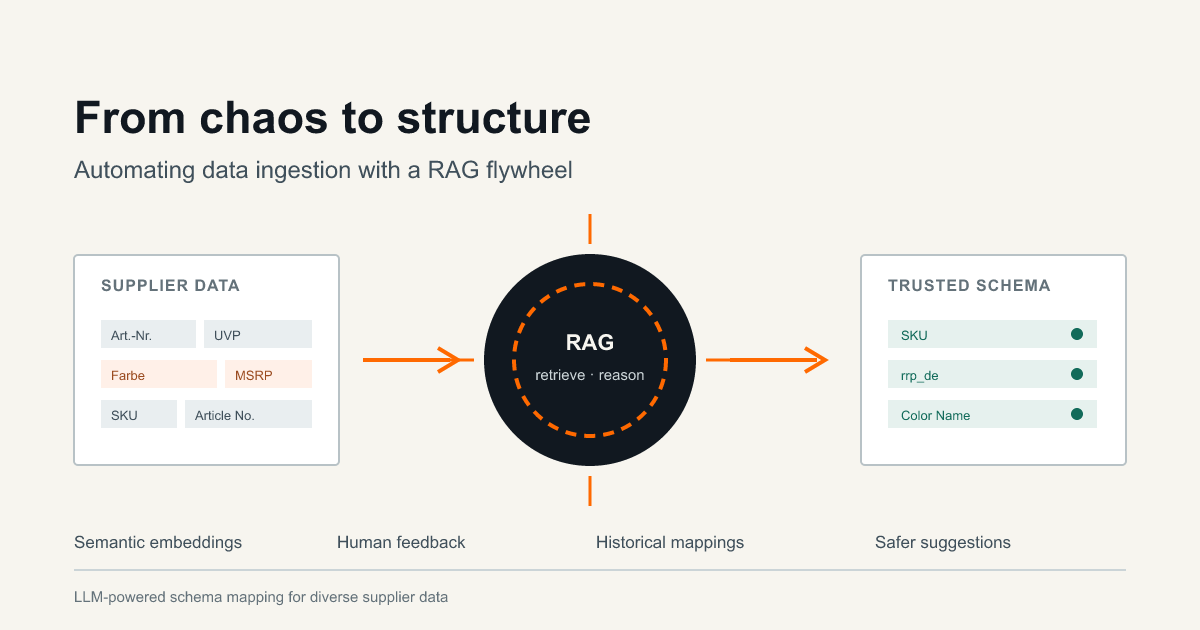
  2. Automating Data Ingestion with a RAG Flywheel

    Zalando replaced manual schema mapping for diverse supplier data with an LLM-powered Retrieval-Augmented Generation (RAG) flywheel. The system combines Amazon Titan embeddings stored in PostgreSQL via pgvector with tool-constrained generative models running at zero temperature. Every LLM suggestion passes through strict API validation checks before being reviewed by operations specialists, creating a continuous learning loop that improves future predictions.

    DEPTH ■■■■■14 min read2 weeks ago

    Machine LearningPostgreSQL

    Sign in to save and rate

  3. Thundering herd of circuit breakers

    An engineering team investigated why a client-side circuit breaker repeatedly failed to close on its own after an outage. By exporting OpenTelemetry traces into a custom visualization tool, they discovered that low probe traffic caused the autoscaler to scale down the service to minimum capacity, triggering a thundering herd of requests and immediate timeouts the moment the circuit breaker closed. Adjusting the system to account for capacity and probe representativeness prevents this oscillation.

    DEPTH ■■■■■10 min read2 weeks ago

    MicroservicesObservabilityReliability

    Sign in to save and rate

  4. Improving site performance by shipping more CSS

    GitHub faced performance degradation on server-side rendering and initial page loads due to scaling issues with its CSS-in-JS solution. The engineering team executed a multi-year migration to CSS Modules and eliminated dynamic styling props using incremental rollouts, wrapper components, and automation tools. This resulted in significant performance gains, including 55% faster server-side rendering and the complete removal of styled-components.

    DEPTH ■■■■■8 min read4 weeks ago

    FrontendPerformance

    Sign in to save and rate