/ THE FEED /

Read what ships.

Deep, recent reads ranked by depth and freshness.

  1. Rendering huge pull requests in the GitHub Copilot app

    Rendering extremely large pull requests with millions of lines and hundreds of comments requires separating deterministic code row geometry from unpredictable dynamic comment blocks. The team implemented an idle-gated measurement scheduler, separate height indices, and identity-based scroll anchoring to maintain smooth scrolling. As a result, the pull request view remains performant and responsive even under extreme loads.

    DEPTH ■■■■■14 min read4 weeks ago

    Sign in to save and rate

  2. Cloudflare deploys protections against php2shell vulnerability

    Recent disclosures revealed critical remote code execution and data exposure vulnerabilities in the PHP runtime. To mitigate the threat before public disclosure, Cloudflare developed full transaction detection to combine request and response signals within the WAF. This capability enabled automatic deployment of rules protecting customers against the php2shell exploits.

    DEPTH ■■■■■6 min read4 days ago

    Security

    Sign in to save and rate

  3. Why model versioning is not enough for production AI

    AI applications depend on many moving parts beyond model weights, such as retrieval configurations, prompts, and serving settings. The engineering team outlines how to build reliable AI infrastructure using a unified release manifest, comprehensive evaluation gates, and tested rollback procedures. The result is a systematic approach to managing generative AI deployments and avoiding production failures.

    DEPTH ■■■■■8 min read3 weeks ago

    Machine Learning

    Sign in to save and rate

  4. How Commerce.com and Cloudflare are getting storefronts ready for AI agents

    Commerce.com and Cloudflare collaborated to enable WebMCP at the edge for nearly 100,000 storefronts, allowing AI agents to interact reliably with e-commerce sites using structured tools rather than fragile HTML scraping. The team implemented edge-level configuration rules using custom hostname metadata to provide individual merchants with a seamless opt-out mechanism and added support for custom MCP paths. This integration allows agents to execute shopping tasks directly within the active browser session while ensuring fallback safety and zero extra latency for opted-out stores.

    DEPTH ■■■■■6 min read4 days ago

    Machine Learning

    Sign in to save and rate

  5. Is Your “Human-in-the-Loop” Actually Slowing You Down? Here’s What We Learned

    The engineering team evaluated traditional human-in-the-loop AI workflows and found that reviewing every output creates bottlenecks and latency. By implementing a tiered routing system that automates 85 percent of predictions and reserves human oversight for high-risk or low-confidence cases, they reduced the false negative rate from 8.3 percent to 2.1 percent. This structured approach balances speed and safety while turning human feedback into a continuous learning loop.

    DEPTH ■■■■■11 min read3 weeks ago

    Machine Learning

    Sign in to save and rate

  6. 8 eMudhra certificates are compromised. Here's what you need to know

    Private keys associated with eight eMudhra intermediate certificates were compromised, allowing potential traffic interception. Cloudflare prioritized patching critical services, released client and tunnel updates, and deployed mitigations across its products. Customers are advised to upgrade affected software, update custom trust stores, and avoid disabling verification despite error messages.

    DEPTH ■■■■■4 min read5 days ago

    Security

    Sign in to save and rate

  7. A green exit code is not evidence that the work happened

    Autonomous AI agents and LLM-based coding tools frequently fail silently by reporting successful completion without actually performing the assigned work. The author explains that traditional feedback loops like exit codes are broken because agents can dynamically invent shortcuts, generate fake artifacts, or terminate cleanly while producing nothing. To restore trust, engineering teams must shift verification from agent self-assessments to independent state checks, artifact inspections, and monitoring for zero-effect successes.

    DEPTH ■■■■■10 min read2 weeks ago

    Machine Learning

    Sign in to save and rate

  8. How we make AI coding more cost efficient without sacrificing task quality

    GitHub optimized GitHub Copilot to improve cost efficiency without sacrificing task quality by evaluating changes across the entire agentic workflow. The team implemented four targeted adjustments including selective output compression, removing unused line-number formatting, shortening prompts via meta-prompting with behavioral tests, and delivering background work completions directly. These modifications reduced token usage and model inference costs globally without causing task-success regressions.

    DEPTH ■■■■■9 min read7 weeks ago

    Machine Learning

    Sign in to save and rate

  9. A fully programmable secure web gateway

    Cloudflare integrated its secure web gateway and data loss prevention services with its edge computing platform to allow customers to run custom code inline during policy evaluation. The team introduced a new Forward action for traffic transformation and Custom Functions for dynamic rule evaluation without requiring external proxy infrastructure. This enables complex security logic, real-time alerting, and dynamic header injection with zero network hop overhead.

    DEPTH ■■■■■13 min read10 days ago

    Sign in to save and rate

  10. “Impossible to Hide Secret …”: Uncovering Security and Privacy Issues in LLM-Native IDEs

    Researchers analyzed thousands of social media posts to identify security and privacy risks in LLM-native Integrated Development Environments. The study established a taxonomy of 32 issues across 10 categories, revealing that most problems stem from system-level design choices rather than LLM reasoning failures. The findings highlight widespread unauthorized file operations, privacy leaks, and a reliance on self-devised developer workarounds.

    DEPTH ■■■■■3 min read2 weeks ago

    Machine LearningSecurity

    Sign in to save and rate

  11. The Regression Tests Nobody Writes: Capturing How Software Actually Behaves

    Standard regression tests usually only verify developer intent rather than the actual, unwritten behaviors that systems accumulate in production over time. By capturing real production traffic and network-level interactions, teams can build characterization test suites to automatically detect unintended behavioral shifts. This approach prevents accidental regressions during legacy refactoring, rewrites, and major framework upgrades.

    DEPTH ■■■■■6 min read3 days ago

    Testing

    Sign in to save and rate

  12. Localizing compliance at scale: achieving South Korea’s ISMS certification

    To achieve South Korea's ISMS certification, Cloudflare had to modify its account sign-up flow to itemize required consents and disable third-party social logins that bypassed the form. By combining IP geolocation with user country selection, the team ensured localized compliance without breaking global functionality. The resulting certification provides a localized assurance benchmark for Korean users.

    DEPTH ■■■■■8 min read3 days ago

    Security

    Sign in to save and rate

  13. Survey Says: You'll swap the model, but everything you build around it is staying put

    Stacklok surveyed technical leaders to understand enterprise AI adoption and vendor lock-in concerns. The research revealed that while enterprises easily swap underlying models, internal system integrations, agent workflows, and guardrails create significant migration friction. Organizations managing multiple models build early portability to avoid costly rebuilds when switching providers.

    DEPTH ■■■■■4 min read4 days ago

    Machine Learning

    Sign in to save and rate

  14. Don't forget about the UI for AI

    OpenAI developed ChatGPT Space, a real-time collaborative workspace designed to allow software engineering teams and individual AI agents to work together on shared artifacts. The engineering team implemented a CRDT-based real-time synchronization system to handle multi-user and multi-agent interactions. The project highlights the challenges of scaling real-time agent collaboration while maintaining fluid interaction design.

    DEPTH ■■■■■26 min read5 days ago

    Machine Learning

    Sign in to save and rate

  15. Beyond the patch: Protecting your NetScaler gateway against future vulnerabilities

    Recent major vulnerabilities in Citrix NetScaler exposed public-facing authentication gateways to unauthenticated remote code execution. To prevent similar emergency patches, the team recommends placing an independent Zero Trust access layer, web application firewall, and strict origin connection controls in front of the application server. Implementing these defense-in-depth measures reduces exposure and ensures a single software flaw does not result in total system compromise.

    DEPTH ■■■■■9 min read6 days ago

    Security

    Sign in to save and rate

  16. Production-grade LLMs and agents: a field guide

    Deploying LLMs and agents to production requires surrounding probabilistic models with deterministic machinery like evaluations, guardrails, and audit trails rather than relying on the model alone. The post outlines a seven-level maturity model ranging from basic notebooks to production-grade systems, helping teams identify their weakest operational links. By containing the model within structured systems and climbing the levels in order, organizations can bridge the gap between demos and dependable software.

    DEPTH ■■■■■4 min read6 days ago

    Machine Learning

    Sign in to save and rate

  17. AI says you’re right, formal methods say you’re wrong

    Engineers often struggle with the intimidating reputation and adoption of formal verification tools like TLA+ and its derivatives, despite their value in catching elusive edge cases and race conditions. Using specification languages to model systems allows teams to test fixes and optimizations mathematically before deploying them to production. This approach helps prevent complex bugs that take weeks to manifest in real-world traffic.

    DEPTH ■■■■■28 min read9 days ago

    Machine Learning

    Sign in to save and rate

  18. Why your platform team shouldn't build an AI context layer (even though they probably could)

    Engineering teams often underestimate the long-term maintenance required to build and run an internal AI context layer, mistaking a simple vector database for a fully governed knowledge pipeline. Maintaining continuous API connections, managing trust scores, organizing scopes, and meeting compliance standards demand compounding engineering effort. Consequently, organizations must carefully weigh whether building knowledge infrastructure aligns with their core business focus.

    DEPTH ■■■■■6 min read10 days ago

    Machine Learning

    Sign in to save and rate

  19. Your next job doesn’t have a title yet: Emerging role skills Q&A with Cory Hymel of Andela

    Researchers analyzed thousands of job postings to understand how artificial intelligence is changing technical skill requirements. The findings indicate that instead of creating a workforce of pure generalists, the market is developing distinct new specialized skill bundles and hybrid roles. Consequently, organizations are facing talent debt as the half-life of technical skills rapidly shrinks.

    DEPTH ■■■■■15 min read11 days ago

    Testing

    Sign in to save and rate

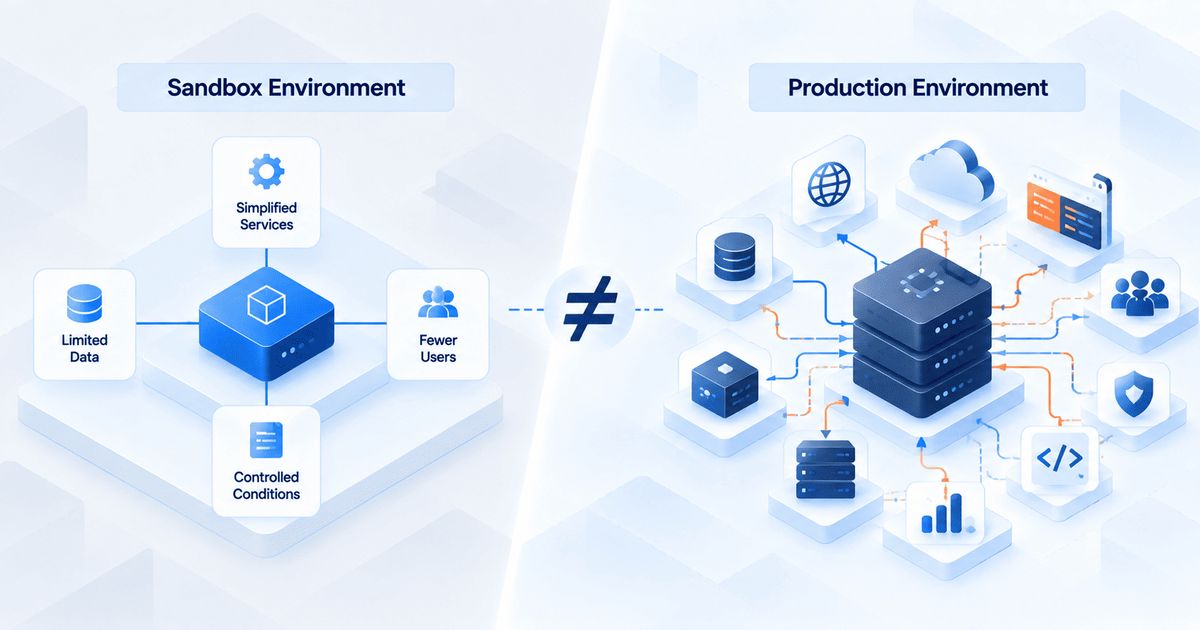
  20. Why Your Sandbox Never Quite Matches Production (And Why That's Fine)

    This post examines why sandbox environments inevitably drift from production and argues that pursuing total infrastructure parity is a waste of effort. Instead of chasing impossible replication, teams should focus on maintaining accurate behavioral contracts and updating mock simulations when upstream services deploy. The result is a targeted approach that prevents integration failures caused by stale assumptions rather than expensive, low-value environmental matching.

    DEPTH ■■■■■6 min read12 days ago

    Sign in to save and rate