/ THE FEED /

Read what ships.

Deep, recent reads ranked by depth and freshness.

  1. The bridge to agent-scale Git infrastructure

    GitHub faced infrastructure capacity limits and a 25ms cross-region network round trip when migrating repositories to Azure. The team changed the storage quorum from repository-wide locks to per-reference serialization and introduced ephemeral virtual replicas backed by object storage. This raised write throughput, prevented slow replicas from blocking traffic, and decoupled read scaling from the write quorum.

    DEPTH ■■■■■8 min read4 days ago

    Infrastructure

    Sign in to save and rate

  2. App stability at scale with a layered defense

    To maintain app stability amidst rapid weekly releases and AI-generated code, Grab uses a layered defense strategy covering prevention, release gates, and incident response. This pipeline includes static analysis via custom lint rules, multiple tiers of automated and manual testing, a pre-production early access build, staged rollouts, and feature flags with instant kill switches. As a result, critical defects are caught early in the development lifecycle before reaching the wider production user base.

    DEPTH ■■■■■16 min read4 days ago

    MobileReliability

    Sign in to save and rate

  3. Building Git infrastructure for agent-scale development

    GitHub is redesigning its Git infrastructure to handle the massive surge in concurrent read and write operations driven by agentic software development and high-volume workloads. The team is decoupling storage from compute by leveraging Azure Blob Storage for durability and lightweight compute workers for requests, which separates scaling dimensions. In internal benchmarks, this approach achieves up to 35 times higher write throughput and independent read scalability.

    DEPTH ■■■■■9 min read2 weeks ago

    Infrastructure

    Sign in to save and rate

  4. Data Mesh at Grab (Part III): Operationalizing data reliability with automated DPIs

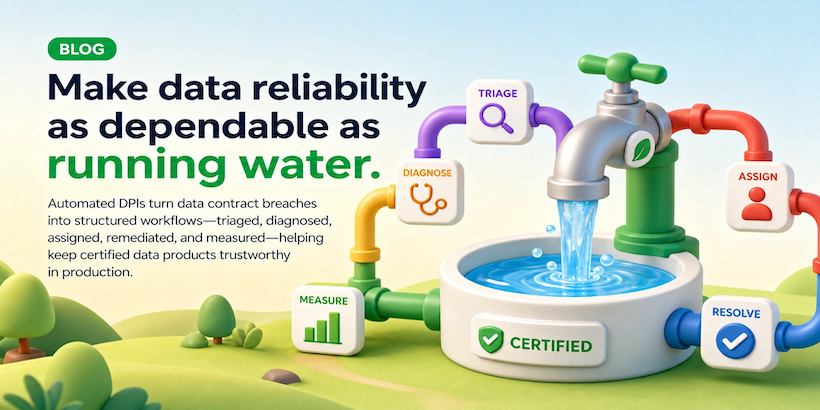
    Grab addressed runtime data reliability issues in its data mesh by implementing automated Data Production Issues (DPIs). The system uses an incident orchestrator to detect contract breaches, a Data Health API for cross-platform root cause analysis, and Hugo for automated remediation. This approach resolved 86.9 percent of incidents automatically and made mean time to resolve six times faster.

    DEPTH ■■■■■12 min read8 weeks ago

    DatabasesObservability

    Sign in to save and rate