/ THE FEED /

Read what ships.

Deep, recent reads ranked by depth and freshness.

  1. The bridge to agent-scale Git infrastructure

    GitHub faced infrastructure capacity limits and a 25ms cross-region network round trip when migrating repositories to Azure. The team changed the storage quorum from repository-wide locks to per-reference serialization and introduced ephemeral virtual replicas backed by object storage. This raised write throughput, prevented slow replicas from blocking traffic, and decoupled read scaling from the write quorum.

    DEPTH ■■■■■8 min read4 days ago

    Infrastructure

    Sign in to save and rate

  2. When Software Meets Hardware

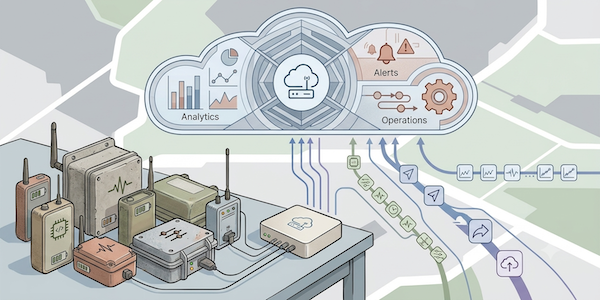
    A software engineering team modernizing a large-scale retail IoT system of 800,000 battery-powered sensors faced challenges integrating software practices with embedded hardware. By building physical sensor farms, virtual emulators, and self-diagnosing firmware, the team learned to design for intermittent connectivity, power efficiency, and fleet-level observability. The project succeeded by treating the physical world, hardware constraints, and engineering environments as core parts of the system lifecycle.

    DEPTH ■■■■■12 min read10 days ago

    Sign in to save and rate

  3. Better HTTP/1 connection reuse

    Failing to read an HTTP/1 response body completely prevents connection reuse, forcing clients to repeatedly pay the high cost of TCP and TLS handshakes. While developers previously had to implement complex manual body-draining logic, Go 1.27 introduces automatic asynchronous response draining in the net/http package. This improvement allows developers to simply close response bodies without worrying about connection pooling performance.

    DEPTH ■■■■■7 min read11 days ago

    Sign in to save and rate

  4. From 2,500 requests to 24: Rebuilding star history without the stargazers

    GitHub faced abuse and performance issues because tools were scraping user identities to reconstruct repository star history. The engineering team collaborated with maintainers to build a purpose-built aggregate endpoint that returns daily star counts without identities and filters by time before aggregation. This reduced request volume from thousands to a few dozen and eliminated heavy database scans.

    DEPTH ■■■■■8 min read11 days ago

    Microservices

    Sign in to save and rate

  5. Are Harnesses Worth the Cost?

    An experiment was conducted to evaluate whether behavioral harnesses improve coding agent reliability when building a complex backend-for-frontend service. While frontier models succeeded consistently with or without a harness, the harness significantly increased token usage, time, and cost without improving final output. However, for a cost-optimized model, the harness improved success rates from 30 percent to 100 percent.

    DEPTH ■■■■■17 min read12 days ago

    Sign in to save and rate

  6. Arch-specific SIMD in Go

    Go 1.27 introduces the archsimd package to provide low-level architecture-specific SIMD intrinsics for amd64, arm64, and wasm without requiring assembly. The API uses sensible naming conventions, zero-cost type reinterpretation, and opaque masks to improve usability and maintainability while achieving high performance. The resulting design enables developers to write optimized vectorized code safely with proper runtime CPU feature checking and compiler optimizations.

    DEPTH ■■■■■12 min read3 weeks ago

    Sign in to save and rate

  7. Building Git infrastructure for agent-scale development

    GitHub is redesigning its Git infrastructure to handle the massive surge in concurrent read and write operations driven by agentic software development and high-volume workloads. The team is decoupling storage from compute by leveraging Azure Blob Storage for durability and lightweight compute workers for requests, which separates scaling dimensions. In internal benchmarks, this approach achieves up to 35 times higher write throughput and independent read scalability.

    DEPTH ■■■■■9 min read2 weeks ago

    Infrastructure

    Sign in to save and rate

  8. Staying Evergreen: How we automated secure access and repo hygiene in a shared org

    Manual repository housekeeping and access reviews for outside collaborators become difficult to maintain as organizations scale. The team built Evergreen, a GitHub App that automates quarterly access reviews and stale repository archiving using native platform features and IssueOps. This automation successfully enforces secure defaults by revoking unanswered access while maintaining a full audit trail in git history.

    DEPTH ■■■■■8 min read10 days ago

    Sign in to save and rate

  9. Improving site performance by shipping more CSS

    GitHub faced performance degradation on server-side rendering and initial page loads due to scaling issues with its CSS-in-JS solution. The engineering team executed a multi-year migration to CSS Modules and eliminated dynamic styling props using incremental rollouts, wrapper components, and automation tools. This resulted in significant performance gains, including 55% faster server-side rendering and the complete removal of styled-components.

    DEPTH ■■■■■8 min read4 weeks ago

    FrontendPerformance

    Sign in to save and rate

  10. Rendering huge pull requests in the GitHub Copilot app

    Rendering extremely large pull requests with millions of lines and hundreds of comments requires separating deterministic code row geometry from unpredictable dynamic comment blocks. The team implemented an idle-gated measurement scheduler, separate height indices, and identity-based scroll anchoring to maintain smooth scrolling. As a result, the pull request view remains performant and responsive even under extreme loads.

    DEPTH ■■■■■14 min read4 weeks ago

    Sign in to save and rate

  11. How we make AI coding more cost efficient without sacrificing task quality

    GitHub optimized GitHub Copilot to improve cost efficiency without sacrificing task quality by evaluating changes across the entire agentic workflow. The team implemented four targeted adjustments including selective output compression, removing unused line-number formatting, shortening prompts via meta-prompting with behavioral tests, and delivering background work completions directly. These modifications reduced token usage and model inference costs globally without causing task-success regressions.

    DEPTH ■■■■■9 min read7 weeks ago

    Machine Learning

    Sign in to save and rate