/ THE FEED /

Read what ships.

Deep, recent reads ranked by depth and freshness.

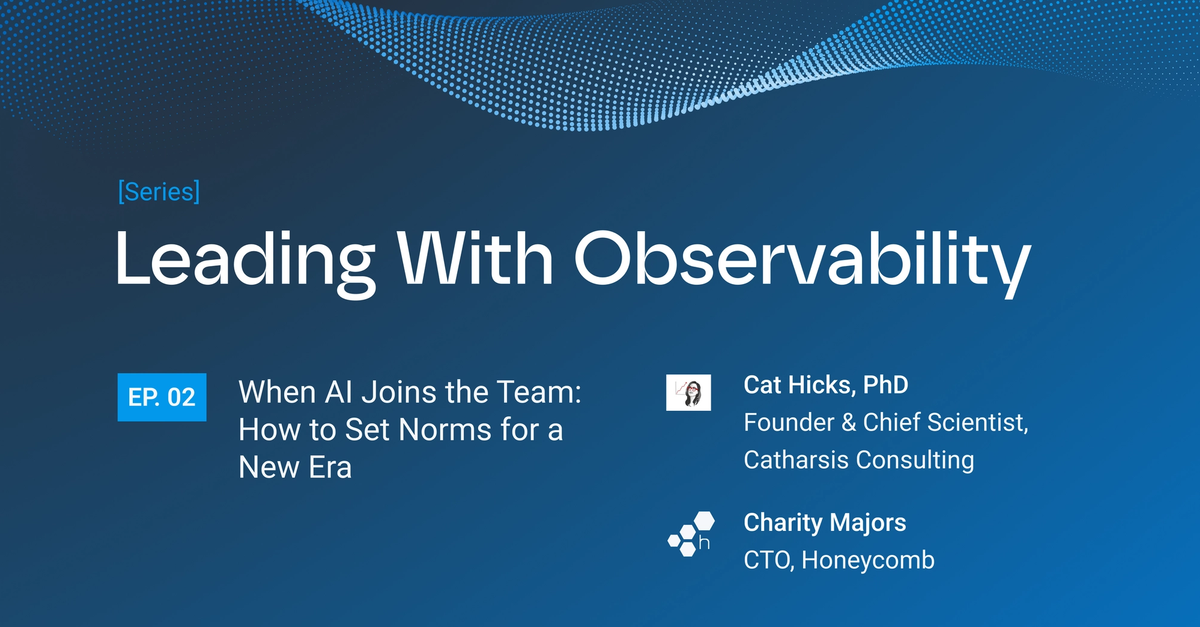
  1. Dr. Cat Hicks on the Psychology of Software Teams

    Engineering leaders must establish clear structures and cultural norms to reduce the psychological identity threat and anxiety developers experience when adopting AI tools. Research indicates that organizational trust regarding AI is currently fractured but repairable through realigned expectations and accountability. Furthermore, engineers are advised to build durable sources of professional identity rather than relying solely on mastery of specific languages or legacy codebases.

    DEPTH ■■■■■3 min read3 weeks ago
    Sign in to save and rate

  2. Seer, the Sentry MCP and CLI, or your own coding agent: where each one fits

    Engineers often struggle to choose between native debugging agents, Model Context Protocols, and command-line tools when integrating error tracking into their workflows. Sentry demonstrates how its debugging assistant Seer, the Sentry MCP, the Sentry CLI, and various coding agent integrations complement each other rather than compete. The resulting setup allows teams to diagnose complex application errors and automatically generate pull requests through whichever surface they prefer.

    DEPTH ■■■■■11 min read3 weeks ago

    Sign in to save and rate

  3. A Peek Behind Our UI Refresh

    The design enablement team updated Honeycomb's UI components, shadow tokens, motion guidance, and heatmap color ramps to address accumulated design debt and improve data visualization clarity. Implementing these updates acted as a comprehensive audit that revealed inconsistent component usage, allowing the team to clean up visual clutter. As a result, the product features improved information hierarchy, better support for dark mode, and a more cohesive visual design.

    DEPTH ■■■■■4 min read3 weeks ago

    Sign in to save and rate

  4. Measuring the back/forward cache with Application Metrics

    Engineering teams often lack visibility into back/forward cache performance because successful cache hits leave no telemetry traces and browser heuristics frequently change. To solve this blind spot, the team introduced an opt-in application metrics integration in their JavaScript SDK that models browser bfcache signals into hits, specific miss reasons, and reload durations. As a result, developers can track, query, and fix silent navigation regressions using customizable dashboards.

    DEPTH ■■■■■6 min read4 weeks ago

    Sign in to save and rate

  5. Building Sentry's Laravel AI Integration

    The Sentry team built a Laravel AI integration to support Agent Tracing during an internal hackweek. Because Laravel AI lacked events for individual LLM invocations, the integration correlates outgoing HTTP requests with active invocations using provider URL prefixes. The resulting zero-config feature is available in sentry-laravel 4.27 and automatically traces agents, LLM requests, and tool calls.

    DEPTH ■■■■■4 min read5 weeks ago

    Sign in to save and rate

  6. Debugging our AI search assistant with agent tracing

    The Sentry team developed a Search Query Assistant to convert natural language prompts into search syntax, which initially failed on custom numerical attributes due to incorrect field formatting in the system prompt. By utilizing their own AI Conversation view and agent tracing, they identified the root cause in the tool call results and system prompt generation. This observability workflow enabled them to reproduce, fix, and verify the issue both locally and in production.

    DEPTH ■■■■■4 min read6 weeks ago

    Sign in to save and rate