/ THE FEED /

Read what ships.

Deep, recent reads ranked by depth and freshness.

  1. PHP2Shell: GitLab helps find and remediate critical PHP flaws

    Critical remote code execution vulnerabilities known as PHP2Shell affect the PHP engine across multiple versions, requiring immediate runtime updates to fixed versions or patched distribution packages. The team utilized platform features like container scanning, code search, and automated agent workflows to locate PHP projects and remediate vulnerabilities. Operators must also check logs and environments for signs of compromise as framework updates and input validations cannot prevent these engine-level flaws.

    DEPTH ■■■■■10 min read3 days ago
    ArchitectureSecurity

    Sign in to save and rate

  2. When Software Meets Hardware

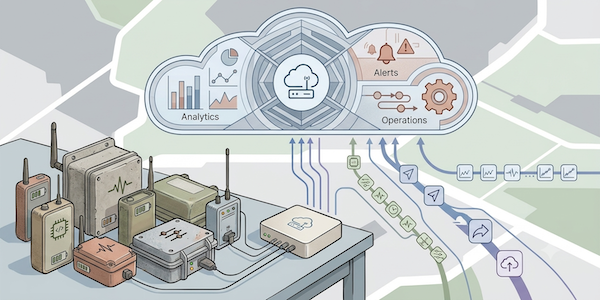
    A software engineering team modernizing a large-scale retail IoT system of 800,000 battery-powered sensors faced challenges integrating software practices with embedded hardware. By building physical sensor farms, virtual emulators, and self-diagnosing firmware, the team learned to design for intermittent connectivity, power efficiency, and fleet-level observability. The project succeeded by treating the physical world, hardware constraints, and engineering environments as core parts of the system lifecycle.

    DEPTH ■■■■■12 min read10 days ago

    Sign in to save and rate

  3. Are Harnesses Worth the Cost?

    An experiment was conducted to evaluate whether behavioral harnesses improve coding agent reliability when building a complex backend-for-frontend service. While frontier models succeeded consistently with or without a harness, the harness significantly increased token usage, time, and cost without improving final output. However, for a cost-optimized model, the harness improved success rates from 30 percent to 100 percent.

    DEPTH ■■■■■17 min read12 days ago

    Sign in to save and rate

  4. Make every AI credit count: See, cap, and reduce agent spend

    Uncontrolled AI agent spending can be mitigated by combining open-weight models, centralized context graphs to reduce retries, and usage analytics with credit caps. GitLab introduced these capabilities in its Duo Agent Platform to help platform teams trace, limit, and optimize AI credit consumption. The resulting architecture matches specific tasks to lower-cost models while maintaining task completion quality.

    DEPTH ■■■■■6 min read12 days ago

    Sign in to save and rate

  5. How Lufthansa Systems prototypes realistic maps for the cockpit with Figma Make

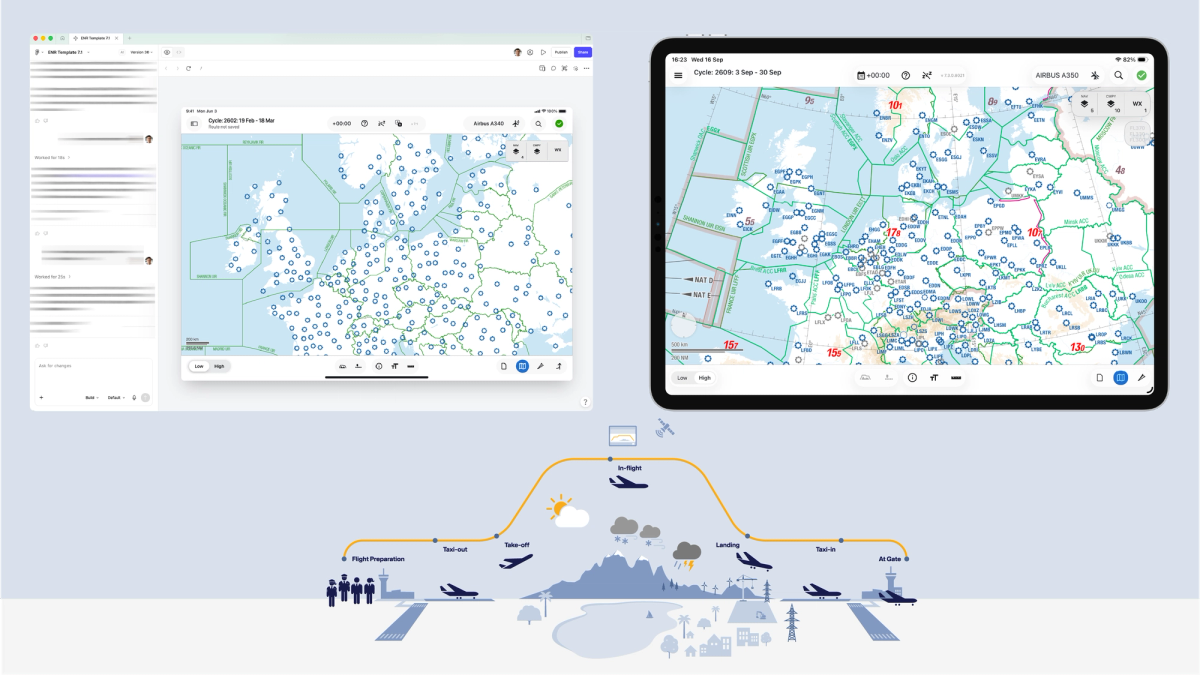
    Lufthansa Systems struggled to build realistic, dynamic map prototypes for cockpit navigation apps using traditional static design tools. The team experimented with Figma Make during an internal hackathon to integrate external data sources like Mapbox and the OpenSky Network into their designs. As a result, designers successfully tested interactive map features and complex flight traffic data with pilots prior to writing production code.

    DEPTH ■■■■■8 min read3 days ago

    Sign in to save and rate

  6. Fragments: October 21

    This post discusses commentary on AI usage in writing, the cancellation of the Grace Hopper Celebration, and reviews a detailed article by Cindy Sridharan on debugging with AI agents. The reviewed article highlights that AI agents excel at processing raw data rather than reading code first, and outlines a three-step debugging process involving controls, signals, and hypothesis validation. The lesson is that engineers must guide AI agents by setting up verification loops and providing raw data rather than human-centric abstractions.

    DEPTH ■■■■■5 min read4 days ago

    Sign in to save and rate

  7. Practitioner Voice: The Writing Category Nobody has Named Yet

    The author explores a missing category of writing called Practitioner Voice, which is grounded in earned experience and visible personal judgment rather than academic rigor, corporate polish, or AI generation. They examine how AI can be used as an extended cognitive tool for practitioners without losing human accountability. Ultimately, the piece argues that maintaining personal judgment and consequence-bearing experience is essential for authentic professional writing.

    DEPTH ■■■■■39 min read12 days ago

    Sign in to save and rate

  8. How to put your design system to work with the Figma agent

    This post explains how to provide the Figma agent with proper context through design libraries, explicit guidelines, practical examples, and reusable skills to produce accurate outputs. By connecting libraries and defining rules, teams can ensure the agent uses approved components and follows design patterns. Reviewing agent outputs helps teams identify missing context and refine their libraries and guidelines.

    DEPTH ■■■■■6 min read2 days ago

    Sign in to save and rate

  9. Three developer tasks worth handing to an agent

    The post explains how to use GitLab Duo Agent Platform features such as automated code reviews, CI/CD pipeline failure diagnosis, and cross-project chat. It provides setup instructions for configuration and outlines a consumption-based pricing model using credits. The features aim to automate routine developer workflows using broader project context than standard IDE assistants.

    DEPTH ■■■■■4 min read6 days ago

    Sign in to save and rate

  10. Fragments: October 4

    This post discusses the evolving role of software development and code in the era of large language models. It explores how shifting from deterministic building to inferential nurturing changes processes, why high-level representations remain critical for managing context windows, and how conceptual modeling becomes more important than the mechanical act of writing instructions.

    DEPTH ■■■■■7 min read2 weeks ago

    Sign in to save and rate

  11. Principles for effective slides

    Presenters often rely on text-heavy slide decks that distract audiences and undermine storytelling. To fix this, speakers can use minimalist slides as a complementary visual channel to control the rate of information and manage cognitive load. This approach leads to more engaging presentations where visuals reinforce the spoken narrative rather than replace it.

    DEPTH ■■■■■12 min read3 weeks ago

    Sign in to save and rate

  12. 4 team rituals that drive AI adoption

    To drive team-wide AI adoption beyond isolated power users, several companies introduced collaborative team rituals such as peer-led study groups, process-focused sharing forums, cross-disciplinary training, and prototype-first critiques. These forums helped bridge knowledge gaps, reduce intimidation, and build consistent habits. As a result, teams were able to move from individual experimentation to collective AI usage.

    DEPTH ■■■■■7 min read2 weeks ago

    Sign in to save and rate

  13. Workflow lab: Staying in the flow with Figma’s agent

    A fictional designer at Offtrail updates a permission settings flow using the Figma agent to handle repetitive maintenance, compliance checks, and component specs. By offloading busywork and context gathering to the agent, the designer focuses on feature logic and design decisions while keeping outputs connected in a shared canvas.

    DEPTH ■■■■■8 min read2 weeks ago

    Sign in to save and rate

  14. Build your slide template

    Presenters often struggle with the visual design of slides and default to cluttered or uniform corporate templates. To build a better presentation foundation, the author recommends sticking to a restricted color palette, limiting the number of fonts, and using minimal layouts without unnecessary floodmarks like page numbers or logos. This approach results in a cohesive visual identity that provides greater flexibility during slide construction.

    DEPTH ■■■■■11 min read11 days ago

    Sign in to save and rate

  15. How to lighten design system upkeep with the Figma agent

    Design systems often suffer from maintenance overhead like documentation debt, naming inconsistencies, and drift between product screens and libraries. The Figma agent automates these upkeep tasks by drafting specs, auditing token and component usage, and bulk-replacing disconnected elements. This reduces manual toil and helps teams keep their design systems aligned with product work.

    DEPTH ■■■■■5 min read2 weeks ago

    Sign in to save and rate

  16. Behind the build: Generative plugins and shaders at Figma

    Figma developed generative plugins and shaders by replacing a prototype WebGL system with an enterprise-scale WebGPU pipeline, sandbox isolation, and custom UI kits. Through rapid prototyping and cross-functional collaboration, the team shipped the feature suite in two months for Config.

    DEPTH ■■■■■8 min read7 weeks ago

    Sign in to save and rate

  17. Bliki: Sensible Default

    The engineering post introduces the concept of a sensible default as an alternative to best practices in software development. Sensible defaults serve as reliable starting points for tasks in the absence of hard constraints, while still allowing teams to adapt and override them when context requires. Organizations like Thoughtworks utilize playbooks of these defaults to guide initial work while encouraging regular reflection and adjustment.

    DEPTH ■■■■■2 min read3 weeks ago

    Sign in to save and rate

  18. Fragments: September 29

    This post discusses observations on coding agents, focusing on their persistence, the role of training material in hacking behavior, and the need for greater safety measures and liability. It examines experiments with unlimited tokens and explores regulatory and educational perspectives on agentic AI.

    DEPTH ■■■■■4 min read3 weeks ago

    Sign in to save and rate

  19. How do you actually measure the impact of AI on design?

    Figma conducted a multi-year research project to track the impact of AI on product design by building an AI sentiment index and running hundreds of AI-moderated interviews. To process the massive volume of qualitative data, the team engineered a custom thematic analysis tool and an internal dashboard to serve as a cross-functional source of truth. The results showed that AI's impact on workflows and collaboration nearly doubled over three years.

    DEPTH ■■■■■6 min read8 weeks ago

    Sign in to save and rate