/ THE FEED /

Read what ships.

Deep, recent reads ranked by depth and freshness.

  1. When Software Meets Hardware

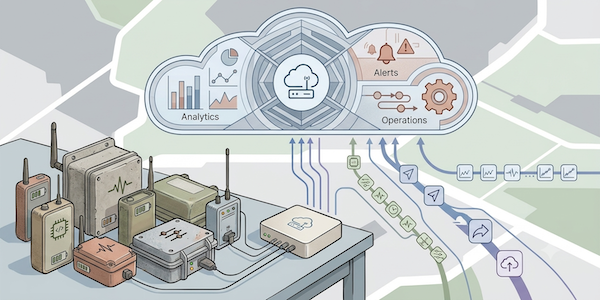
    A software engineering team modernizing a large-scale retail IoT system of 800,000 battery-powered sensors faced challenges integrating software practices with embedded hardware. By building physical sensor farms, virtual emulators, and self-diagnosing firmware, the team learned to design for intermittent connectivity, power efficiency, and fleet-level observability. The project succeeded by treating the physical world, hardware constraints, and engineering environments as core parts of the system lifecycle.

    DEPTH ■■■■■12 min read10 days ago
    Sign in to save and rate

  2. Are Harnesses Worth the Cost?

    An experiment was conducted to evaluate whether behavioral harnesses improve coding agent reliability when building a complex backend-for-frontend service. While frontier models succeeded consistently with or without a harness, the harness significantly increased token usage, time, and cost without improving final output. However, for a cost-optimized model, the harness improved success rates from 30 percent to 100 percent.

    DEPTH ■■■■■17 min read12 days ago

    Sign in to save and rate

  3. Fragments: October 21

    This post discusses commentary on AI usage in writing, the cancellation of the Grace Hopper Celebration, and reviews a detailed article by Cindy Sridharan on debugging with AI agents. The reviewed article highlights that AI agents excel at processing raw data rather than reading code first, and outlines a three-step debugging process involving controls, signals, and hypothesis validation. The lesson is that engineers must guide AI agents by setting up verification loops and providing raw data rather than human-centric abstractions.

    DEPTH ■■■■■5 min read4 days ago

    Sign in to save and rate

  4. Practitioner Voice: The Writing Category Nobody has Named Yet

    The author explores a missing category of writing called Practitioner Voice, which is grounded in earned experience and visible personal judgment rather than academic rigor, corporate polish, or AI generation. They examine how AI can be used as an extended cognitive tool for practitioners without losing human accountability. Ultimately, the piece argues that maintaining personal judgment and consequence-bearing experience is essential for authentic professional writing.

    DEPTH ■■■■■39 min read12 days ago

    Sign in to save and rate

  5. Fragments: October 4

    This post discusses the evolving role of software development and code in the era of large language models. It explores how shifting from deterministic building to inferential nurturing changes processes, why high-level representations remain critical for managing context windows, and how conceptual modeling becomes more important than the mechanical act of writing instructions.

    DEPTH ■■■■■7 min read2 weeks ago

    Sign in to save and rate

  6. Replacing the old battery on rechargeable bike lights

    An individual attempted to repair old rechargeable bike lights with degraded batteries by cutting open the casing, desoldering the dead cells, and soldering in replacements. Despite lacking electronics experience and losing some screws, the repair was successful and restored the functionality of the lights.

    DEPTH ■■■■■5 min read4 weeks ago

    Sign in to save and rate

  7. Principles for effective slides

    Presenters often rely on text-heavy slide decks that distract audiences and undermine storytelling. To fix this, speakers can use minimalist slides as a complementary visual channel to control the rate of information and manage cognitive load. This approach leads to more engaging presentations where visuals reinforce the spoken narrative rather than replace it.

    DEPTH ■■■■■12 min read3 weeks ago

    Sign in to save and rate

  8. Build your slide template

    Presenters often struggle with the visual design of slides and default to cluttered or uniform corporate templates. To build a better presentation foundation, the author recommends sticking to a restricted color palette, limiting the number of fonts, and using minimal layouts without unnecessary floodmarks like page numbers or logos. This approach results in a cohesive visual identity that provides greater flexibility during slide construction.

    DEPTH ■■■■■11 min read11 days ago

    Sign in to save and rate

  9. Bliki: Sensible Default

    The engineering post introduces the concept of a sensible default as an alternative to best practices in software development. Sensible defaults serve as reliable starting points for tasks in the absence of hard constraints, while still allowing teams to adapt and override them when context requires. Organizations like Thoughtworks utilize playbooks of these defaults to guide initial work while encouraging regular reflection and adjustment.

    DEPTH ■■■■■2 min read3 weeks ago

    Sign in to save and rate

  10. Fragments: September 29

    This post discusses observations on coding agents, focusing on their persistence, the role of training material in hacking behavior, and the need for greater safety measures and liability. It examines experiments with unlimited tokens and explores regulatory and educational perspectives on agentic AI.

    DEPTH ■■■■■4 min read3 weeks ago

    Sign in to save and rate