/ THE FEED /

Read what ships.

Deep, recent reads ranked by depth and freshness.

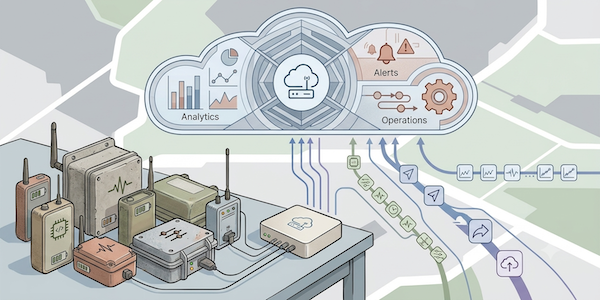
  1. When Software Meets Hardware

    A software engineering team modernizing a large-scale retail IoT system of 800,000 battery-powered sensors faced challenges integrating software practices with embedded hardware. By building physical sensor farms, virtual emulators, and self-diagnosing firmware, the team learned to design for intermittent connectivity, power efficiency, and fleet-level observability. The project succeeded by treating the physical world, hardware constraints, and engineering environments as core parts of the system lifecycle.

    DEPTH ■■■■■12 min read10 days ago
    Sign in to save and rate

  2. Better HTTP/1 connection reuse

    Failing to read an HTTP/1 response body completely prevents connection reuse, forcing clients to repeatedly pay the high cost of TCP and TLS handshakes. While developers previously had to implement complex manual body-draining logic, Go 1.27 introduces automatic asynchronous response draining in the net/http package. This improvement allows developers to simply close response bodies without worrying about connection pooling performance.

    DEPTH ■■■■■7 min read11 days ago

    Sign in to save and rate

  3. Sentry JavaScript SDK v11 adds tracing for all JS platforms

    Sentry replaced its OpenTelemetry-based JavaScript SDK instrumentation with a source-code transformation approach using diagnostics channels in version 11. This change removes reliance on Node-specific module loader hooks, enabling reliable tracing across non-Node runtimes like Deno, Bun, and Cloudflare Workers, while also supporting bundled applications. The result is a simplified architecture that reduces bundle weight and fixes previous limitations with load order and immutable exports.

    DEPTH ■■■■■13 min read2 weeks ago

    Sign in to save and rate

  4. Are Harnesses Worth the Cost?

    An experiment was conducted to evaluate whether behavioral harnesses improve coding agent reliability when building a complex backend-for-frontend service. While frontier models succeeded consistently with or without a harness, the harness significantly increased token usage, time, and cost without improving final output. However, for a cost-optimized model, the harness improved success rates from 30 percent to 100 percent.

    DEPTH ■■■■■17 min read12 days ago

    Sign in to save and rate

  5. Reducing Android scope-sync overhead in Sentry Flutter

    The Sentry Flutter team investigated scope-sync overhead on Android and found redundant data normalization across isolates alongside unnecessary buffer copies during JSON encoding. By removing the duplicate normalization and encoding directly to UTF-8 bytes, the team reduced processing time by 27 to 30 percent across benchmarked payloads.

    DEPTH ■■■■■4 min read2 weeks ago

    Sign in to save and rate

  6. Arch-specific SIMD in Go

    Go 1.27 introduces the archsimd package to provide low-level architecture-specific SIMD intrinsics for amd64, arm64, and wasm without requiring assembly. The API uses sensible naming conventions, zero-cost type reinterpretation, and opaque masks to improve usability and maintainability while achieving high performance. The resulting design enables developers to write optimized vectorized code safely with proper runtime CPU feature checking and compiler optimizations.

    DEPTH ■■■■■12 min read3 weeks ago

    Sign in to save and rate

  7. The Sentry Android SDK is now 20-30% faster!

    The Sentry team optimized the Android SDK to reduce initialization time by 20-30% and background CPU usage by up to 10%. Improvements were achieved by profiling with Perfetto, replacing slow runtime manifest parsing and DSN parsing with build-time bytecode writing and lightweight parsers, and reusing thread pools. Upgrading to the latest SDK version allows applications to realize these startup performance gains.

    DEPTH ■■■■■4 min read5 days ago

    Sign in to save and rate

  8. Fragments: October 21

    This post discusses commentary on AI usage in writing, the cancellation of the Grace Hopper Celebration, and reviews a detailed article by Cindy Sridharan on debugging with AI agents. The reviewed article highlights that AI agents excel at processing raw data rather than reading code first, and outlines a three-step debugging process involving controls, signals, and hypothesis validation. The lesson is that engineers must guide AI agents by setting up verification loops and providing raw data rather than human-centric abstractions.

    DEPTH ■■■■■5 min read4 days ago

    Sign in to save and rate

  9. Unreal MCP now speaks Sentry

    The Sentry team integrated their crash reporting plugin with Unreal Engine's new experimental Model Context Protocol (MCP) server, allowing coding agents to fully automate setup and debugging. By combining editor tools and Sentry MCP, an agent successfully configured the SDK, uploaded debug symbols, packaged a build, induced a crash, and traced the root cause without manual file editing. The integration streamlines crash reporting setup, though it currently suffers from occasional agent tool-discovery issues and server fragility across editor restarts.

    DEPTH ■■■■■7 min read2 weeks ago

    Sign in to save and rate

  10. Should you use a log or a metric?

    This post explains the distinction between logs and metrics in application monitoring, noting that logs capture what was true during specific events for debugging while metrics track ongoing numerical trends over time. The author demonstrates how to implement both using Sentry SDKs during a user signup flow and outlines criteria for choosing between them. The resulting takeaway helps engineers decide whether to log an event or track it as a metric based on the questions they need to answer.

    DEPTH ■■■■■12 min read3 days ago

    Sign in to save and rate

  11. Practitioner Voice: The Writing Category Nobody has Named Yet

    The author explores a missing category of writing called Practitioner Voice, which is grounded in earned experience and visible personal judgment rather than academic rigor, corporate polish, or AI generation. They examine how AI can be used as an extended cognitive tool for practitioners without losing human accountability. Ultimately, the piece argues that maintaining personal judgment and consequence-bearing experience is essential for authentic professional writing.

    DEPTH ■■■■■39 min read12 days ago

    Sign in to save and rate

  12. How Etsy gets its mobile apps ready for peak traffic

    Etsy prepares its mobile apps for peak holiday traffic through advance planning, operational guardrails, and risk management rather than relying on capacity scaling or the ability to quickly revert binaries. The engineering team utilizes a phased code slush, dual crash reporting, remote feature flags, and custom error tagging to surface and mitigate issues effectively under heavy loads. By connecting crash rates to business metrics and automating manual triage workflows incrementally, the organization maintains high visibility and reliability when updates cannot be instantly rolled back.

    DEPTH ■■■■■11 min read3 weeks ago

    Sign in to save and rate

  13. Fragments: October 4

    This post discusses the evolving role of software development and code in the era of large language models. It explores how shifting from deterministic building to inferential nurturing changes processes, why high-level representations remain critical for managing context windows, and how conceptual modeling becomes more important than the mechanical act of writing instructions.

    DEPTH ■■■■■7 min read2 weeks ago

    Sign in to save and rate

  14. Principles for effective slides

    Presenters often rely on text-heavy slide decks that distract audiences and undermine storytelling. To fix this, speakers can use minimalist slides as a complementary visual channel to control the rate of information and manage cognitive load. This approach leads to more engaging presentations where visuals reinforce the spoken narrative rather than replace it.

    DEPTH ■■■■■12 min read3 weeks ago

    Sign in to save and rate

  15. Application Metrics caught my broken size estimator

    An engineer integrated application metrics into a client-side video conversion tool to monitor file size estimation accuracy without using invasive telemetry. By tracking key performance indicators and analyzing the metric distributions, they discovered that an AI-generated estimation formula was flawed and producing results off by up to 83 percent. Replacing the broken logic with a correct bitrate-based formula brought the size estimation accuracy to within five percent of real-world results.

    DEPTH ■■■■■15 min read7 weeks ago

    Sign in to save and rate

  16. Seer, the Sentry MCP and CLI, or your own coding agent: where each one fits

    Engineers often struggle to choose between native debugging agents, Model Context Protocols, and command-line tools when integrating error tracking into their workflows. Sentry demonstrates how its debugging assistant Seer, the Sentry MCP, the Sentry CLI, and various coding agent integrations complement each other rather than compete. The resulting setup allows teams to diagnose complex application errors and automatically generate pull requests through whichever surface they prefer.

    DEPTH ■■■■■11 min read3 weeks ago

    Sign in to save and rate

  17. Build your slide template

    Presenters often struggle with the visual design of slides and default to cluttered or uniform corporate templates. To build a better presentation foundation, the author recommends sticking to a restricted color palette, limiting the number of fonts, and using minimal layouts without unnecessary floodmarks like page numbers or logos. This approach results in a cohesive visual identity that provides greater flexibility during slide construction.

    DEPTH ■■■■■11 min read11 days ago

    Sign in to save and rate

  18. Measuring the back/forward cache with Application Metrics

    Engineering teams often lack visibility into back/forward cache performance because successful cache hits leave no telemetry traces and browser heuristics frequently change. To solve this blind spot, the team introduced an opt-in application metrics integration in their JavaScript SDK that models browser bfcache signals into hits, specific miss reasons, and reload durations. As a result, developers can track, query, and fix silent navigation regressions using customizable dashboards.

    DEPTH ■■■■■6 min read4 weeks ago

    Sign in to save and rate

  19. Building Sentry's Laravel AI Integration

    The Sentry team built a Laravel AI integration to support Agent Tracing during an internal hackweek. Because Laravel AI lacked events for individual LLM invocations, the integration correlates outgoing HTTP requests with active invocations using provider URL prefixes. The resulting zero-config feature is available in sentry-laravel 4.27 and automatically traces agents, LLM requests, and tool calls.

    DEPTH ■■■■■4 min read4 weeks ago

    Sign in to save and rate

  20. Bliki: Sensible Default

    The engineering post introduces the concept of a sensible default as an alternative to best practices in software development. Sensible defaults serve as reliable starting points for tasks in the absence of hard constraints, while still allowing teams to adapt and override them when context requires. Organizations like Thoughtworks utilize playbooks of these defaults to guide initial work while encouraging regular reflection and adjustment.

    DEPTH ■■■■■2 min read3 weeks ago

    Sign in to save and rate