/ THE FEED /

Read what ships.

Deep, recent reads ranked by depth and freshness.

  1. SBD: We Have a Filesystem at Home

    Fly.io replaced a custom JuiceFS-based filesystem for their Sprites infrastructure with the Sprites Block Device (SBD) to eliminate complex, out-of-sync metadata ledgers. SBD presents object storage as a block device over NBD, allowing standard ext4 to manage the filesystem and simplifying checkpoints and restores. The result is significantly improved reliability and a much simpler storage architecture.

    DEPTH ■■■■■6 min read3 days ago

    Sign in to save and rate

  2. The Shift to cgroup v2 in Kubernetes: What You Need to Know

    Kubernetes has deprecated cgroup v1 in favor of cgroup v2, with complete removal scheduled for future releases. The transition requires migrating Linux nodes, updating container runtimes, and verifying kernel compatibility. Adopting cgroup v2 enables advanced features such as Memory QoS, improved OOM handling, and pressure stall information metrics.

    DEPTH ■■■■■12 min read2 weeks ago

    Sign in to save and rate

  3. Scaling Kubernetes Workloads with Node Swap

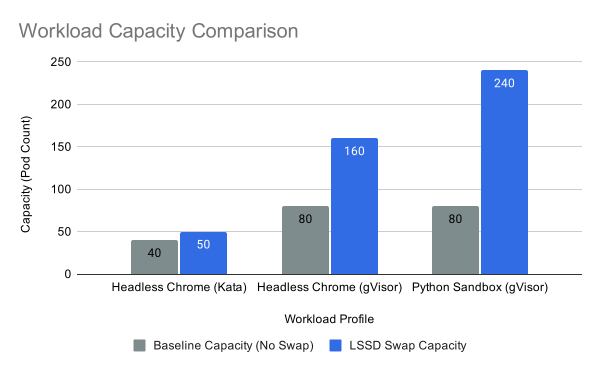
    Kubernetes memory limits often cap node density for bursty agentic AI workloads that sit idle with large memory footprints. To solve this, the engineering team benchmarked Kubernetes v1.34 node swap backed by fast NVMe Local SSDs across CI/CD builds, headless browsers, and Python sandboxes. The approach successfully increased pod density up to three times without significant latency costs.

    DEPTH ■■■■■6 min read2 weeks ago

    Sign in to save and rate

  4. Why Is My Kubernetes Job Still Pending? Tracing Kueue Admission with Headlamp

    Kubernetes jobs managed by Kueue can remain pending while waiting for admission checks and resource allocation. The team implemented a Kueue plugin for Headlamp to trace pending workloads through local queues, cluster queues, and resource flavors within a unified interface. This approach allows engineers to quickly determine whether a job is blocked by admission policies or standard pod scheduling.

    DEPTH ■■■■■9 min read11 days ago

    Sign in to save and rate

  5. Why I tried to kill token billing (and why we kept it)

    The author examines the limitations of token-based billing as a customer-facing pricing model, noting that it exposes internal margins and commoditizes AI products. The company explored abandoning token billing entirely but realized its necessity for backend cost tracking and margin management. Ultimately, the piece proposes unified credits and output-based pricing as better ways to align invoices with customer value.

    DEPTH ■■■■■7 min read3 weeks ago

    Sign in to save and rate