/ THE FEED /

Read what ships.

Deep, recent reads ranked by depth and freshness.

  1. Origin Range Requests: Serving large files without range-request tuning

    Cloudflare replaced a legacy, fixed-size range caching design that suffered from bandwidth waste and memory pressure with a Pingora-based chunk coordinator. The new implementation dynamically combines cached chunks and aligned origin fetches to serve range requests accurately without manual tuning. This approach cut p99 time to first byte in half for R2 storage and reduced tiered cache traffic by six percent.

    DEPTH ■■■■■8 min read2 days ago

    DatabasesPerformanceRedis

    Sign in to save and rate

  2. Bringing post-quantum cryptography to geographically fenced key management

    Cloudflare introduced a post-quantum geographically restricted key manager in closed beta to enforce data sovereignty and protect customers against harvest-now-decrypt-later attacks. The team implemented a hybrid ML-KEM-768 and X25519 cryptographic design that separates globally distributed wrapped private keys from regionally restricted root keys. This ensures that decryption keys are only accessible within authorized geographical boundaries and fails closed if validation fails.

    DEPTH ■■■■■12 min read2 days ago

    Security

    Sign in to save and rate

  3. Cutting our inference bill by 68% by being obsessive about optimization

    An engineering team investigated a steady rise in AI code review costs and found that cache misses and redundant model calls were driving up expenses. By restructuring system prompts to enable cross-repository prompt caching, eliminating wasted tool calls, and switching to more efficient models, the team cut inference costs by 68% while also significantly improving review latency.

    DEPTH ■■■■■15 min read6 days ago

    Machine Learning

    Sign in to save and rate

  4. Yandex outage: Data shows that instead of going dark, malicious bots went on the move

    Following physical strikes on Yandex data centers, overall HTTP traffic from the network dropped significantly, leading to speculation that malicious bot farms had been disabled. However, traffic analysis revealed that search crawling simply decreased while malicious automation quickly migrated to other hosting providers with identical fingerprints. Consequently, overall malicious bot traffic remained flat, demonstrating that network disruptions do not stop portable automated workloads.

    DEPTH ■■■■■8 min read11 days ago

    Incidents & Postmortems

    Sign in to save and rate

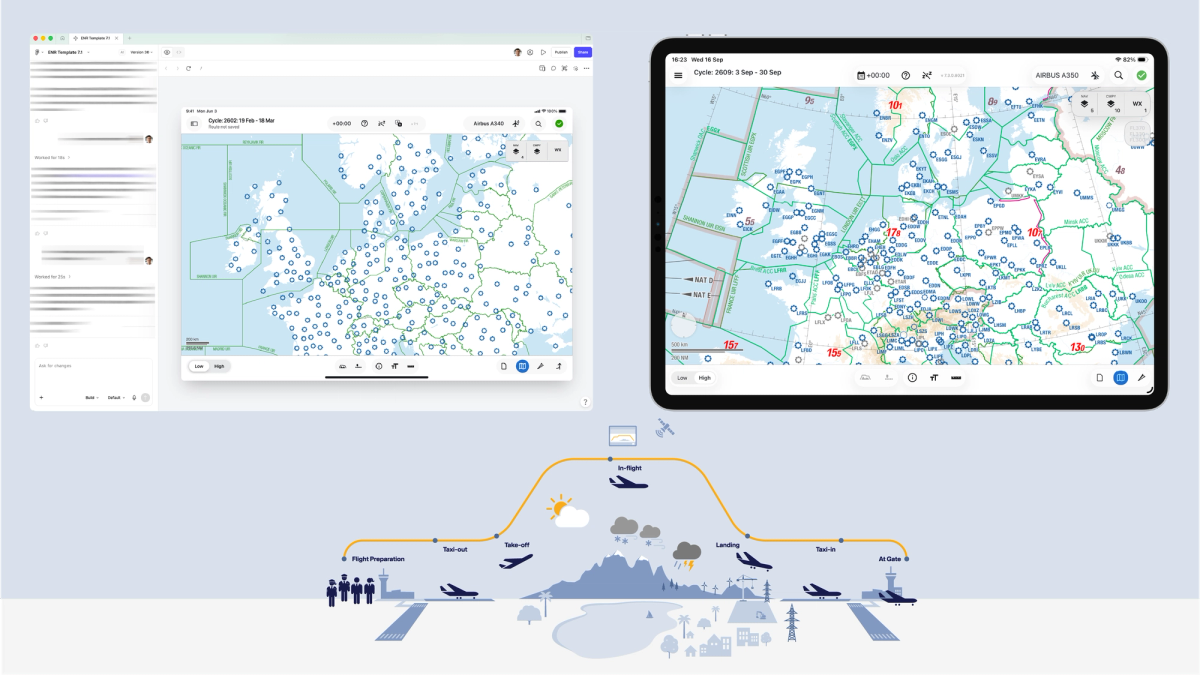
  5. How Lufthansa Systems prototypes realistic maps for the cockpit with Figma Make

    Lufthansa Systems struggled to build realistic, dynamic map prototypes for cockpit navigation apps using traditional static design tools. The team experimented with Figma Make during an internal hackathon to integrate external data sources like Mapbox and the OpenSky Network into their designs. As a result, designers successfully tested interactive map features and complex flight traffic data with pilots prior to writing production code.

    DEPTH ■■■■■8 min read3 days ago

    Sign in to save and rate

  6. Inside Hyperdrive: How we solved a rare Hyperdrive MySQL caching bug

    During the beta of MySQL support for Hyperdrive, engineers investigated rare empty query responses and connection hangs occurring in 0.001% of requests. They discovered that sharing the data center cache between client and endpoint nodes caused protocol capability mismatches when translating MySQL wire messages. The team resolved the issue by standardizing the cache to always store responses encoded with canonical Hyperdrive capabilities.

    DEPTH ■■■■■9 min read11 days ago

    MySQL

    Sign in to save and rate

  7. Under the hood, off the hot path: How D1 scales to millions of databases

    Cloudflare scaled its serverless SQLite database, D1, to support millions of databases by decoupling the control plane from the data plane. The team used distributed metadata caching via Workers KV, optimized database connections through Hyperdrive, and implemented a self-correcting heartbeat mechanism. This architecture prevents centralized bottlenecks and allows D1 to handle rapid on-demand database creation efficiently.

    DEPTH ■■■■■22 min read12 days ago

    Databases

    Sign in to save and rate

  8. Safer for Teens, Same Discord for Adults

    Discord developed a privacy-preserving age assurance and estimation system to comply with expanding global regulations while keeping adult experiences unchanged. By analyzing account metadata and patterns rather than private messages, the system automatically classifies over 90 percent of users into age groups. Users can also verify their status through alternative methods like credit cards or platform app stores if automated classification is incorrect.

    DEPTH ■■■■■18 min read4 weeks ago

    Sign in to save and rate

  9. Rewinding the exponential: How we keep hardware usage down

    Cloudflare tackled exponential traffic growth against linear hardware growth by continuously evolving their data pipeline architecture over five years. Key optimizations included breaking up monolithic schemas, switching to zstd compression, decoupling pipeline transit from database replication, decentralizing sampling, and moving aggregations earlier in the pipeline. These strategies significantly reduced backbone bandwidth usage, network congestion, and storage requirements while preserving data quality.

    DEPTH ■■■■■12 min read12 days ago

    Infrastructure

    Sign in to save and rate

  10. Filter, reshape, and redact logs before export with Transformers

    Cloudflare integrated SQL-based log transformation directly into its Logpush export pipeline, allowing customers to filter, redact, and reshape logs before delivery. The team chose to embed the Apache DataFusion engine in-process using Rust and Go across an Arrow IPC boundary to ensure high throughput and avoid network latency. As a result, the system processes high-volume log streams efficiently while maintaining predictable resource usage and strict delivery reliability.

    DEPTH ■■■■■8 min read13 days ago

    Sign in to save and rate

  11. How to put your design system to work with the Figma agent

    This post explains how to provide the Figma agent with proper context through design libraries, explicit guidelines, practical examples, and reusable skills to produce accurate outputs. By connecting libraries and defining rules, teams can ensure the agent uses approved components and follows design patterns. Reviewing agent outputs helps teams identify missing context and refine their libraries and guidelines.

    DEPTH ■■■■■6 min read2 days ago

    Sign in to save and rate

  12. Discord Update: September 25, 2026

    Discord released product updates including system-wide echo cancellation for Windows clients, along with various UI and feature changes. The engineering team also upgraded the React Native version for mobile and Electron for desktop, yielding measurable CPU and launch performance improvements. These updates aim to improve resource efficiency and overall application usability.

    DEPTH ■■■■■4 min read4 weeks ago

    Sign in to save and rate

  13. Cloudflare deploys protections against php2shell vulnerability

    Recent disclosures revealed critical remote code execution and data exposure vulnerabilities in the PHP runtime. To mitigate the threat before public disclosure, Cloudflare developed full transaction detection to combine request and response signals within the WAF. This capability enabled automatic deployment of rules protecting customers against the php2shell exploits.

    DEPTH ■■■■■6 min read4 days ago

    Security

    Sign in to save and rate

  14. How Commerce.com and Cloudflare are getting storefronts ready for AI agents

    Commerce.com and Cloudflare collaborated to enable WebMCP at the edge for nearly 100,000 storefronts, allowing AI agents to interact reliably with e-commerce sites using structured tools rather than fragile HTML scraping. The team implemented edge-level configuration rules using custom hostname metadata to provide individual merchants with a seamless opt-out mechanism and added support for custom MCP paths. This integration allows agents to execute shopping tasks directly within the active browser session while ensuring fallback safety and zero extra latency for opted-out stores.

    DEPTH ■■■■■6 min read4 days ago

    Machine Learning

    Sign in to save and rate

  15. 8 eMudhra certificates are compromised. Here's what you need to know

    Private keys associated with eight eMudhra intermediate certificates were compromised, allowing potential traffic interception. Cloudflare prioritized patching critical services, released client and tunnel updates, and deployed mitigations across its products. Customers are advised to upgrade affected software, update custom trust stores, and avoid disabling verification despite error messages.

    DEPTH ■■■■■4 min read4 days ago

    Security

    Sign in to save and rate

  16. 4 team rituals that drive AI adoption

    To drive team-wide AI adoption beyond isolated power users, several companies introduced collaborative team rituals such as peer-led study groups, process-focused sharing forums, cross-disciplinary training, and prototype-first critiques. These forums helped bridge knowledge gaps, reduce intimidation, and build consistent habits. As a result, teams were able to move from individual experimentation to collective AI usage.

    DEPTH ■■■■■7 min read2 weeks ago

    Sign in to save and rate

  17. A fully programmable secure web gateway

    Cloudflare integrated its secure web gateway and data loss prevention services with its edge computing platform to allow customers to run custom code inline during policy evaluation. The team introduced a new Forward action for traffic transformation and Custom Functions for dynamic rule evaluation without requiring external proxy infrastructure. This enables complex security logic, real-time alerting, and dynamic header injection with zero network hop overhead.

    DEPTH ■■■■■13 min read10 days ago

    Sign in to save and rate

  18. Workflow lab: Staying in the flow with Figma’s agent

    A fictional designer at Offtrail updates a permission settings flow using the Figma agent to handle repetitive maintenance, compliance checks, and component specs. By offloading busywork and context gathering to the agent, the designer focuses on feature logic and design decisions while keeping outputs connected in a shared canvas.

    DEPTH ■■■■■8 min read2 weeks ago

    Sign in to save and rate

  19. How to lighten design system upkeep with the Figma agent

    Design systems often suffer from maintenance overhead like documentation debt, naming inconsistencies, and drift between product screens and libraries. The Figma agent automates these upkeep tasks by drafting specs, auditing token and component usage, and bulk-replacing disconnected elements. This reduces manual toil and helps teams keep their design systems aligned with product work.

    DEPTH ■■■■■5 min read2 weeks ago

    Sign in to save and rate