/ THE FEED /

Read what ships.

Deep, recent reads ranked by depth and freshness.

  1. A fully programmable secure web gateway

    Cloudflare integrated its secure web gateway and data loss prevention services with its edge computing platform to allow customers to run custom code inline during policy evaluation. The team introduced a new Forward action for traffic transformation and Custom Functions for dynamic rule evaluation without requiring external proxy infrastructure. This enables complex security logic, real-time alerting, and dynamic header injection with zero network hop overhead.

    DEPTH ■■■■■13 min read10 days ago

    Sign in to save and rate

  2. How the Math Used in 19th-Century Heat Physics Helps LLMs Understand Sentences

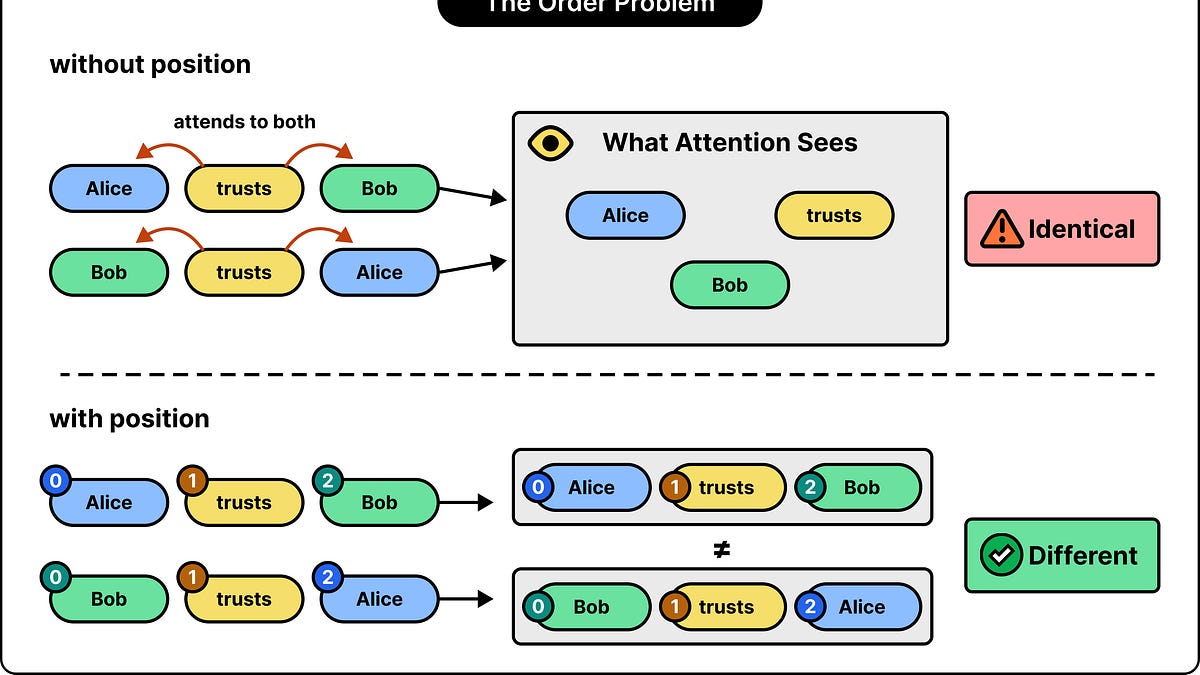
    This post explains how 19th-century mathematical techniques developed by Joseph Fourier using sine and cosine waves are applied in modern transformer models to give tokens positional context. The author demonstrates how word order dictates semantic meaning and how multi-speed rotational patterns provide bounded, scalable positional encodings. Ultimately, this mathematical structure helps attention mechanisms account for relative token distances during training.

    DEPTH ■■■■■13 min read12 days ago

    Sign in to save and rate

  3. Localizing compliance at scale: achieving South Korea’s ISMS certification

    To achieve South Korea's ISMS certification, Cloudflare had to modify its account sign-up flow to itemize required consents and disable third-party social logins that bypassed the form. By combining IP geolocation with user country selection, the team ensured localized compliance without breaking global functionality. The resulting certification provides a localized assurance benchmark for Korean users.

    DEPTH ■■■■■8 min read3 days ago

    Security

    Sign in to save and rate

  4. EP230: RAG vs Agentic RAG

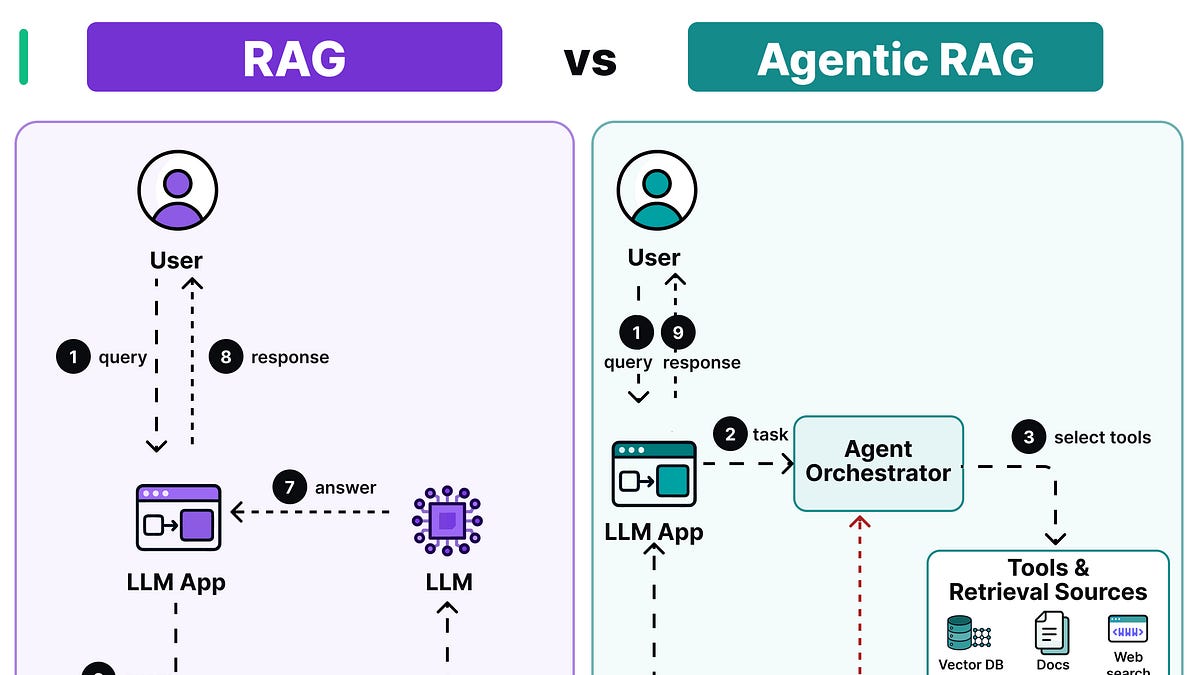
    This post provides brief conceptual overviews of several engineering topics, including traditional RAG versus Agentic RAG, OAuth versus OIDC, and the standard Linux directory structure. Traditional RAG relies on a single retrieval step, whereas Agentic RAG allows iterative searches and tool selection until sufficient evidence is gathered. The text outlines how OAuth handles authorization and OIDC adds user authentication, alongside a breakdown of core Linux directories like boot, dev, bin, and etc.

    DEPTH ■■■■■3 min readyesterday

    Sign in to save and rate

  5. Beyond the patch: Protecting your NetScaler gateway against future vulnerabilities

    Recent major vulnerabilities in Citrix NetScaler exposed public-facing authentication gateways to unauthenticated remote code execution. To prevent similar emergency patches, the team recommends placing an independent Zero Trust access layer, web application firewall, and strict origin connection controls in front of the application server. Implementing these defense-in-depth measures reduces exposure and ensures a single software flaw does not result in total system compromise.

    DEPTH ■■■■■9 min read6 days ago

    Security

    Sign in to save and rate

  6. EP229: 8 Chunking strategies for RAG-based agents

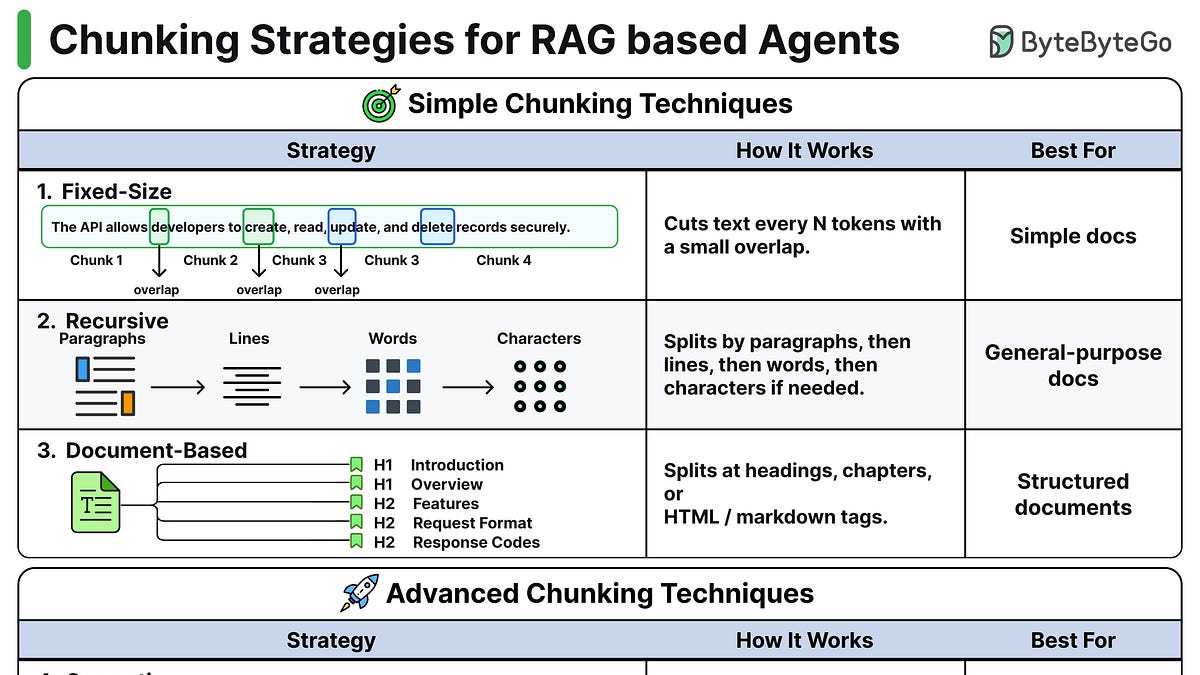
    The post provides brief, high-level overviews of various software engineering concepts including eight chunking strategies for RAG, the architecture of Google Translate, agent skills workflows, and the structural differences between PostgreSQL and MySQL. It touches upon how these different components and techniques function theoretically without deep benchmark comparisons. The content serves as a summary refresher on multiple system design topics.

    DEPTH ■■■■■3 min read8 days ago

    Sign in to save and rate

  7. EP228: How SSH Works

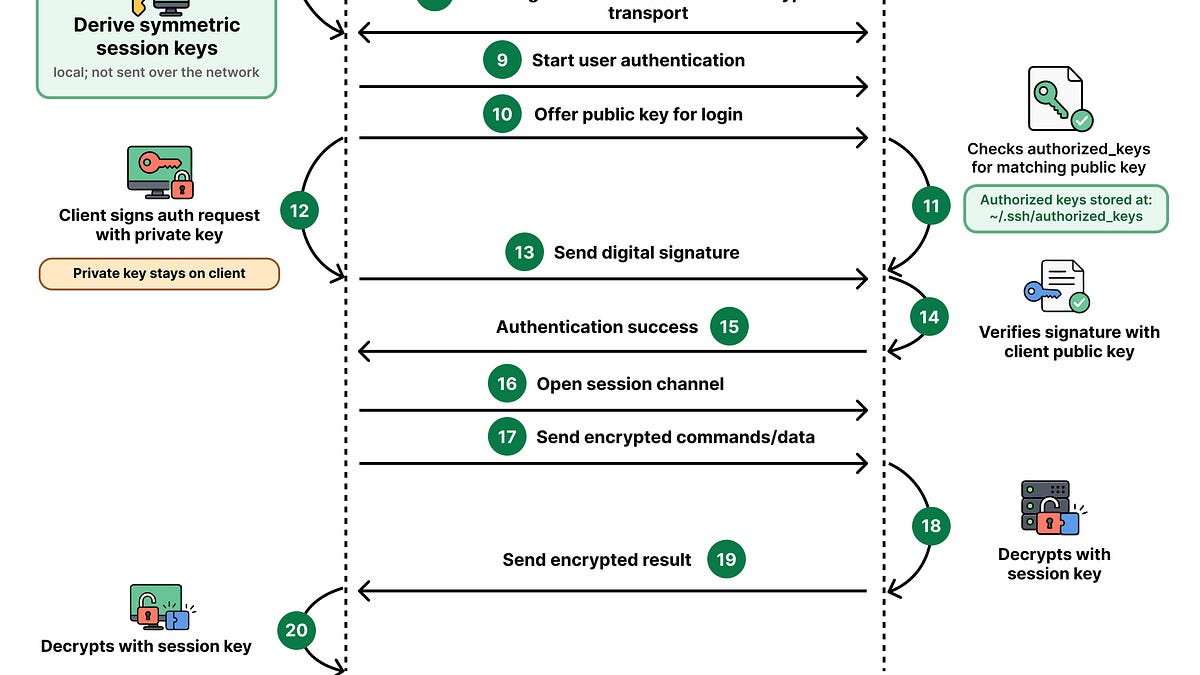
    This engineering newsletter covers the fundamentals of how SSH establishes secure remote connections through TCP, key exchange, and authentication. It also outlines key techniques for efficient LLM serving, the core anatomy of AI agents, and a structured approach to building evaluation systems.

    DEPTH ■■■■■6 min read3 weeks ago

    Sign in to save and rate