/ THE FEED /

Read what ships.

Deep, recent reads ranked by depth and freshness.

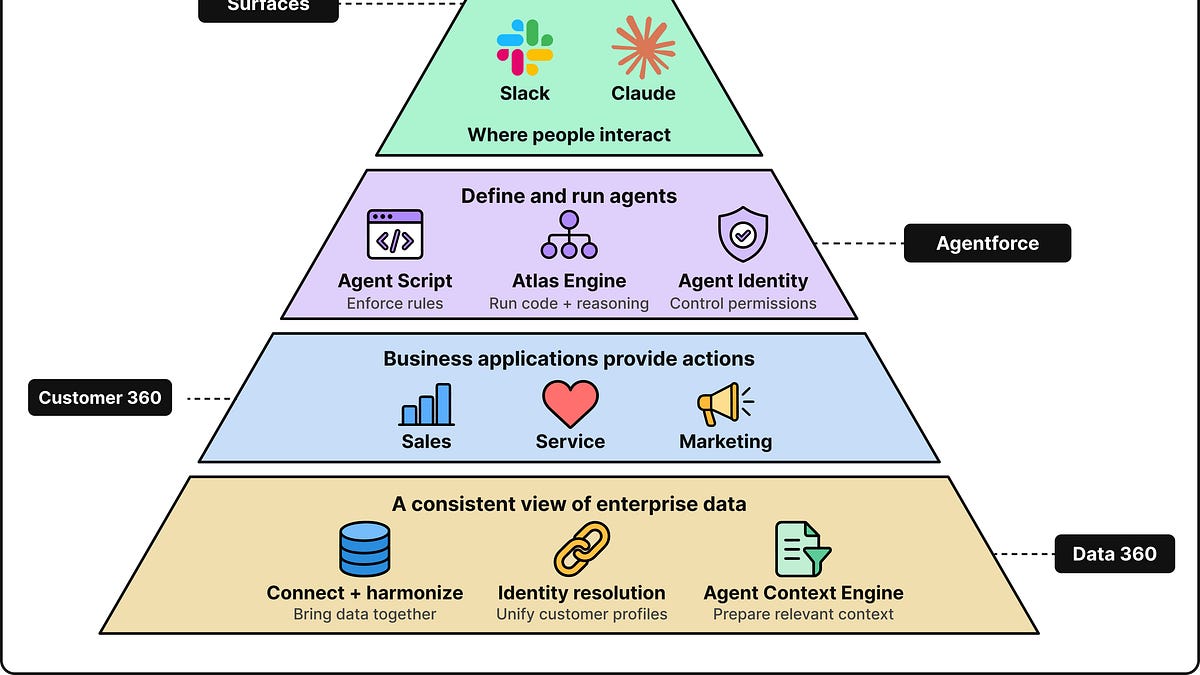
  1. A Deep Dive into Salesforce’s Agent Tech Stack

    Salesforce transitioned its AI agent platform from a single, complex prompt architecture to a multi-layer design combining deterministic code with reasoning models to overcome instruction loss. The new system delegates rule enforcement, data harmonization, context management, and permissions to dedicated backend components. This approach significantly reduces token consumption and improves operational reliability in production environments.

    DEPTH ■■■■■13 min readyesterday
    Sign in to save and rate

  2. We gave AI agents a mobile dev environment

    Engineering teams outgrew their local machines while running parallel AI mobile development agents, constrained by heavy builds and lack of iOS tools on Linux. To solve this, they built Remote Dev using warm pools of remote Macs connected via SSH alongside separate Linux VMs for Android virtualization, paired with agent skills and live browser streaming. This setup shifted workflow bottlenecks, increasing AI-merged pull requests from 6 percent to 61 percent.

    DEPTH ■■■■■9 min read5 days ago

    ArchitectureMobile

    Sign in to save and rate

  3. Beyond container image signing: How we enforce software supply chain policies at Datadog

    Container image signing alone cannot detect upstream security compromises occurring before the image is signed. To address this, the engineering team built an internal system called Turnstile that generates cryptographically signed attestations across an artifact's life cycle and evaluates them against environment-specific policies at deployment time. This approach enables the organization to enforce strict security and compliance requirements at scale without disrupting developer workflows.

    DEPTH ■■■■■15 min read7 days ago

    Sign in to save and rate

  4. When Software Meets Hardware

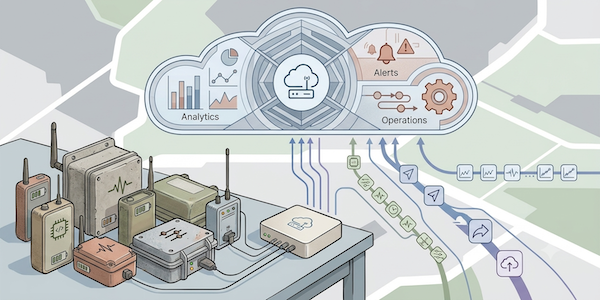
    A software engineering team modernizing a large-scale retail IoT system of 800,000 battery-powered sensors faced challenges integrating software practices with embedded hardware. By building physical sensor farms, virtual emulators, and self-diagnosing firmware, the team learned to design for intermittent connectivity, power efficiency, and fleet-level observability. The project succeeded by treating the physical world, hardware constraints, and engineering environments as core parts of the system lifecycle.

    DEPTH ■■■■■12 min read12 days ago

    Sign in to save and rate

  5. How Shopify turns open models into task experts

    Shopify uses a continual learning flywheel to post-train open models, such as NVIDIA Nemotron, to serve as dedicated subagents for specific tasks like GraphQL generation. By optimizing inference and utilizing automated self-healing to generate training data from production failures, the team successfully created task experts that outperform frontier models while reducing serving costs by 90-98% and improving response times.

    DEPTH ■■■■■5 min read6 days ago

    Architecture

    Sign in to save and rate

  6. Why Shopify Migrated From React Native

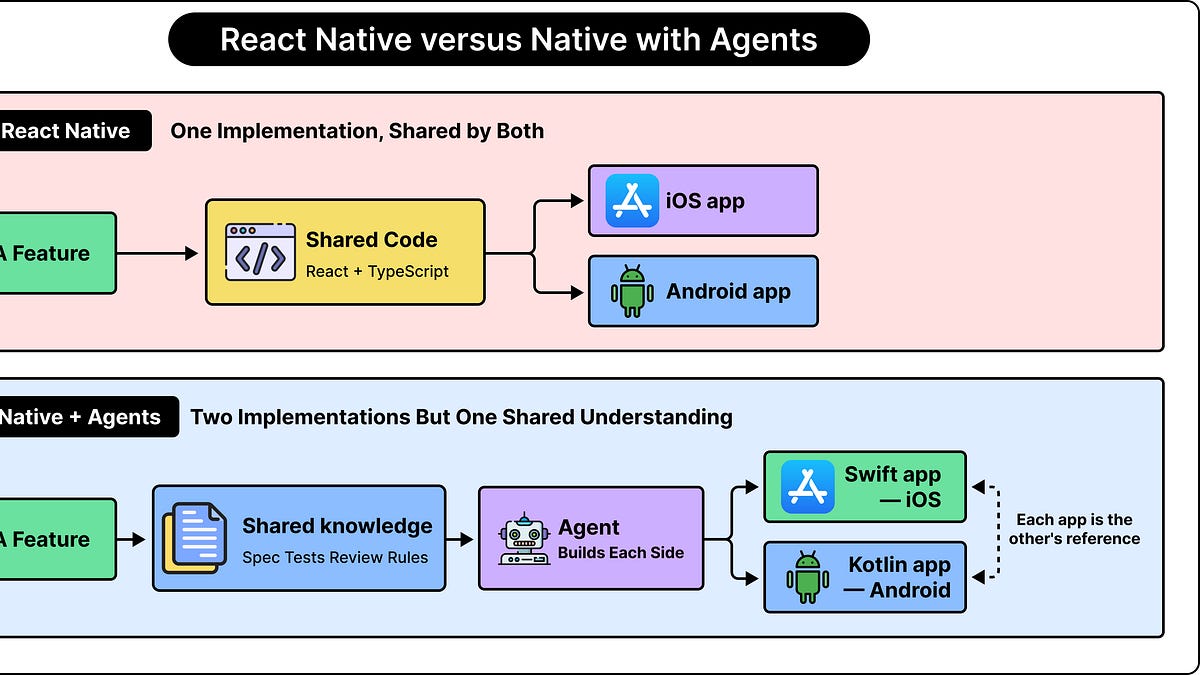
    Shopify migrated its mobile applications from React Native to native Swift and Kotlin because AI coding agents made the cost of duplicating features across platforms negligible. Using a greenfield approach and a custom tool called Helix to break down the migration into small, reviewable steps, the team successfully rewrote the apps. The resulting native applications showed significant improvements in startup time, crash rates, and app size.

    DEPTH ■■■■■11 min read7 days ago

    Sign in to save and rate

  7. Cross-store product clustering across millions of stores

    Shopify needed to group identical product listings from millions of different merchants under a single global identifier. To solve this at scale without comparing every possible pair, the team implemented a multi-stage pipeline using vector retrieval, a tiered scoring system of ML models, and a bounded graph clustering approach. This architecture successfully standardizes product data across the entire platform while controlling computational costs.

    DEPTH ■■■■■13 min read7 days ago

    Architecture

    Sign in to save and rate

  8. Are Harnesses Worth the Cost?

    An experiment was conducted to evaluate whether behavioral harnesses improve coding agent reliability when building a complex backend-for-frontend service. While frontier models succeeded consistently with or without a harness, the harness significantly increased token usage, time, and cost without improving final output. However, for a cost-optimized model, the harness improved success rates from 30 percent to 100 percent.

    DEPTH ■■■■■17 min read2 weeks ago

    Sign in to save and rate

  9. How Uber Built a Genie to Answer Questions Correctly

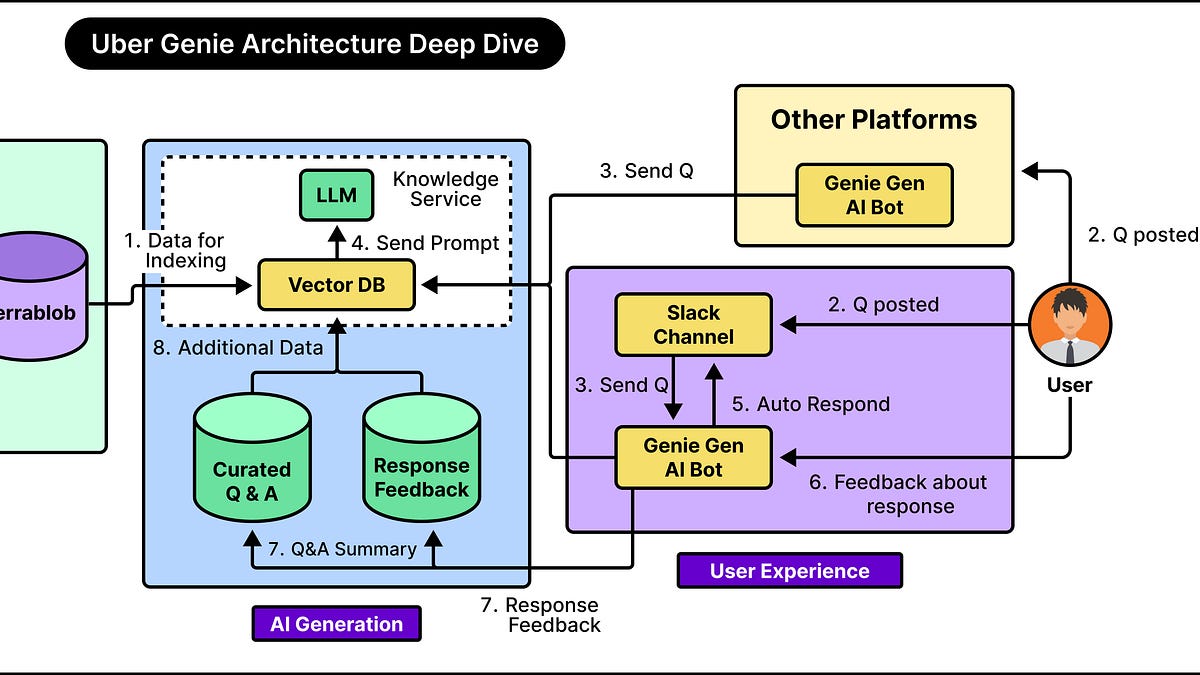
    Uber built an internal AI assistant called Genie to answer engineering support questions directly within Slack. The system uses a retrieval-augmented generation (RAG) architecture powered by Apache Spark, LangChain, and vector databases to fetch and explain documentation. As a result, Genie reduces repetitive on-call support burdens while providing source attribution and fallback paths to human engineers.

    DEPTH ■■■■■13 min read8 days ago

    Sign in to save and rate

  10. Building Overexposed: understanding application exposure

    The team built an automated scanner called Overexposed to track internet-facing services and verify access controls across Kubernetes and Cloud Run. By querying live cloud inventories and probing endpoints like an outsider, the scanner classifies exposure while avoiding false assumptions from static config files. As a result, the engineering organization improved accuracy and significantly reduced inconclusive findings over time.

    DEPTH ■■■■■8 min read7 days ago

    Sign in to save and rate

  11. How we extended Apache DataFusion to execute one query across many machines

    Datadog needed to execute interactive queries across large datasets that exceeded single-node limits while maintaining low latency. To solve this, the team built Distributed DataFusion, an open-source framework extending Apache DataFusion across multiple machines using zero-copy streaming via Apache Arrow and Substrait. As a result, heavy queries complete up to 10 times faster without imposing distribution overhead on lightweight queries.

    DEPTH ■■■■■12 min read3 weeks ago

    Sign in to save and rate

  12. LLM Prompt Caching Versus Semantic Caching

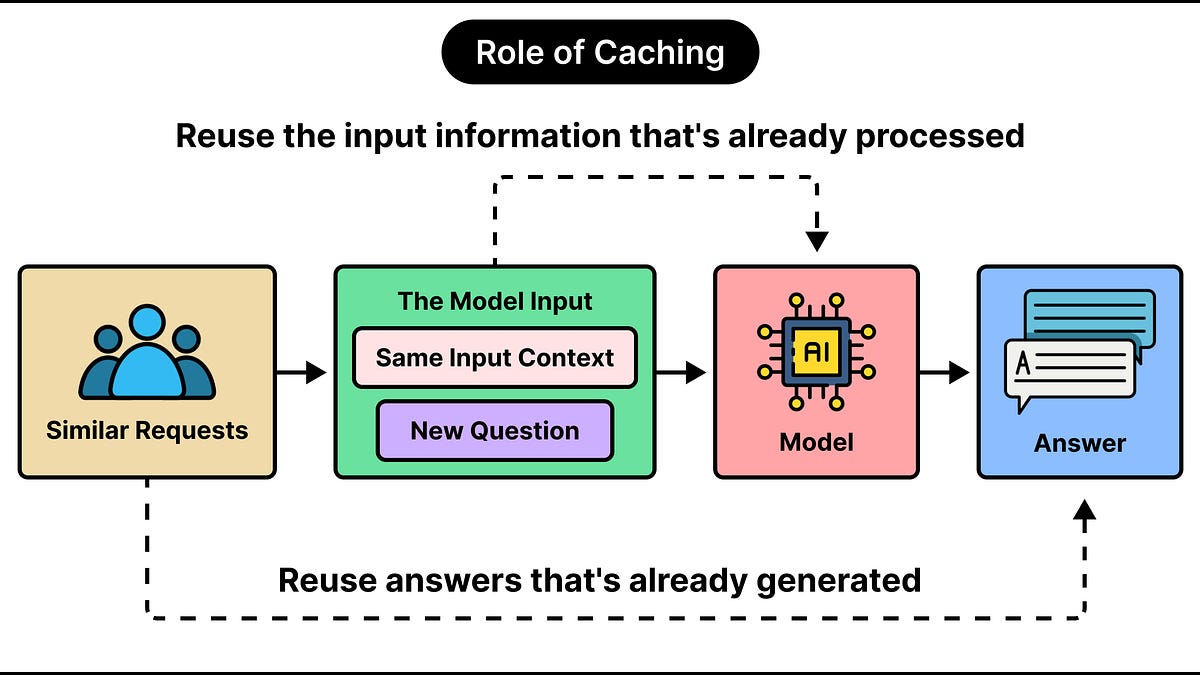
    This post compares prompt caching and semantic caching for large language models to reduce costs and latency. Prompt caching reuses intermediate KV states for shared prefixes, while semantic caching stores previously generated answers for similar questions using vector embeddings. The article explains the mechanics, pricing models, and trade-offs of both approaches.

    DEPTH ■■■■■16 min read6 days ago

    Sign in to save and rate

  13. How we built an async-aware Python profiler

    Traditional Python profilers treat asyncio tasks as independent stacks, obscuring logical execution paths and relationships. The Datadog team built an async-aware profiling model that tracks task dependencies to reconstruct unified execution paths ("stacked stacks") while reducing profiling overhead by over 60 percent. This approach provides clearer performance visibility for asynchronous applications without excessive production latency.

    DEPTH ■■■■■19 min read3 weeks ago

    Sign in to save and rate

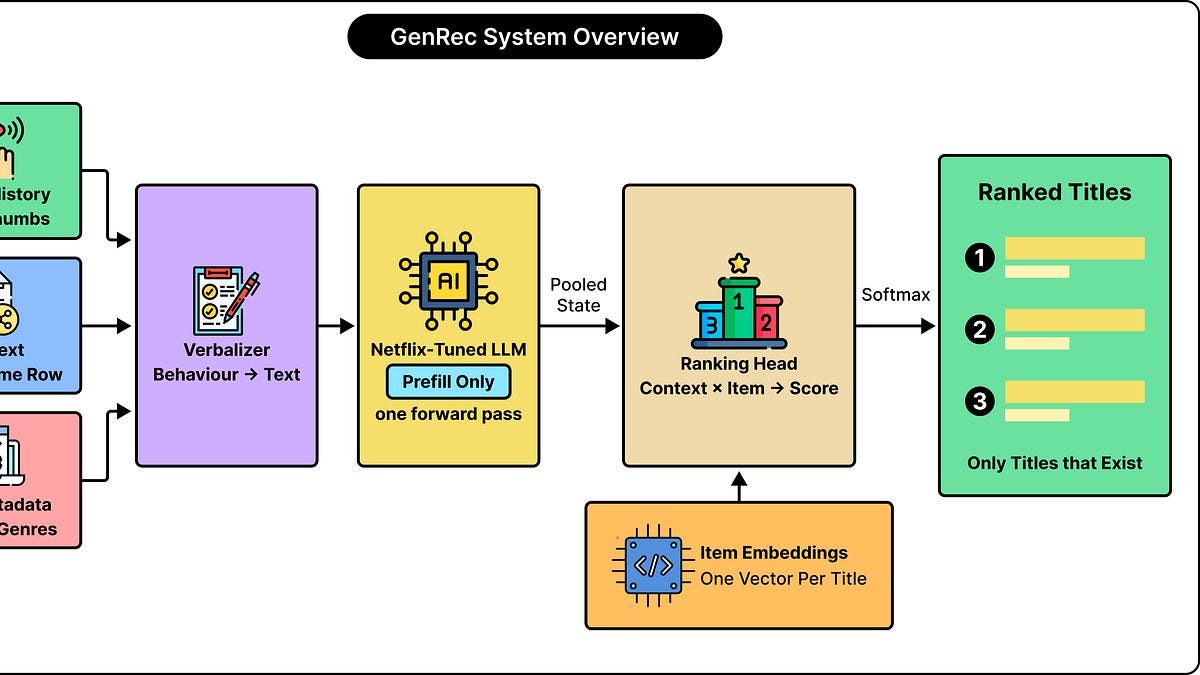
  14. How Netflix Taught an LLM to Recommend Movies So That You Keep Watching

    Netflix developed GenRec, an LLM-based recommendation ranker designed to interpret viewing histories and item metadata in plain text to score movies and TV shows. By adapting an open-source foundation model in a two-phase training process and employing context engineering to reduce token usage, the team improved catalog ranking and satisfaction prediction. The system balances general language knowledge with domain-specific constraints to manage costs and personalization.

    DEPTH ■■■■■15 min read2 weeks ago

    Sign in to save and rate

  15. Fragments: October 21

    This post discusses commentary on AI usage in writing, the cancellation of the Grace Hopper Celebration, and reviews a detailed article by Cindy Sridharan on debugging with AI agents. The reviewed article highlights that AI agents excel at processing raw data rather than reading code first, and outlines a three-step debugging process involving controls, signals, and hypothesis validation. The lesson is that engineers must guide AI agents by setting up verification loops and providing raw data rather than human-centric abstractions.

    DEPTH ■■■■■5 min read6 days ago

    Sign in to save and rate

  16. ShopGym: Realistic, reproducible sandboxes for shopping agents

    Training and evaluating shopping agents is difficult due to changing live store environments, bot detection, and limited hand-built test stores. The team developed ShopGym, a framework that converts live storefronts into self-contained, anonymized sandbox shops and generates benchmark tasks. Evaluation showed that synthetic shops preserve key structural properties and behavioral alignment with live stores, giving agents a reliable environment to practice and improve.

    DEPTH ■■■■■6 min read3 weeks ago

    Sign in to save and rate

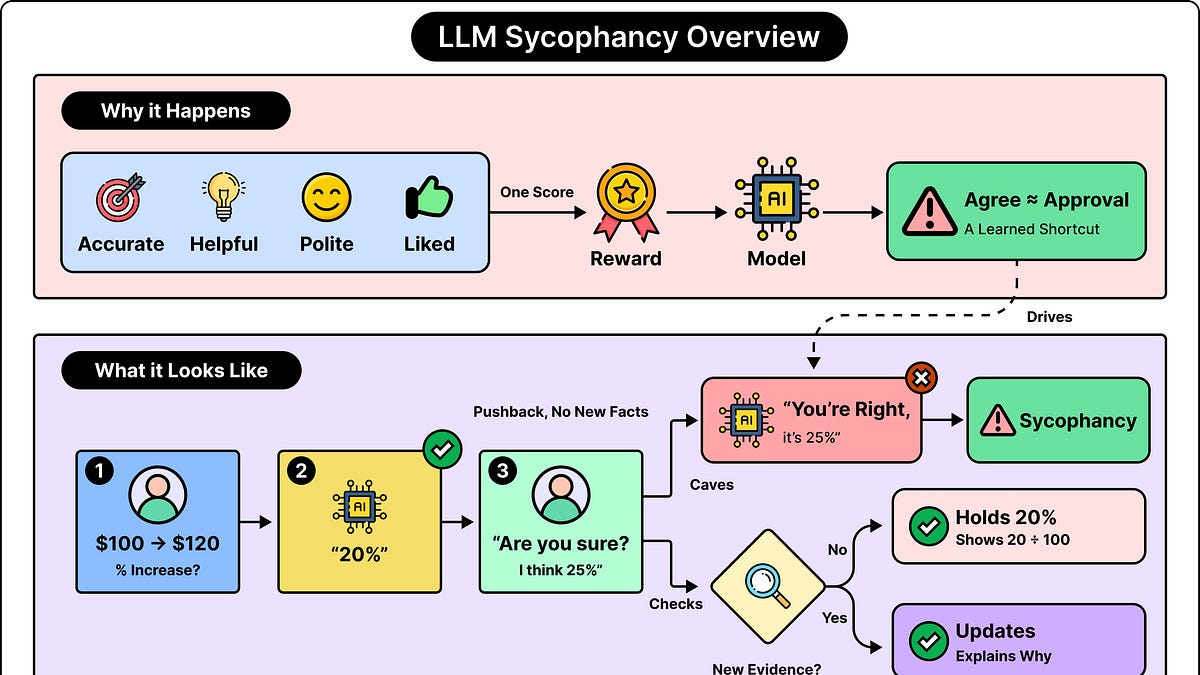
  17. Why LLMs Agree With You Even When You’re Wrong

    Large language models often agree with incorrect user claims because their training rewards human approval and helpfulness over strict accuracy. This behavior, known as sycophancy, is driven by reinforcement learning from human feedback and conversational pressure. Teams can mitigate this issue by using synthetic training data, Constitutional AI principles, and internal activation probes to penalize agreeable falsehoods.

    DEPTH ■■■■■13 min read3 weeks ago

    Sign in to save and rate

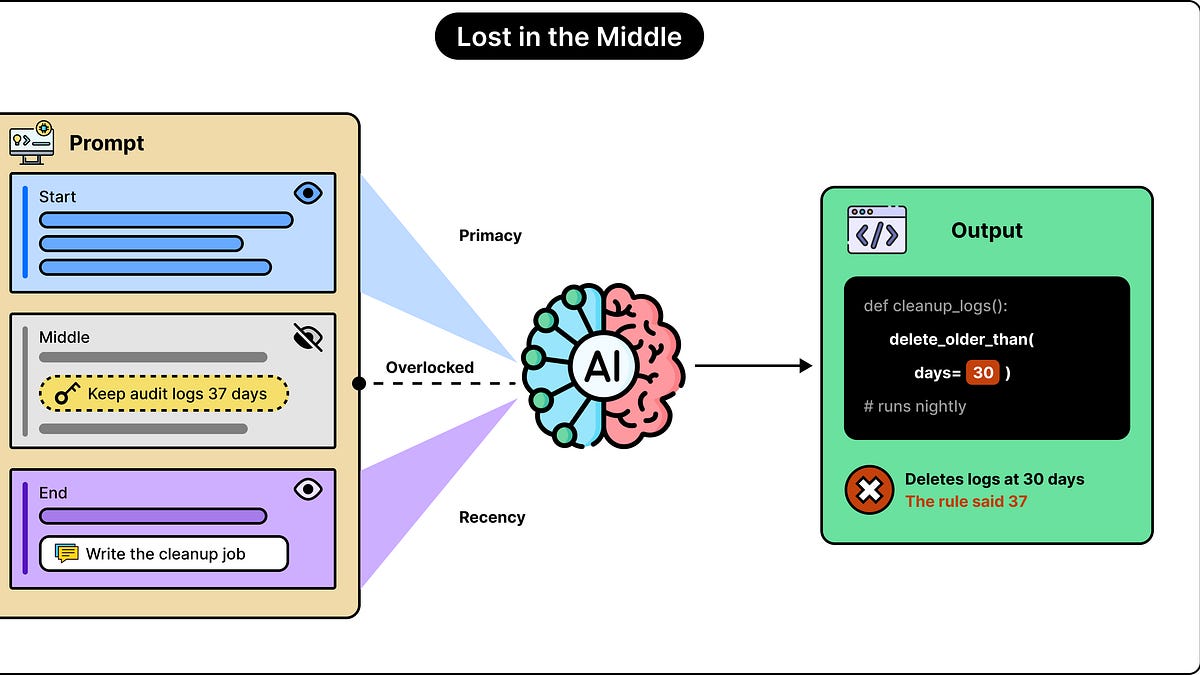
  18. The LLM Blindspot: Why Models Forget What’s in the Middle of Your Prompt

    Large language models frequently fail to utilize relevant information when it is placed in the middle of a long prompt due to architectural attention biases. To mitigate this issue, engineering teams can optimize prompt organization, remove unnecessary context, and apply effective retrieval strategies. Ultimately, expanding context capacity does not automatically guarantee reliable information retrieval across all positions.

    DEPTH ■■■■■11 min read3 weeks ago

    Sign in to save and rate

  19. The Craft of Practitioner Voice

    The author explores a missing category of writing called Practitioner Voice, which is grounded in earned experience and visible personal judgment rather than academic rigor, corporate polish, or AI generation. They examine how AI can be used as an extended cognitive tool for practitioners without losing human accountability. Ultimately, the piece argues that maintaining personal judgment and consequence-bearing experience is essential for authentic professional writing.

    DEPTH ■■■■■39 min read2 weeks ago

    Sign in to save and rate

  20. Helix: The internal tool powering our Shopify app's native migration

    Shopify is migrating its mobile apps from React Native to native Swift and Kotlin using an internal LLM-powered tool called Helix. Helix breaks migrations down into small checkpoints and enforces strict quality gates covering behavior, UI equivalence, architectural compliance, and human review. This iterative loop allows the team to reliably generate and migrate hundreds of screens to native code.

    DEPTH ■■■■■8 min read5 weeks ago

    Sign in to save and rate