/ THE FEED /

Read what ships.

Deep, recent reads ranked by depth and freshness.

  1. How MHK built a HIPAA-eligible agentic AI solution on Amazon Bedrock

    Healthcare technology company MHK faced fragmented AI infrastructure and lengthy development cycles while trying to process unstructured medical documents under strict HIPAA standards. To solve this, they built a multi-tenant, event-driven agentic workflow framework called the SmartProminence AI Orchestrator on AWS using Amazon Bedrock, ECS, and SQS. The new system reduced manual review effort by 90% and shortened AI feature deployment times from months to weeks.

    DEPTH ■■■■■12 min read3 weeks ago
    Sign in to save and rate

  2. Build adaptive AI interfaces with the AG-UI protocol, agent swarms, and Nova Act on AWS

    AI applications produce variable outputs that cannot be effectively handled by static user interfaces, leading to development friction and poor user experiences. The team implemented an adaptive interface pattern using the AG-UI protocol, the Strands Agents SDK Swarm pattern, and Amazon Nova Act on AWS to dynamically render components and automate legacy integrations. This architecture streams agent findings over Server-Sent Events, enabling real-time multi-agent consensus and reducing interface development overhead.

    DEPTH ■■■■■22 min read3 weeks ago

    Sign in to save and rate

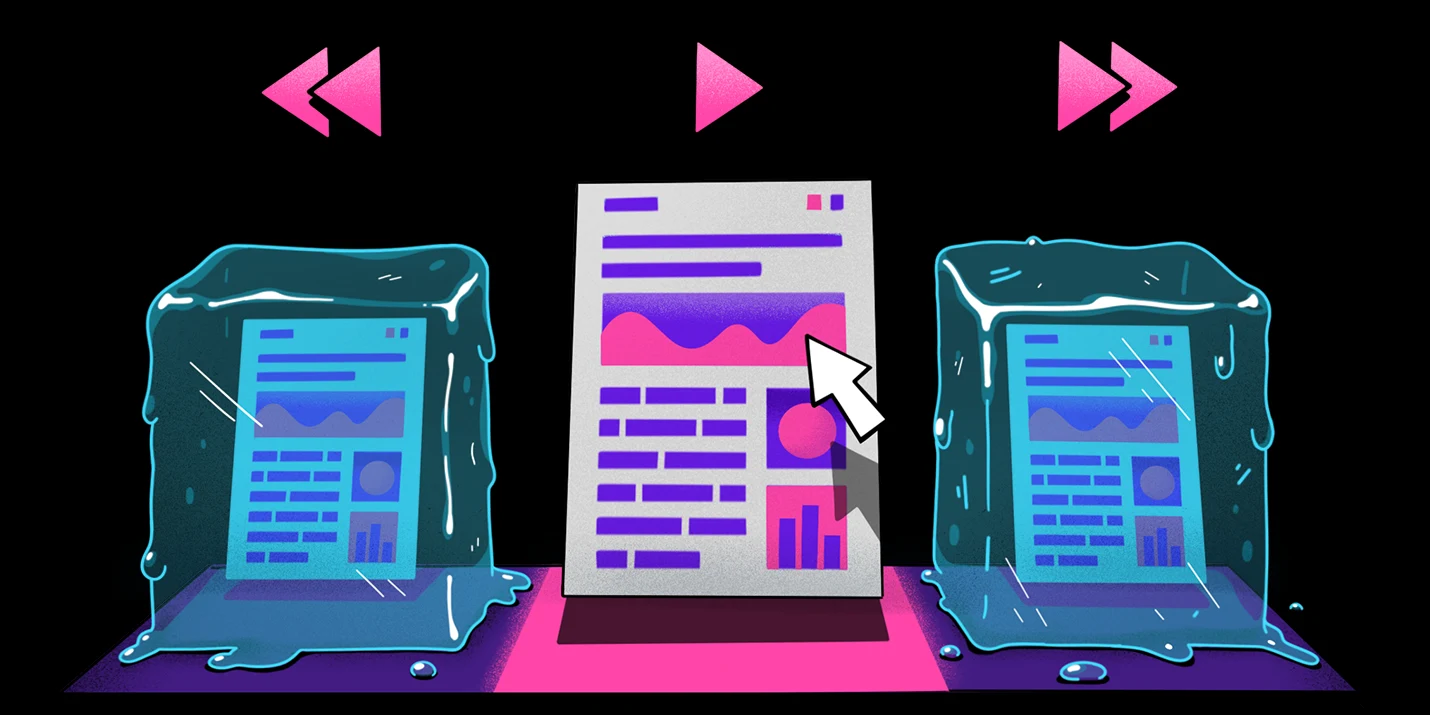
  3. Measuring the back/forward cache with Application Metrics

    Engineering teams often lack visibility into back/forward cache performance because successful cache hits leave no telemetry traces and browser heuristics frequently change. To solve this blind spot, the team introduced an opt-in application metrics integration in their JavaScript SDK that models browser bfcache signals into hits, specific miss reasons, and reload durations. As a result, developers can track, query, and fix silent navigation regressions using customizable dashboards.

    DEPTH ■■■■■6 min read4 weeks ago

    Sign in to save and rate

  4. Building Sentry's Laravel AI Integration

    The Sentry team built a Laravel AI integration to support Agent Tracing during an internal hackweek. Because Laravel AI lacked events for individual LLM invocations, the integration correlates outgoing HTTP requests with active invocations using provider URL prefixes. The resulting zero-config feature is available in sentry-laravel 4.27 and automatically traces agents, LLM requests, and tool calls.

    DEPTH ■■■■■4 min read4 weeks ago

    Sign in to save and rate

  5. How Dynata scaled AI across the development lifecycle with AI-DLC and Kiro IDE

    Dynata adopted the AI-Driven Development Lifecycle methodology using Kiro IDE and Amazon Q Developer to compress multi-sprint feature delivery into a single sprint. The team progressed from code generation to integrating knowledge ecosystems and conducting structured three-day feature workshops. As a result, requirements ambiguities surfaced early during planning and the team achieved faster, more aligned feature delivery.

    DEPTH ■■■■■15 min read10 days ago

    Sign in to save and rate

  6. Debugging our AI search assistant with agent tracing

    The Sentry team developed a Search Query Assistant to convert natural language prompts into search syntax, which initially failed on custom numerical attributes due to incorrect field formatting in the system prompt. By utilizing their own AI Conversation view and agent tracing, they identified the root cause in the tool call results and system prompt generation. This observability workflow enabled them to reproduce, fix, and verify the issue both locally and in production.

    DEPTH ■■■■■4 min read6 weeks ago

    Sign in to save and rate