/ THE FEED /

Read what ships.

Deep, recent reads ranked by depth and freshness.

  1. Shard design doesn't start from your tables

    Designing a sharded Postgres architecture requires grouping tables around shared query keys rather than starting from table structures alone. The post details how to configure shard groups, reference tables, SQL expressions in shard indexes, and global secondary indexes using Neki. This setup enables efficient single-shard queries and transactions while maintaining full Postgres semantics.

    DEPTH ■■■■■8 min read2 days ago
    PostgreSQL

    Sign in to save and rate

  2. Automate medical coding with Step Functions and Amazon Bedrock AgentCore

    Automating medical coding requires a hybrid approach that combines deterministic orchestration with bounded agentic reasoning to ensure safety, auditability, and human oversight. The team built a workflow using AWS Step Functions, AWS Lambda, and Amazon Bedrock AgentCore that evaluates terms cheapest-first via block-lists, exact matching, and finally an LLM agent for ambiguous cases. This design successfully autocodes confident cases while routing ambiguous ones to human reviewers with full audit trails and decision explanations.

    DEPTH ■■■■■15 min read3 days ago

    AWS

    Sign in to save and rate

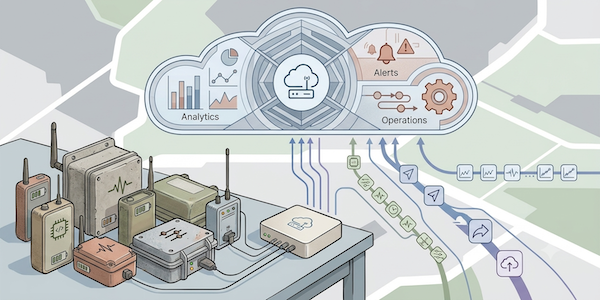
  3. When Software Meets Hardware

    A software engineering team modernizing a large-scale retail IoT system of 800,000 battery-powered sensors faced challenges integrating software practices with embedded hardware. By building physical sensor farms, virtual emulators, and self-diagnosing firmware, the team learned to design for intermittent connectivity, power efficiency, and fleet-level observability. The project succeeded by treating the physical world, hardware constraints, and engineering environments as core parts of the system lifecycle.

    DEPTH ■■■■■12 min read10 days ago

    Sign in to save and rate

  4. I don't trust ON DELETE CASCADE

    Postgres ON DELETE CASCADE can cause production outages, replication failures, and performance degradation during large deletions or schema migrations due to long-running transactions holding locks and generating massive WAL. The author recommends using soft deletes with batched background cleanup instead to keep transactions short and bounded. This approach avoids table locks and simplifies data recovery.

    DEPTH ■■■■■5 min read4 days ago

    PostgreSQL

    Sign in to save and rate

  5. Multi-region disaster recovery for Amazon API Gateway WebSocket APIs

    Real-time applications using WebSocket connections face disruptions during regional AWS outages because connections are tied to specific regions. The team implemented an active-passive multi-region disaster recovery architecture using Route 53 DNS failover, DynamoDB Global Tables, an automated canary health probe, and client-side exponential backoff with jitter. This design automatically detects failures, redirects traffic, and restores client state without manual intervention.

    DEPTH ■■■■■10 min read11 days ago

    Sign in to save and rate

  6. Are Harnesses Worth the Cost?

    An experiment was conducted to evaluate whether behavioral harnesses improve coding agent reliability when building a complex backend-for-frontend service. While frontier models succeeded consistently with or without a harness, the harness significantly increased token usage, time, and cost without improving final output. However, for a cost-optimized model, the harness improved success rates from 30 percent to 100 percent.

    DEPTH ■■■■■17 min read12 days ago

    Sign in to save and rate

  7. How UTS established a modern curriculum data services foundation on AWS

    University of Technology Sydney rearchitected its curriculum data integration using serverless AWS services to decouple systems of record from downstream consumers. By implementing domain-driven design with an event-driven architecture and purpose-built persistence layers, the team achieved zero production incidents, low latency, and reduced operational overhead while managed by a single engineer.

    DEPTH ■■■■■9 min read11 days ago

    Sign in to save and rate

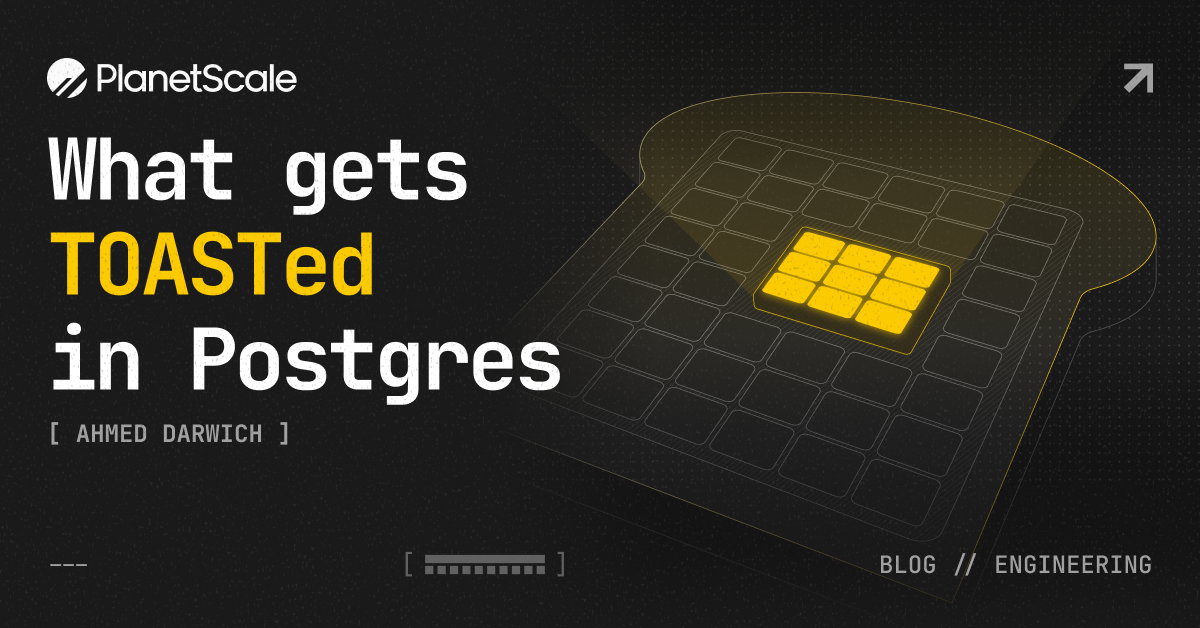
  8. What gets TOASTed in Postgres

    This post examines how PostgreSQL uses TOAST to manage oversized rows and variable-length columns through compression and off-row storage. It compares the pglz and LZ4 compression algorithms across different workloads, highlighting trade-offs in search windows, file sizes, and CPU overhead. The analysis demonstrates how these mechanisms impact storage efficiency and read performance for large text and JSON data.

    DEPTH ■■■■■12 min read13 days ago

    PostgreSQL

    Sign in to save and rate

  9. Scope workloads and share resilience policies with AWS Resilience Hub

    Engineering teams often struggle to scope workloads and maintain up-to-date resilience policies in shared Kubernetes clusters after migrations or deployments. AWS Resilience Hub introduced features enabling Kubernetes label-based resource scoping, generative AI-powered dependency insights, and cross-account resilience policy sharing via AWS Organizations. These capabilities allow teams to isolate specific workloads, prioritize dependency investigations, and enforce centralized recovery standards.

    DEPTH ■■■■■14 min read11 days ago

    Sign in to save and rate

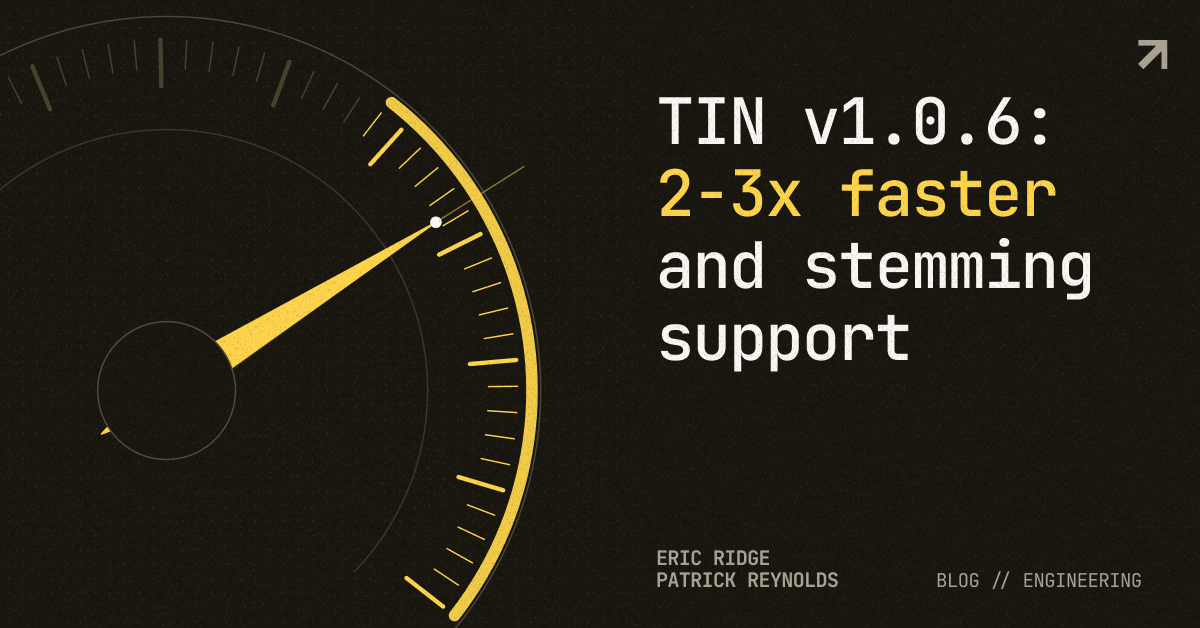
  10. TIN v1.0.6: 2-3x faster, with support for stemming

    Following competitive benchmarks that highlighted opportunities for optimization, the developers of the TIN full-text search index for Postgres released versions 1.0.4 and 1.0.6. These updates added Snowball stemming for 18 languages, optimized top-k sorting queries with deterministic tiebreakers, and improved overall query performance. As a result, benchmark tests show that TIN outperforms competing extensions across conjunction, disjunction, and phrase query workloads.

    DEPTH ■■■■■8 min read2 weeks ago

    PostgreSQL

    Sign in to save and rate

  11. Stopping business email compromise with AI-driven email security: How VIPRE protects modern enterprises on AWS

    VIPRE developed an AI-driven, cloud-native email security solution on AWS to protect enterprises against business email compromise and advanced phishing attacks. The system uses layered machine learning, semantic analysis, and dynamic sandboxing orchestrated via serverless containers and message queues to evaluate over half a million messages daily. In production testing, the architecture successfully identified thousands of BEC attempts while maintaining low-latency processing and reducing administrative overhead.

    DEPTH ■■■■■12 min read12 days ago

    Sign in to save and rate

  12. Bulk Executor for Amazon DynamoDB, Part 2: Lessons we learned the hard way

    Engineering a bulk execution tool for Amazon DynamoDB using AWS Glue required addressing several architectural challenges, including cost estimation, graceful job termination, and error handling across hundreds of parallel workers. The team overcame limitations in CloudWatch logging and the Spark connector by combining serverless execution with direct API calls and distributed rate limiting. As a result, the tool provides a scalable, script-like interface for managing large-scale table operations safely.

    DEPTH ■■■■■14 min read12 days ago

    Sign in to save and rate

  13. Fragments: October 21

    This post discusses commentary on AI usage in writing, the cancellation of the Grace Hopper Celebration, and reviews a detailed article by Cindy Sridharan on debugging with AI agents. The reviewed article highlights that AI agents excel at processing raw data rather than reading code first, and outlines a three-step debugging process involving controls, signals, and hypothesis validation. The lesson is that engineers must guide AI agents by setting up verification loops and providing raw data rather than human-centric abstractions.

    DEPTH ■■■■■5 min read4 days ago

    Sign in to save and rate

  14. Building a faster, lazier router for Postgres

    To reduce overhead when routing queries across PostgreSQL shards, the Neki router avoids unnecessary parsing and decodes responses lazily. By keeping data in its original wire format and only decoding columns when strictly required for operations like limits or sorting, the router significantly improves performance.

    DEPTH ■■■■■16 min read3 weeks ago

    Sign in to save and rate

  15. Agentic antimicrobial resistance surveillance with AWS HealthOmics and Amazon Bedrock AgentCore

    Processing public bacterial sequencing data for antimicrobial resistance surveillance typically requires specialized bioinformatics and SQL skills. To streamline this process, the team built a reference architecture using AWS HealthOmics, Amazon S3 Tables, and an Amazon Bedrock AgentCore conversational agent that ingests raw reads, normalizes findings, and answers plain-language questions with cited evidence. The resulting system automates the path from public accession numbers to natural-language epidemiological answers.

    DEPTH ■■■■■10 min read13 days ago

    Sign in to save and rate

  16. Sequences and other volatiles in Neki

    Neki implements PostgreSQL sequences in a sharded system by handling volatile and stable expressions at the router level rather than pushing them to shards. Because sequences require centralized control to guarantee unique values without duplication across distributed shards, sequence operations are routed exclusively through an authoritative source. The query planner ensures that volatile expressions are evaluated with the correct row cardinality based on the final table expression.

    DEPTH ■■■■■14 min read11 days ago

    Sign in to save and rate

  17. Practitioner Voice: The Writing Category Nobody has Named Yet

    The author explores a missing category of writing called Practitioner Voice, which is grounded in earned experience and visible personal judgment rather than academic rigor, corporate polish, or AI generation. They examine how AI can be used as an extended cognitive tool for practitioners without losing human accountability. Ultimately, the piece argues that maintaining personal judgment and consequence-bearing experience is essential for authentic professional writing.

    DEPTH ■■■■■39 min read12 days ago

    Sign in to save and rate

  18. PlanetScale is now available on Azure

    PlanetScale expanded its database offering to Microsoft Azure by adapting its Kubernetes-based infrastructure to handle Azure's networking constraints. The engineering team overcame Azure's private IP limits and slow pod startup times by implementing block-based IP allocation via a custom CNI plugin. This approach successfully increased IP capacity and removed the Kubernetes API server from the critical path during pod initialization.

    DEPTH ■■■■■3 min read12 days ago

    Sign in to save and rate

  19. Deploy Oracle Database step by step on Amazon EVS with FSx for ONTAP

    This post provides a step-by-step guide to deploying Oracle Database 19c on Amazon Elastic VMware Service using Amazon FSx for NetApp ONTAP as an NFS datastore. It covers provisioning storage, mounting datastores, installing Oracle, configuring SnapMirror for cross-region disaster recovery, and outlining four migration paths. The result is a fully functional enterprise database deployment that preserves existing operational workflows.

    DEPTH ■■■■■11 min read3 weeks ago

    Sign in to save and rate

  20. Architect highly available Oracle Database on Amazon EVS and FSx for ONTAP

    Enterprises migrating Oracle databases to Amazon Elastic VMware Service face challenges with storage latency, disaster recovery, and operational consistency. The team designed a highly available architecture combining Amazon EVS bare metal instances with Amazon FSx for NetApp ONTAP NFS datastores and cross-region SnapMirror replication. The resulting setup delivers sub-millisecond storage latency, preserved VMware operational workflows, and robust disaster recovery capabilities.

    DEPTH ■■■■■12 min read3 weeks ago

    Sign in to save and rate